Physics › Engineering physics › Heat pumps and combined heat and power
Heat pumps and combined heat and power
Driven backwards, the cycle uses work to move thermal energy from a colder region to a hotter one, as a refrigerator or a heat pump. The coefficient of performance is the useful heat over the work in, and it passes one because the machine moves heat rather than making it. Combined heat and power raises the sink temperature on purpose.
Choose your exam board to show the notes and questions relevant to your specification. You can change this setting at any time, and content for other boards remains available.
Heat engines and heat pumps, part 2 of 2. Part 1 is Heat engines and their efficiency.
Builds on Heat engines and their efficiency and The first law and its sign convention.
IN THIS TOPIC
- Treat refrigerators and heat pumps as reversed engines and calculate both coefficients of performance.
- Explain how combined heat and power uses the rejected heat without contradicting the second law.
COMMON MISCONCEPTION
A heat pump with a coefficient of performance of 4 is creating energy, since it delivers four times what it is given.
A coefficient of performance above 1 creates nothing. The work does not become the delivered heat; it drives heat that was already outdoors from cold to hot, so the house receives QC + W and the books balance exactly.
Running it backwards
Drive the cycle anticlockwise, feeding work in, and thermal energy is transferred from a colder region to a hotter one. One machine, two names, chosen by which output is the useful one. A refrigerator is judged on the heat QC extracted from the cold space. A heat pump is judged on the heat QH = QC + W delivered to the hot space, a house in winter. Each is measured by a coefficient of performance, the useful heat divided by the work input:
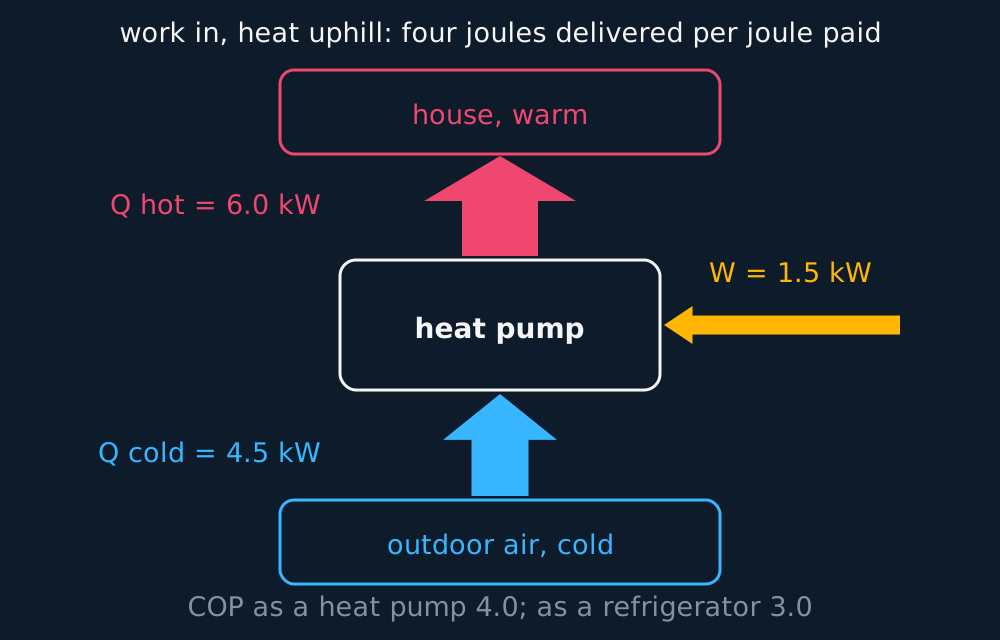
Unlike efficiency, a COP can exceed one, and no law is broken. The work does not become most of the delivered heat; it drives the transfer of heat that was already there, outdoors. A domestic heat pump with a COP of 4 delivers four joules of heat per joule of electricity, against exactly one for the best possible electric fire, and both COPs climb as the temperature gap being pumped across narrows.
GUIDED PRACTICE
Heating a house
A heat pump delivers 6.0 kW of heat into a house using 1.5 kW of electrical power. Find its coefficient of performance and the rate it extracts heat from the winter air outside.
Show the working
COPhp = QH/W = 6.0/1.5 = 4.0.
QC = QH − W = 6.0 − 1.5 = 4.5 kW drawn from the cold outdoors. The house gets the outdoor heat plus the electrical work, and a plain electric heater on the same 1.5 kW would deliver only a quarter as much.
INDEPENDENT PRACTICE
Scoring a refrigerator
In each cycle a refrigerator extracts 120 J from its cold compartment and rejects 168 J into the kitchen. Find the work input per cycle and the coefficient of performance.
Show the working
W = QH − QC = 168 − 120 = 48 J per cycle.
COPref = QC/W = 120/48 = 2.5. Note the kitchen receives more heat than the food lost; a running fridge with its door open warms the room.
Selling the heat as well as the work
In the engine audit, the largest single term is the rejected heat: about fifty of the ninety kilowatts supplied leave as hot exhaust and hot coolant. A power station rejects a comparable share on a larger scale, perhaps sixty per cent of its fuel's energy, into a river or a cooling tower. Combined heat and power uses that rejected heat rather than dumping it.
The change is one of sink temperature. Instead of rejecting QC to the coldest thing available, the plant rejects it into water at eighty or ninety degrees, which is then piped round the buildings nearby to heat them. The heat is doing a job now, so the share of the fuel's energy that ends up wanted climbs from something like forty per cent to something like eighty, and the plant is built in the town it heats rather than out by the river.
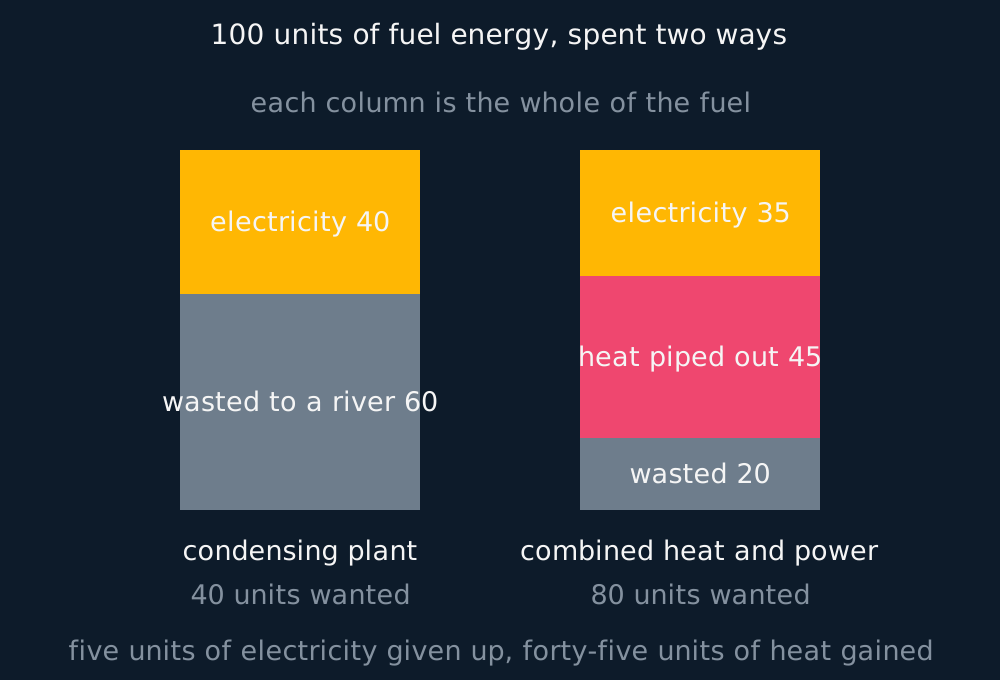
It is not free, and the second law says precisely what is lost. The ceiling on work is (TH − TC)/TH, so lifting TC from 300 K to 360 K lowers that ceiling, and a combined heat and power plant generates less electricity from the same fuel than one rejecting into a cold river. In exchange, the rejected heat leaves at a temperature high enough to be useful.
No law is bent by the eighty per cent, and it is worth being able to say why. The second law forbids turning all of QH into work; it says nothing against using QC as heat, which is what it already was. The figure is an energy utilisation rather than an efficiency, since it adds a quantity of work to a quantity of low-grade heat as though the two were interchangeable, and they are not: the work can drive a motor or a computer, while ninety-degree water can only ever warm something cooler than itself.
ASSESSMENT FOCUS
- COP definitions are benefit over work. QC/W for a refrigerator, QH/W for a heat pump, and a COP above 1 is expected, not an error, because the machine moves heat rather than creating it.
- Decide which machine the question means before writing a formula. The same machine is judged on a different output in each case, and the two COPs differ by exactly one, since QH = QC + W.
- Energy conservation supplies whichever heat the question has not given you. W = QH − QC holds for the reversed cycle just as it did for the forward one, so a question quoting one heat and the COP is asking for the other two.
- Combined heat and power answers need the gain and the loss. The rejected heat warms buildings instead of a river, so far more of the fuel does something wanted, but the sink is hotter, so the electrical output falls, and the utilisation figure quoted adds work to low-grade heat.
- If asked whether combined heat and power breaks the second law, say what the law actually forbids. It caps the fraction of QH that can become work, and using QC as heat is not turning it into work, so no cap applies to the eighty per cent.
CHECK YOURSELF
A heat pump keeps a house warm at 6.4 kW while drawing 1.6 kW of electrical power. Find its coefficient of performance, the rate at which it takes heat from outdoors, and the electrical power a plain heater would need for the same warmth. Then say what changes if the same plant were instead a combined heat and power station rejecting into the house.
Show a hint
COP is the wanted heat over the work. Conservation gives the outdoor rate. For the last part, ask what a hotter sink does to the ceiling on work.
Show the answer
COPhp = QH/W = 6.4/1.6 = 4.0.
QC = QH − W = 6.4 − 1.6 = 4.8 kW pulled from the outdoor air.
A plain electric heater delivers one joule of heat per joule of electricity, so it would need the full 6.4 kW, four times as much.
A combined heat and power station is the forward cycle, not the reversed one. Rejecting into the house rather than a river raises TC, which lowers (TH − TC)/TH and so lowers the electricity generated, but the rejected heat is now warm enough to be piped and used, so the share of the fuel doing something wanted rises sharply.
Reversed, the cycle uses work to transfer heat from a colder region to a hotter one: COP is the useful heat over the work in, Q_C/W for a fridge and Q_H/W for a heat pump, and above 1 is normal.
Combined heat and power raises the sink temperature on purpose: less electricity from the same fuel, but the rejected heat leaves hot enough to be worth piping.
Or read them with their mark schemes on the heat engines and their efficiency questions page.
CHECK YOUR PROGRESS
Rate how confident you feel with each objective for this lesson. Ratings are saved in this browser, on this device, unless you sign in.
- Treat refrigerators and heat pumps as reversed engines and calculate both coefficients of performance.
- Explain how combined heat and power uses the rejected heat without contradicting the second law.
Open the full revision checklist to track your progress across the whole unit.