Biology › Pathogens, disease and immunity › Plant disease and plant defences
Plant disease and plant defences
Plants have no phagocytes, no antibodies and no memory cells, so infection is restricted locally rather than cleared. Ring rot and tobacco mosaic virus are the named diseases; callose and lignin seal the routes a pathogen spreads by; chemical defences act against pathogens and herbivores; and the Venus flytrap illustrates electrical signalling in plants.
Before this The four groups of pathogen · Plasmodesmata, sieve plates and translocation in phloem · Turgor, water potential and the guard cell mechanism
COMMON MISCONCEPTION
A plant fights infection the way you do, with immune cells patrolling it and antibodies made to order.
Plants do not have antibody-producing lymphocytes or mobile phagocytes. They restrict infection by depositing callose and lignin around affected tissue and by producing antimicrobial compounds. These are structural and chemical defences, not an antibody response.
What you should be able to do
- Name a bacterial and a viral plant disease, and describe the damage and the spread of each.
- Explain containment: callose and lignin sealing plasmodesmata and sieve plates, with the timescale of each.
- Give named chemical defences and state what each acts against.
- Describe defences against herbivory: alkaloids, tannins, pheromone signalling and the Mimosa touch response.
- Work through the Venus flytrap mechanism in order, and explain why the trap counts to two before it closes.
Two named plant diseases
Once a crop plant is infected there is usually no treatment for that plant, so control acts on prevention and containment rather than cure. The two diseases below are the standard examples, one bacterial and one viral.
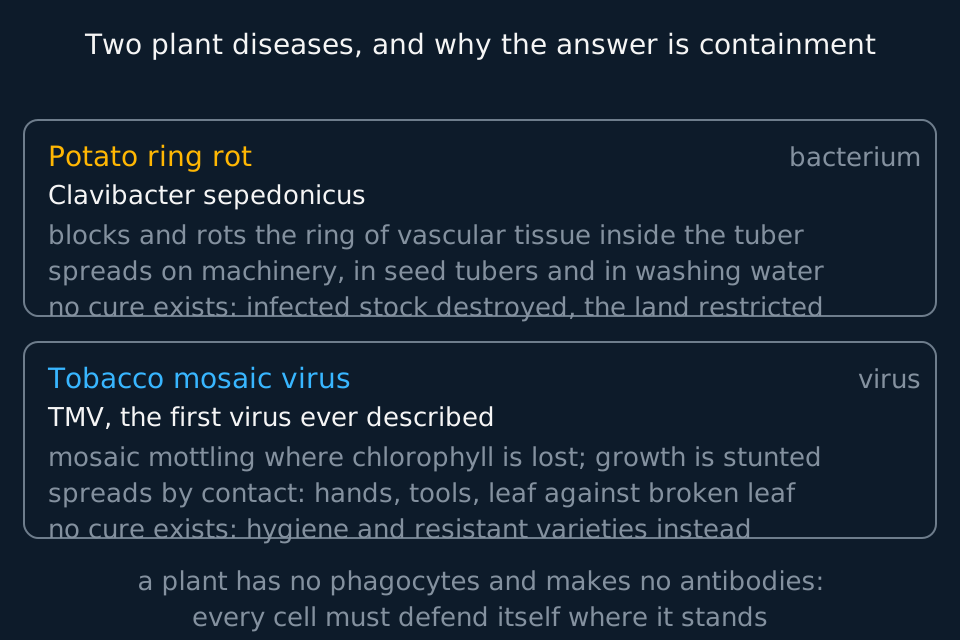
Ring rot of potatoes is caused by the bacterium Clavibacter sepedonicus. It infects the vascular tissue, and the name is literal: cut an infected tuber and the ring of xylem and phloem has turned to a pale rotting band, because the bacterium multiplies where the transport runs. A field can carry the infection for a season with little to show above ground, so symptomless seed tubers, and the machinery and washing water that touched them, carry the bacterium to the next field. There is no chemical cure. Ring rot is a notifiable disease in the UK, and an outbreak leads to statutory action covering destruction of the stock, disinfection of equipment and restrictions on growing potatoes on the affected land. Check the current plant-health notice for the measures and periods that apply.
Tobacco mosaic virus has a place in the history of biology as the first virus described, and is the standard example of a viral plant disease. It infects tobacco and over a hundred other species, tomatoes and peppers among them. The mosaic is the symptom: patches of leaf lose their chlorophyll, photosynthesis falls, and growth is stunted. The virus needs no vector; it spreads by contact, from leaf to broken leaf, on tools, and on hands, and it is stable enough to survive for years in dried plant material. Control is hygiene, washing hands and tools and removing infected plants, and, increasingly, growing varieties bred or engineered to be resistant.
Plants do not produce antibodies and do not have circulating immune cells. Infection is restricted locally. Cells deposit callose at plasmodesmata and sieve plates, reducing movement of a pathogen between cells and through the phloem. Lignification can strengthen barriers around affected tissue, while antimicrobial compounds and hydrolytic enzymes inhibit pathogens.
Containment: callose first, lignin after
Plant cells detect infection chemically, recognising molecules characteristic of pathogens and fragments of their own damaged walls. What matters at A level is the response, and its first and fastest part is a polysaccharide.
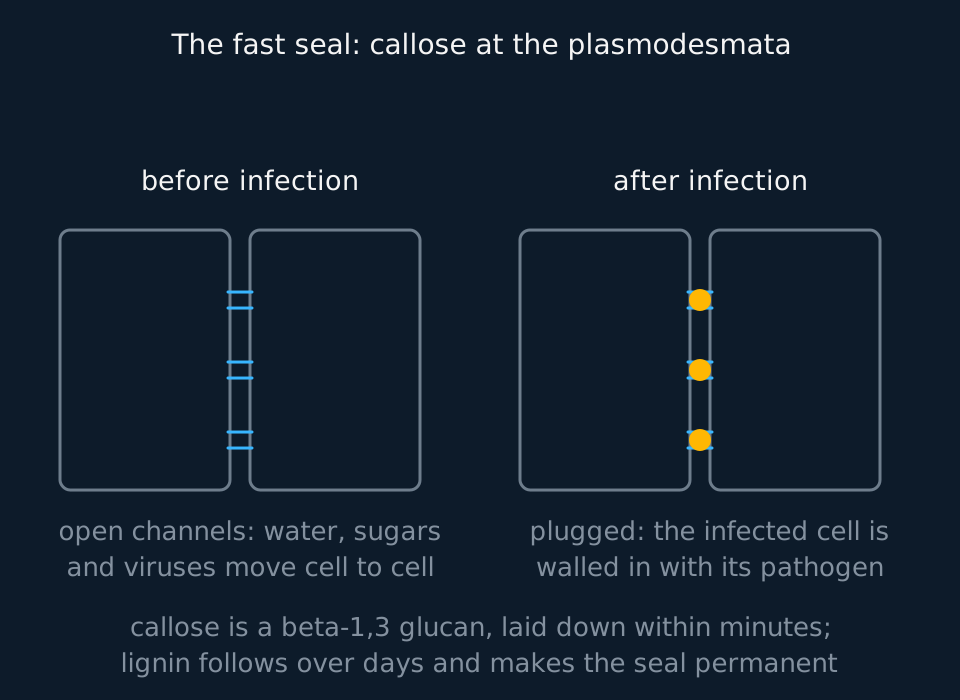
- Callose
- A polysaccharide of beta-1,3 linked glucose, deposited within minutes of infection at plasmodesmata, sieve plates and wounds, sealing the routes a pathogen would spread by.
- Lignin
- The tough, waterproof polymer of woody tissue, added to walls around an infection site over days to make the seal permanent.
Callose is a glucose polymer, like cellulose and starch, but built on beta-1,3 links rather than the beta-1,4 of cellulose, which gives it a helical, gel-forming structure distinct from the structural polysaccharides of the wall. Within minutes of infection it is laid down between the cell membrane and the wall, and at the two kinds of opening that matter: the plasmodesmata connecting cell to cell, and the sieve plates of the phloem. The first blocks the pathogen's short-range spread; the second matters because sap flowing through sieve tubes would otherwise carry a virus the length of the plant in hours. Sealing those routes also stops the transport of sugars through them, so containment has a cost in translocation.
Over the following days the seal is made permanent. Lignin is deposited in and around the walls of the infected region, the same polymer that stiffens xylem. The cells enclosed by it often die with the pathogen contained among them, and growth continues elsewhere. A plant can lose tissue in this way because its structure is modular: a single leaf is replaceable, and no irreplaceable organ is lost at a typical infection site.
Chemical defences
Plants also produce a wide range of defensive compounds, which are most easily organised by the organisms they act against.
| Class | Named example | Acts against |
|---|---|---|
| Insect repellents | citronella from lemon grass; pine resin | Insects, before they bite |
| Insecticides | pyrethrins from chrysanthemums; caffeine; nicotine | Insects that bite anyway |
| Antibacterial compounds | phenols; defensins, small proteins that damage bacterial membranes | Bacteria |
| Antifungal compounds | chitinases, enzymes that hydrolyse chitin; saponins | Fungi |
| General toxins | compounds that release cyanide when tissue is crushed, as in white clover | Almost anything that chews |
Two points turn a list into an explanation. First, the target follows from the chemistry: chitin is the polymer of fungal walls and insect skeletons and appears nowhere in a plant cell, so a chitinase hydrolyses fungal walls without damaging the plant's own tissue. Second, several entries in the table are the origin of human products: pyrethrins are the model for the synthetic pyrethroid insecticides, and the nicotine in a tobacco leaf functions as an insecticide in the plant. Many human medicines were first isolated from such defensive compounds, which is one argument for conserving plant diversity: the compounds made by an extinct species can no longer be investigated.
Defences against herbivory
Plants are also attacked by herbivores, chiefly insects and mammals. The defences against them range from deterrent chemistry to volatile signalling.
- Alkaloid
- A bitter, nitrogen-containing compound made by a plant, toxic to or deterrent to herbivores; caffeine, nicotine and morphine are alkaloids.
- Tannin
- A phenolic compound in leaves and bark that binds proteins, inactivating digestive enzymes and making the tissue bitter and hard to digest.
- Pheromone
- A chemical signal released by an organism that changes the behaviour of another; used loosely in plant biology for the volatile signals plants release when attacked.
Alkaloids are bitter nitrogen-containing compounds: caffeine, nicotine, morphine, quinine and cocaine are examples. Each functions as a herbivore deterrent in the plant, and several are also used as human drugs; quinine was the first effective treatment for malaria. Tannins work more slowly: they bind proteins, including the digestive enzymes and gut lining of whatever is chewing, so an insect eating tannin-rich leaf grows slowly or gives up. The dryness of strong tea is tannin binding the proteins of your own mouth.
Volatile signalling acts at a distance. A maize plant being chewed by caterpillars releases volatile compounds that diffuse downwind, and parasitic wasps orient towards them and lay their eggs in those caterpillars. Neighbouring plants detect the same volatiles and increase their tannin and toxin concentrations before they are attacked. Strictly, a pheromone is a within-species signal, so 'a volatile signal' is the safer exam phrase for the wasp case; the specification's word is pheromone and it will be accepted.
Mimosa pudica responds to touch with rapid movement. Touching a leaf causes the leaflets to fold together in sequence within a second or two and the whole leaf to droop. An electrical signal travels from the point touched, and at each leaflet's hinge, a pad of cells called the pulvinus, potassium ions leave the cells on one side, water follows by osmosis, turgor falls and the hinge folds. The movement can dislodge insects and reduces the exposed leaf area. The ions are transported back over the following minutes and the leaf reopens, at a cost in ATP. Specifications differ in how much of this mechanism they require.
The Venus flytrap and electrical signalling
The Venus flytrap grows in bogs whose waterlogged, acidic soil is very poor in nitrogen. Its traps are modified leaves that capture insects as a source of nitrogen compounds, so they are a nutritional adaptation rather than a defence. They appear in specifications as an example of electrical signalling in plants, and are described as a sequence.
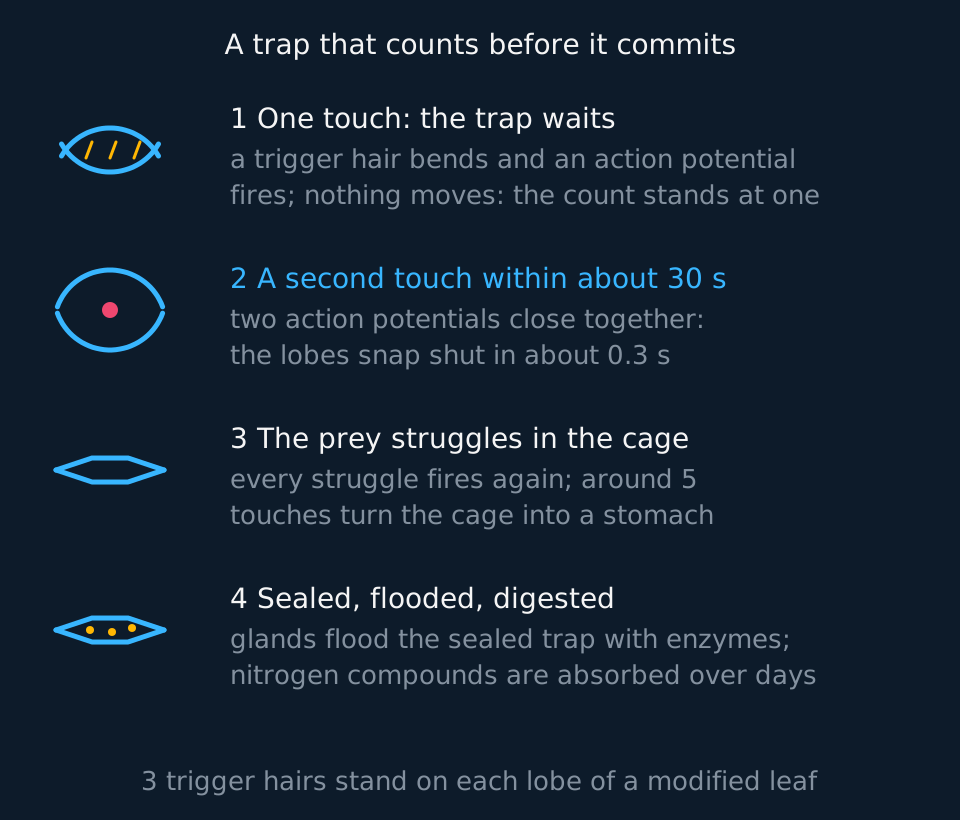
Each half of the trap, each lobe, carries three stiff trigger hairs. An insect walking on the lobe bends a hair, stretch-sensitive ion channels at its base open, and the resulting depolarisation fires an action potential across the trap, carried by ion movements just as in a neurone, though more slowly. One action potential does nothing visible. The trap holds the signal, in effect a count of one, as a raised calcium ion concentration that decays over tens of seconds.
A second touch within about thirty seconds fires a second action potential, the calcium concentration crosses a threshold and the trap closes. The lobes move from convex to concave in a fraction of a second, through released elastic tension and rapid water movement between cell layers, and the marginal spines interlock. Requiring two touches discriminates between prey and other stimuli: a raindrop or a blown seed usually touches once, while a walking insect touches repeatedly. Closing on a false stimulus would cost energy and leave the photosynthetic surface folded shut for a day.
The counting continues after closure. A caged insect struggles, each struggle bends hairs and fires further action potentials, and around five in total switch the trap's glands on: the lobes seal at the margins, digestive enzymes, proteases and chitinases among them, flood the cavity, and over the next days the soluble products, nitrogen compounds above all, are absorbed through the trap wall. A trap that closed on debris receives no further touches, and reopens within a day without having secreted its enzymes. The same classes of molecule that defend an ordinary leaf are used in digestion here: a chitinase hydrolyses a fungal wall in one plant and an insect exoskeleton in this one.
In the exam
- Name the diseases precisely: ring rot is bacterial, caused by Clavibacter sepedonicus; tobacco mosaic is viral. The group determines which control measures apply.
- For containment, give the chain in order: infection detected, callose deposited within minutes, plasmodesmata and sieve plates sealed, lignin added over days, pathogen walled in. Name callose as a beta-1,3 glucan if the question mentions structure.
- Mimosa and the flytrap move by turgor changes driven by action potentials. Plants contain no muscle tissue.
- Chemical-defence answers pair compound with target: chitinase against fungal walls, defensins against bacterial membranes, tannins against digestive enzymes.
- For the flytrap, give the counting and the reason for it: two touches within about thirty seconds to close and around five to begin digestion, because closing on a false stimulus costs energy.
Check yourself
A tomato grower who smokes hand-prunes a glasshouse row by row. Two weeks later, mosaic mottling appears on plants along the rows pruned first, and spreads along them. Explain how the plants became infected and why the disease tracks the rows, describe what the infected plants themselves will be doing to slow the virus, and state what the grower should now do.
Answer
The source is tobacco mosaic virus carried on the grower's hands and tools. TMV survives in dried tobacco, needs no vector, and enters a plant through wounds; pruning creates a wound on every plant touched. The disease tracks the rows because transmission is by contact in the order of handling: each pruned plant contaminated the blades and fingers that went on to wound the next.
Inside each infected plant, containment is the only defence available. Cells around the infection deposit callose, the beta-1,3 glucan, within minutes at their plasmodesmata, closing the cell-to-cell channels the virus spreads through, and at the sieve plates of the phloem, denying it the sap flow that would otherwise distribute it through the whole plant in hours. Lignin laid down over the following days makes the barrier permanent, and tissue inside it is sacrificed with the virus contained, at the cost of the mottled, non-photosynthesising patches the grower can see.
No treatment will cure the infected plants, so the grower's moves are all containment too: remove and destroy the infected plants rather than composting them, since the virus survives in dead material; disinfect tools and wash hands between plants, and ideally between rows; and keep tobacco away from the glasshouse. For future seasons, resistant varieties close the loop.
The structure of a complete answer is: name the pathogen, trace the route of transmission, give the plant's own response, then give the control measure that interrupts that route.
Questions
Question 15 marks
A grower has ring rot in one field of potatoes and mosaic mottling in a glasshouse of tomatoes nearby. Suggest what should be done in each case, and suggest why no treatment can be offered to the infected plants themselves.
Mark scheme
- B1 ring rot is a notifiable disease, so the infected stock is destroyed, the machinery and washing water that touched it are disinfected, and the land grows something other than potatoes for several years
- B1 the tubers are the route, and infected ones can look healthy, so future crops must be grown from certified disease-free seed potatoes
- B1 the tomatoes have tobacco mosaic virus, so infected plants are removed and destroyed rather than composted, since the virus survives for years in dried plant material
- B1 spread is by contact through wounds, so hands and tools are washed and disinfected between plants, tobacco is kept away from the glasshouse, and resistant varieties are grown in future seasons
- B1 neither disease can be cured: there is no chemical that clears a bacterium from the vascular tissue of every plant in a field, and no antibiotic acts on a virus, so all the useful action is containment before and around infection rather than treatment of it
Question 24 marks
Describe how a plant contains an infection once a pathogen has entered a leaf, naming the two materials it deposits.
Mark scheme
- B1 callose, a polysaccharide of beta-1,3 linked glucose, is laid down between the cell membrane and the wall within minutes of the infection being detected
- B1 it plugs the plasmodesmata, the channels connecting cell to cell, so the pathogen cannot spread from the infected cells to their neighbours
- B1 it also seals the sieve plates of the phloem, which would otherwise carry a virus the length of the plant in hours in the flowing sap
- B1 over the following days lignin, the tough waterproof polymer of woody tissue, is deposited in and around the walls of the infected region, making the barricade permanent with the pathogen walled in
Question 34 marks
Outline the defences a plant uses against herbivores, referring to alkaloids, tannins and volatile signals in your answer.
Mark scheme
- B1 alkaloids are bitter, nitrogen-containing compounds, caffeine, nicotine, morphine and quinine among them, which are toxic to herbivores or deter them from feeding
- B1 tannins are phenolic compounds that bind proteins, inactivating the digestive enzymes of whatever is chewing and making the tissue bitter, so an insect eating tannin-rich leaf grows slowly or gives up
- B1 a plant being chewed releases volatile signals that drift downwind, and parasitic wasps follow the plume to lay their eggs in exactly those caterpillars, so the plant summons its herbivore's own enemy
- B1 neighbouring plants detect the same volatiles and raise their tannin and toxin levels before they are bitten; some plants add movement, as Mimosa pudica does when a touched leaf folds and dislodges insects
Question 44 marks
Explain why a Venus flytrap closes only after two touches within about thirty seconds, and explain why about five action potentials are needed before it begins to digest.
Mark scheme
- B1 bending a trigger hair opens stretch-sensitive ion channels at its base, and the depolarisation fires an action potential across the trap
- B1 one action potential is held as a raised calcium ion concentration that decays over tens of seconds, so only a second touch within that window takes the calcium concentration past threshold and commits the trap
- B1 a raindrop or a blown seed touches once whereas prey walks, and walking touches twice, so the count is a filter against false alarms, which would cost the plant energy and hold its photosynthetic surface folded shut for a day
- B1 a caged insect struggles and bends the hairs again, so about five action potentials in total confirm live prey before the glands are switched on and the enzymes are spent; a trap closed on debris receives no further touches and simply reopens
Question 54 marks
Describe how touching a leaf of Mimosa pudica causes its leaflets to fold together within a second or two.
Mark scheme
- B1 touching the leaf generates an electrical signal, an action potential, that travels away from the point touched
- B1 at each leaflet's hinge, a pad of cells called the pulvinus, potassium ions leave the cells on one side
- B1 water follows the potassium ions out of those cells by osmosis, so turgor in them falls
- A1 the loss of turgor on one side of the hinge makes it fold, closing the leaflets together
Question 63 marks
Compare the defences a plant has against a pathogen with the defences a mammal has.
Mark scheme
- B1 both detect the invader chemically as something that should not be there: a plant recognises molecules characteristic of pathogens and fragments of its own damaged walls, whereas a mammal recognises non-self antigens
- B1 a mammal brings phagocytes and lymphocytes to the site in the blood, whereas a plant has no circulating cells at all and each cell defends where it stands, sealing with callose and lignin and poisoning with its own chemistry
- B1 a mammal makes antibodies and keeps memory cells, so it acquires immunity, whereas a plant makes neither, so it learns nothing from an infection and has no immunity to the same pathogen next season
Question 73 marks
Explain why a plant can secrete a chitinase without digesting its own tissues, and name one plant compound that acts against bacteria.
Mark scheme
- B1 a chitinase hydrolyses chitin, which is the polymer of fungal cell walls and of insect exoskeletons
- B1 no plant cell contains chitin, since a plant cell wall is made of cellulose, so the enzyme has no substrate in the plant and the weapon can be deployed freely
- B1 defensins, small proteins that damage bacterial membranes, or phenols, act against bacteria
Question 83 marks
Explain why the leaves of a tobacco plant infected with tobacco mosaic virus show a mottled loss of colour, and explain the effect this has on the plant's growth.
Mark scheme
- B1 the virus damages chloroplasts in the infected patches of leaf, so those patches lose their chlorophyll, which produces the mottled (mosaic) pattern
- B1 chlorophyll is needed to absorb light for photosynthesis, so the rate of photosynthesis in the affected leaf tissue falls
- A1 with less photosynthesis taking place, less sugar is available for growth, so the plant's growth is stunted
Question 93 marks
Sealing the sieve plates of the phloem with callose helps to contain a viral infection, but it also has a cost to the plant. Explain what this cost is.
Mark scheme
- B1 callose deposited at the sieve plates blocks the flow of sap through the phloem in that region, which is what stops the virus travelling with it
- B1 the phloem, however, is also how the plant normally transports sugars from where they are made to where they are needed
- A1 sealing the sieve plates therefore also blocks translocation of sugars through that same region, so containment comes at a cost to the plant's own transport
Question 103 marks
A tree can lose a whole branch to lignified, walled-off infected tissue and survive, whereas similar damage to an animal's one heart would be fatal. Suggest why a plant can survive this kind of local tissue loss more easily than an animal could.
Mark scheme
- B1 a plant's structure is modular, built of many repeated parts such as leaves and branches, so one part can be lost without the whole organism failing
- B1 most plant organs are not unique, so growth continues from meristems elsewhere on the plant even after a branch is walled off and sacrificed
- A1 an animal's organs, such as the heart, are not modular in this way; each animal usually has only one, so damage to it cannot simply be sacrificed and grown around
Question 113 marks
Compare an insect repellent produced by a plant with an insecticide produced by a plant, giving a named example of each and stating when each acts.
Mark scheme
- B1 a repellent, such as citronella from lemon grass, acts before an insect bites, deterring it from feeding on or landing on the plant at all
- B1 an insecticide, such as the pyrethrins made by chrysanthemums, acts on an insect that has already begun to feed, poisoning or killing it
- A1 so a repellent reduces the number of insects that attack the plant in the first place, whereas an insecticide reduces the damage done by insects that attack anyway
Question 123 marks
Many human medicines, including quinine and morphine, were first isolated from chemical defences that plants use against herbivores or pathogens. Suggest one argument this provides for conserving plant diversity.
Mark scheme
- B1 different plant species have evolved different defensive compounds against different herbivores and pathogens, so the range of chemicals available across all plant species is very large
- B1 some of these compounds, such as quinine and morphine, have turned out to be useful as human medicines once isolated and tested
- A1 if a plant species becomes extinct before its defensive compounds have been investigated, any medically useful chemistry it made is lost permanently and cannot be recovered
Question 133 marks
The Venus flytrap grows in bogs where the soil is very poor in nitrogen compounds. Explain why the plant catches and digests insects, and explain why this is not classed as a defence against a pathogen or a herbivore.
Mark scheme
- B1 digesting an insect releases nitrogen-containing compounds, such as amino acids, which the plant absorbs through the trap wall
- B1 this supplements the nitrogen the plant cannot obtain in sufficient quantity from the nitrogen-poor, waterlogged soil it grows in
- A1 it is a nutritional adaptation rather than a defence, because its purpose is to obtain a nutrient the plant needs, not to protect the plant from being eaten or infected
Question 142 marks
State the type of pathogen that causes ring rot of potatoes, and state how tobacco mosaic virus travels from plant to plant.
Mark scheme
- B1 ring rot is caused by a bacterium, Clavibacter sepedonicus, which infects the vascular tissue
- B1 tobacco mosaic virus needs no vector and spreads by contact, from leaf to broken leaf and on tools and hands
Question 152 marks
State what action is legally required when an outbreak of ring rot is confirmed on a UK farm, and state why symptomless tubers make this disease difficult to control.
Mark scheme
- B1 an outbreak leads to statutory action: the infected stock is destroyed, equipment is disinfected, and restrictions are placed on growing potatoes on the affected land
- B1 symptomless tubers can still carry the bacterium, so infected seed tubers, and the machinery or washing water that touched them, can be moved to a new field before anyone knows the crop is infected
Worth remembering
- Ring rot is a bacterium and TMV is a virus, and neither can be cured: control is hygiene, destruction and resistant varieties.
- Callose, a beta-1,3 glucan, seals plasmodesmata and sieve plates within minutes; lignin makes the seal permanent over days.
- A plant defends in place: no phagocytes, no antibodies, no memory, so containment and chemistry do all the work.
- Alkaloids poison herbivores, tannins bind their digestive enzymes, and volatile signals recruit the herbivore's own parasites.
- The flytrap counts: two touches within about thirty seconds to close, around five to digest, because false alarms cost energy.
CHECK YOUR PROGRESS
Rate how confident you are with each objective for this lesson. Ratings are saved in this browser, on this device, unless you sign in.
- Name a bacterial and a viral plant disease, and describe the damage and the spread of each.
- Explain containment: callose and lignin sealing plasmodesmata and sieve plates, with the timescale of each.
- Give named chemical defences and state what each acts against.
- Describe defences against herbivory: alkaloids, tannins, pheromone signalling and the Mimosa touch response.
- Work through the Venus flytrap mechanism in order, and explain why the trap counts to two before it closes.
Open the full revision checklist to see every objective in the curriculum in one place.
Practise this lesson
WORKBOOK
The same questions as the player, on paper with room to work, and a separate book of mark schemes. Free to use; please do not redistribute or sell.