Chemistry › Revision posters
A-level Chemistry revision posters
One page per topic: the diagrams, the processes and the handful of points worth remembering. Made to be printed, put on a wall, or saved to a phone. Click a poster to open it full size, or download it to keep; the title goes to the lesson it came from.
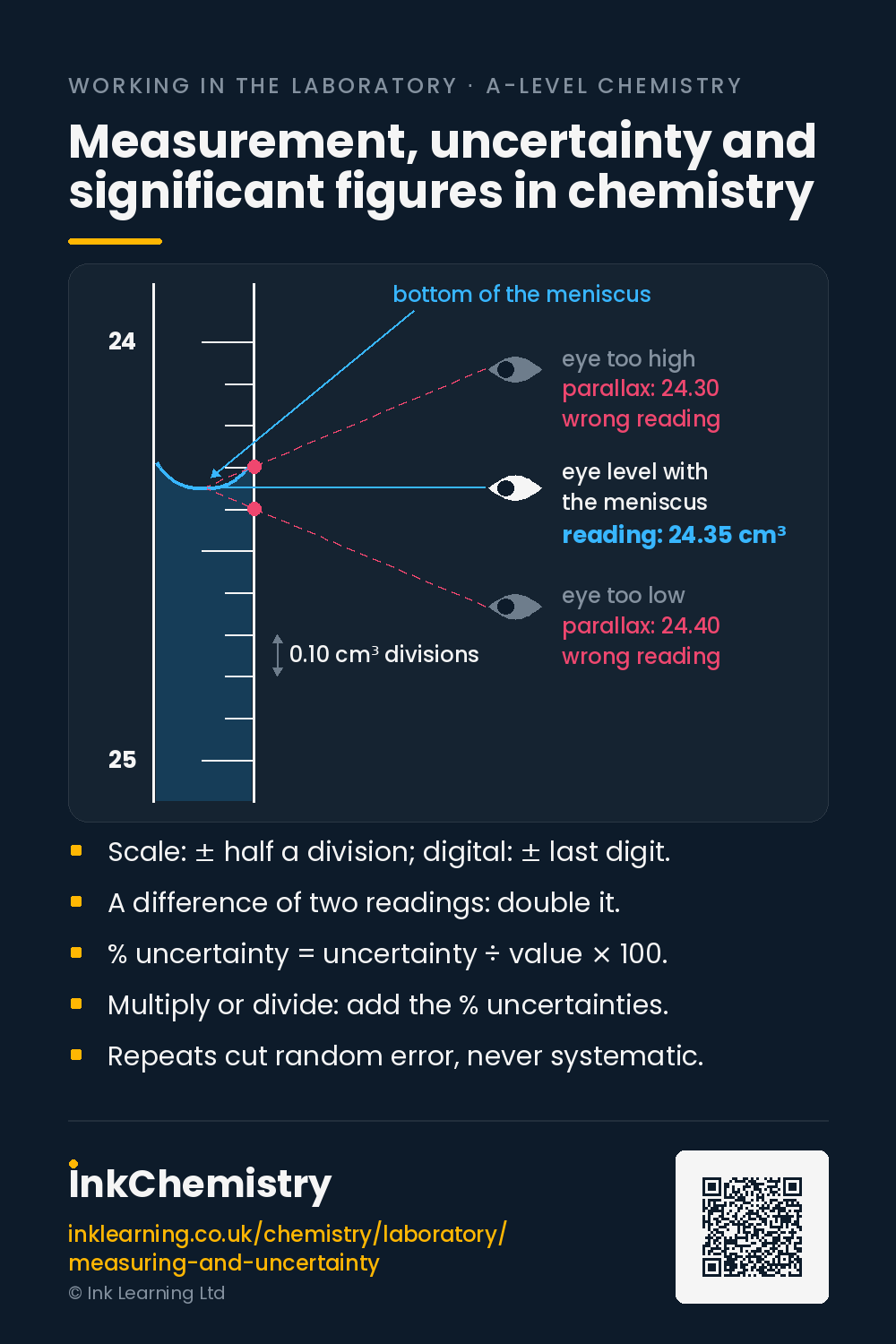
Working in the laboratory
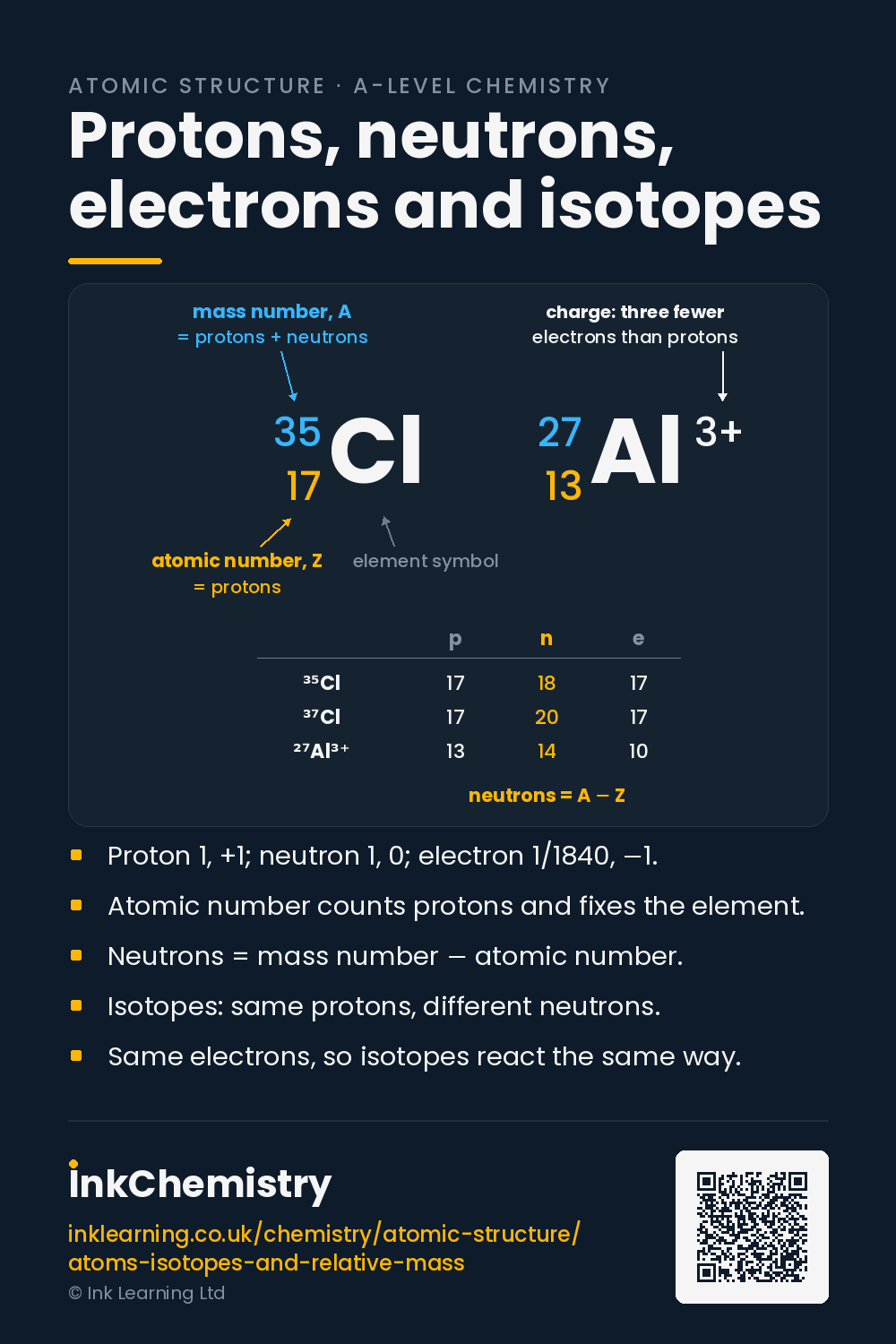
Atomic structure
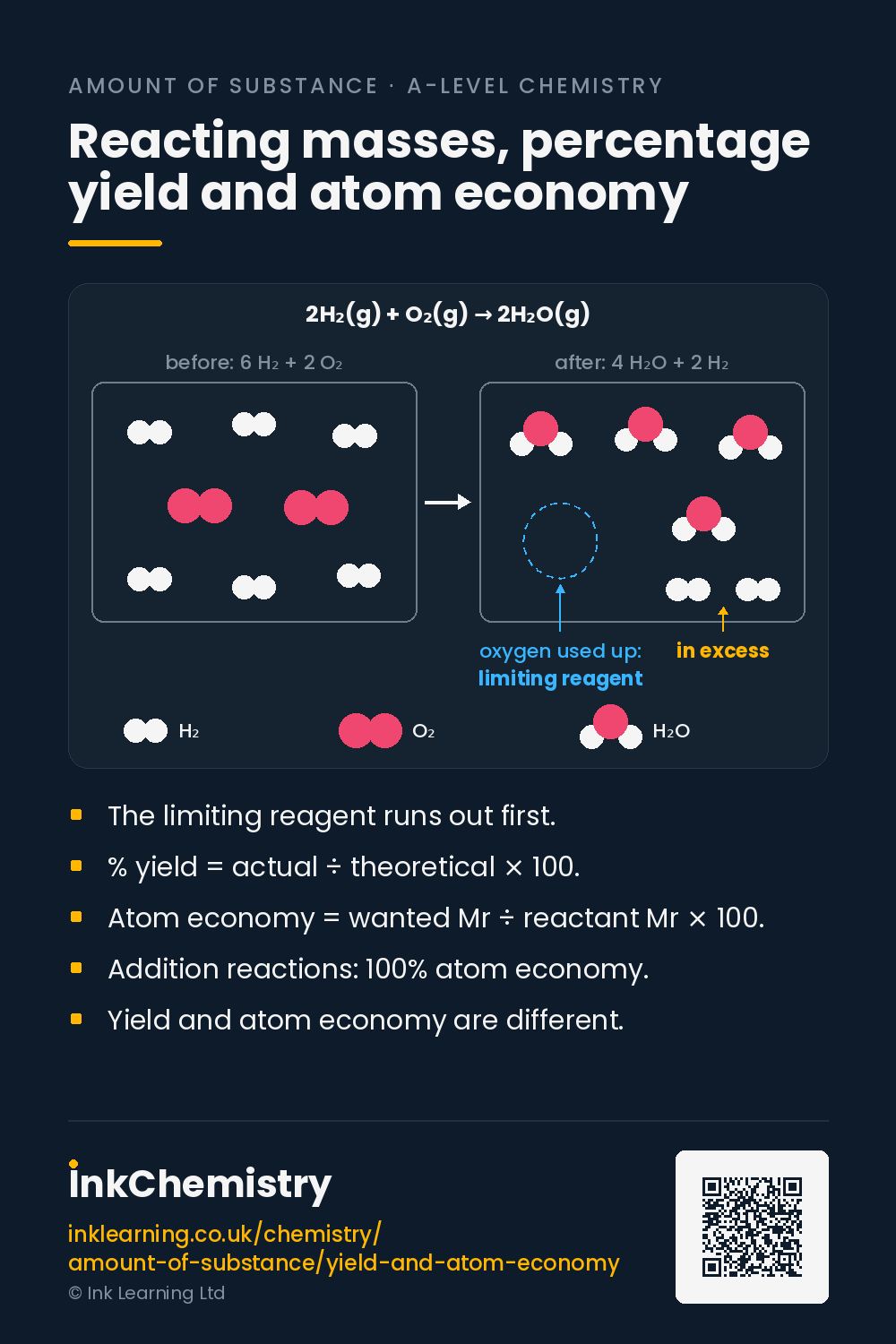
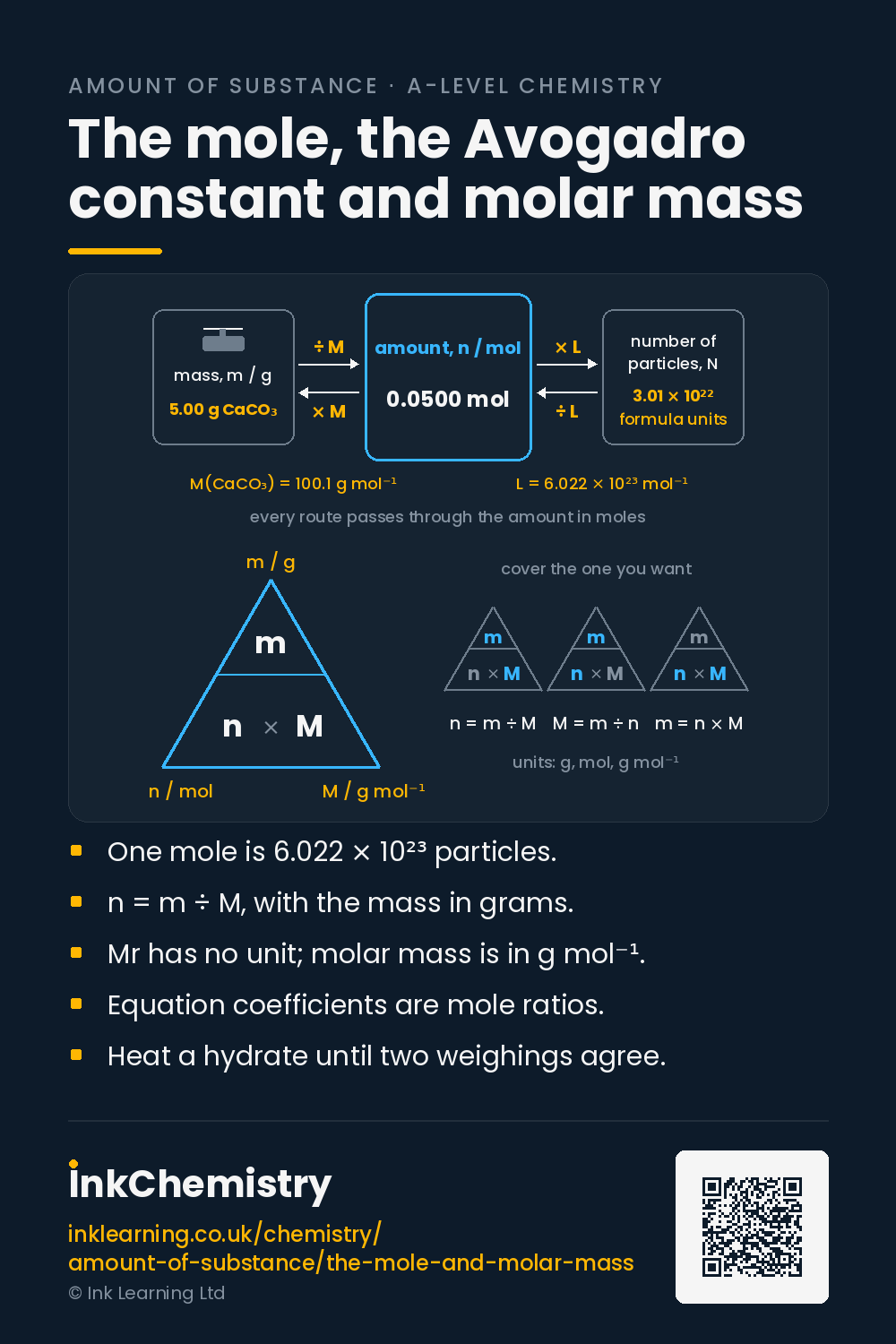
Amount of substance
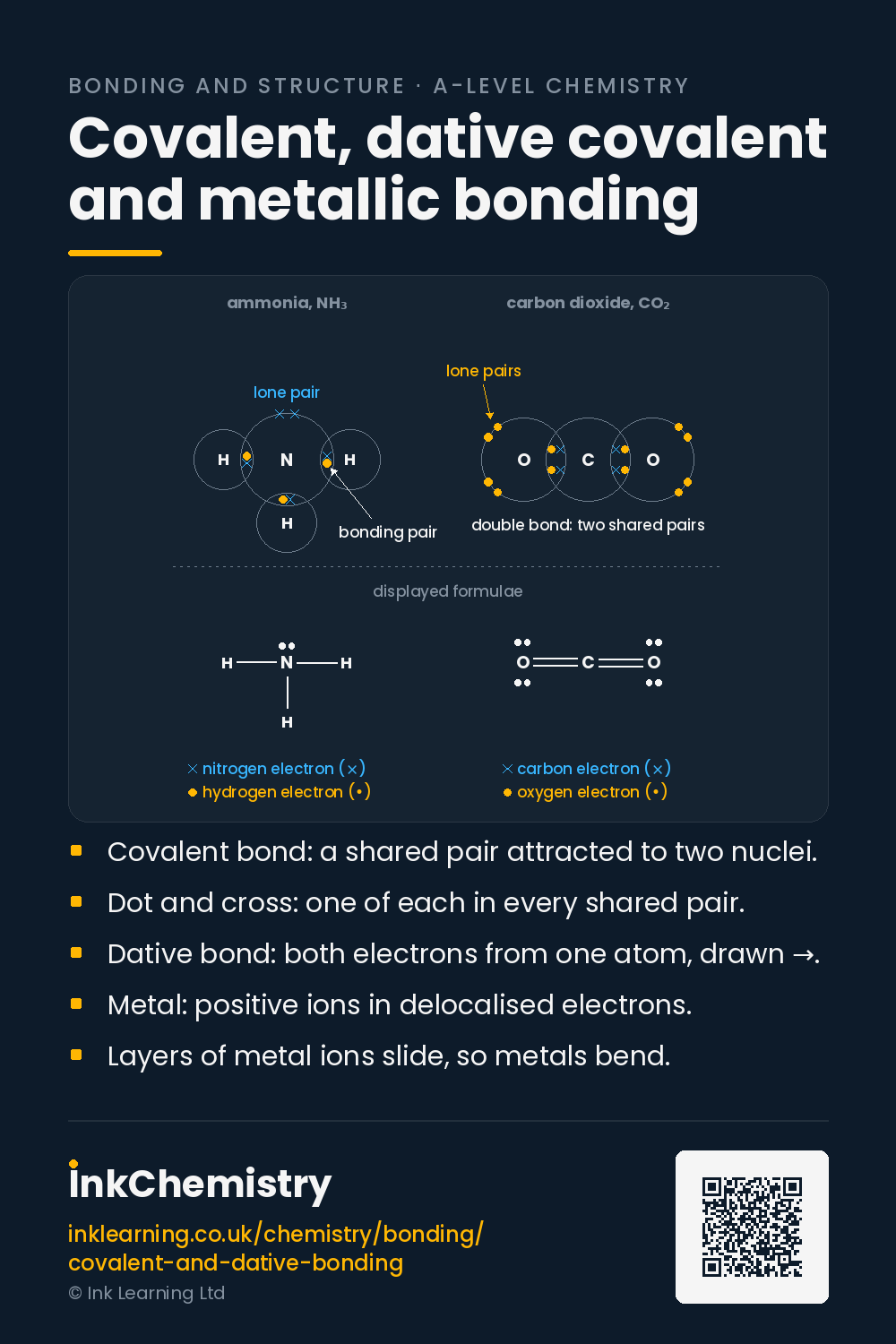
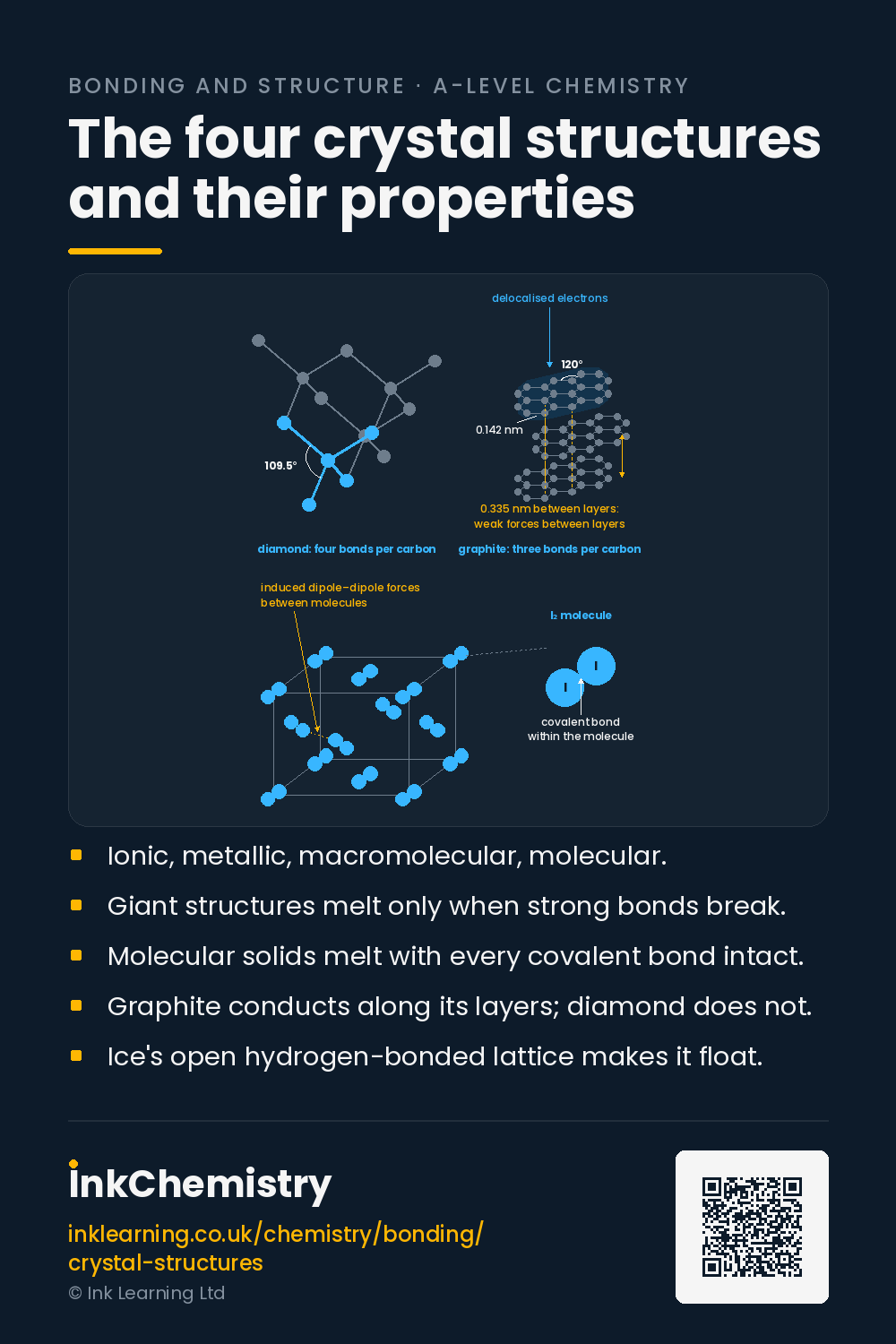
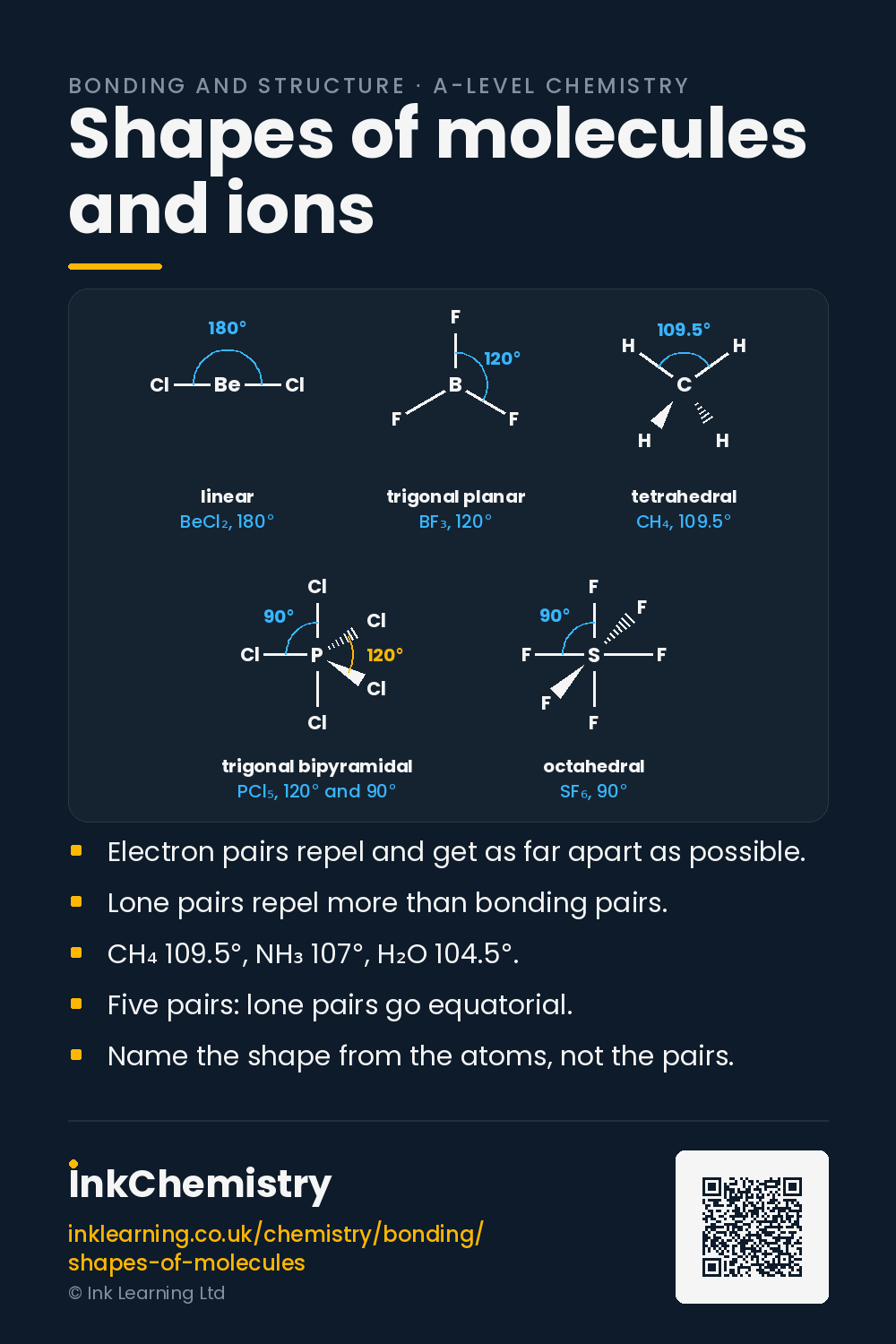
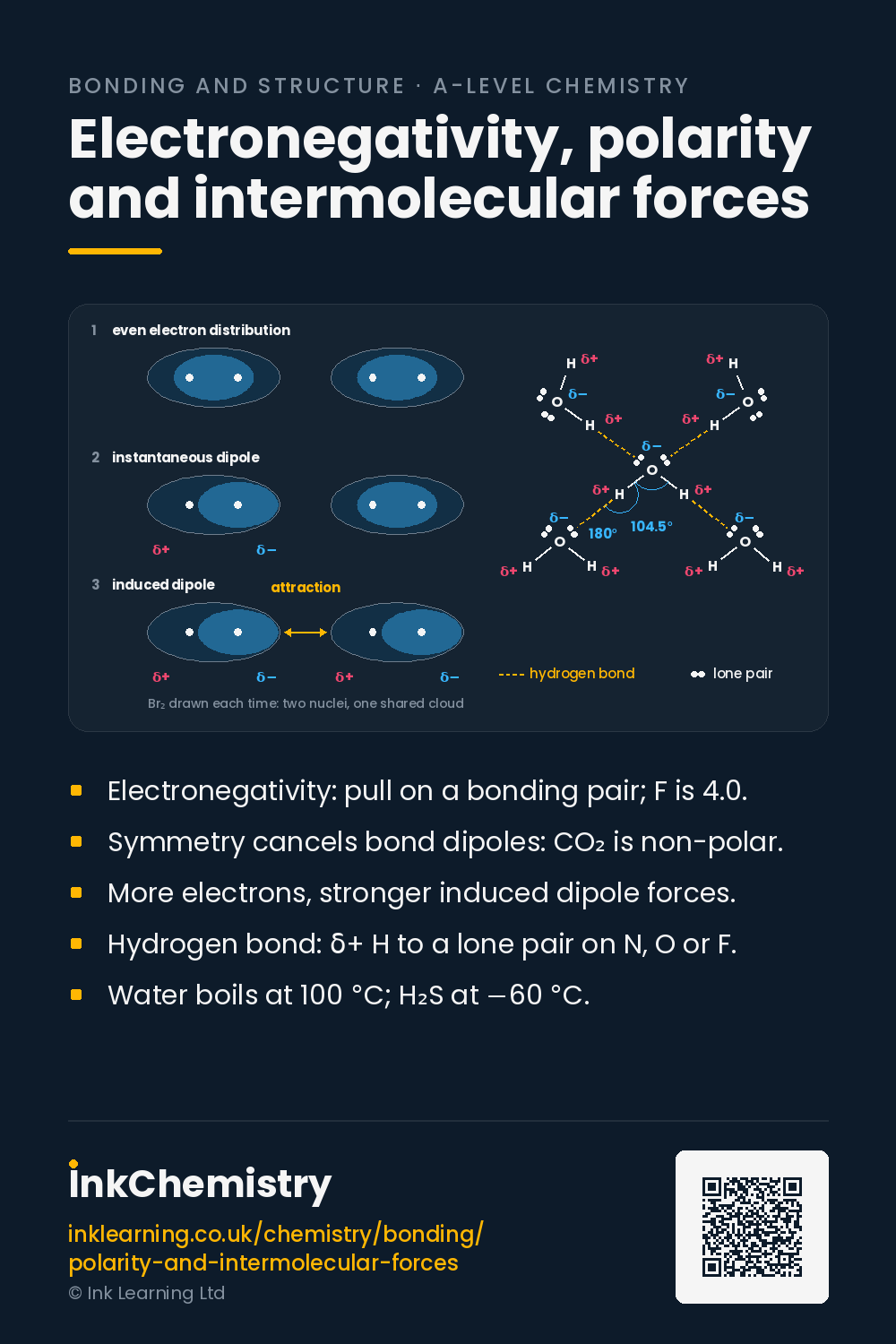
Bonding and structure
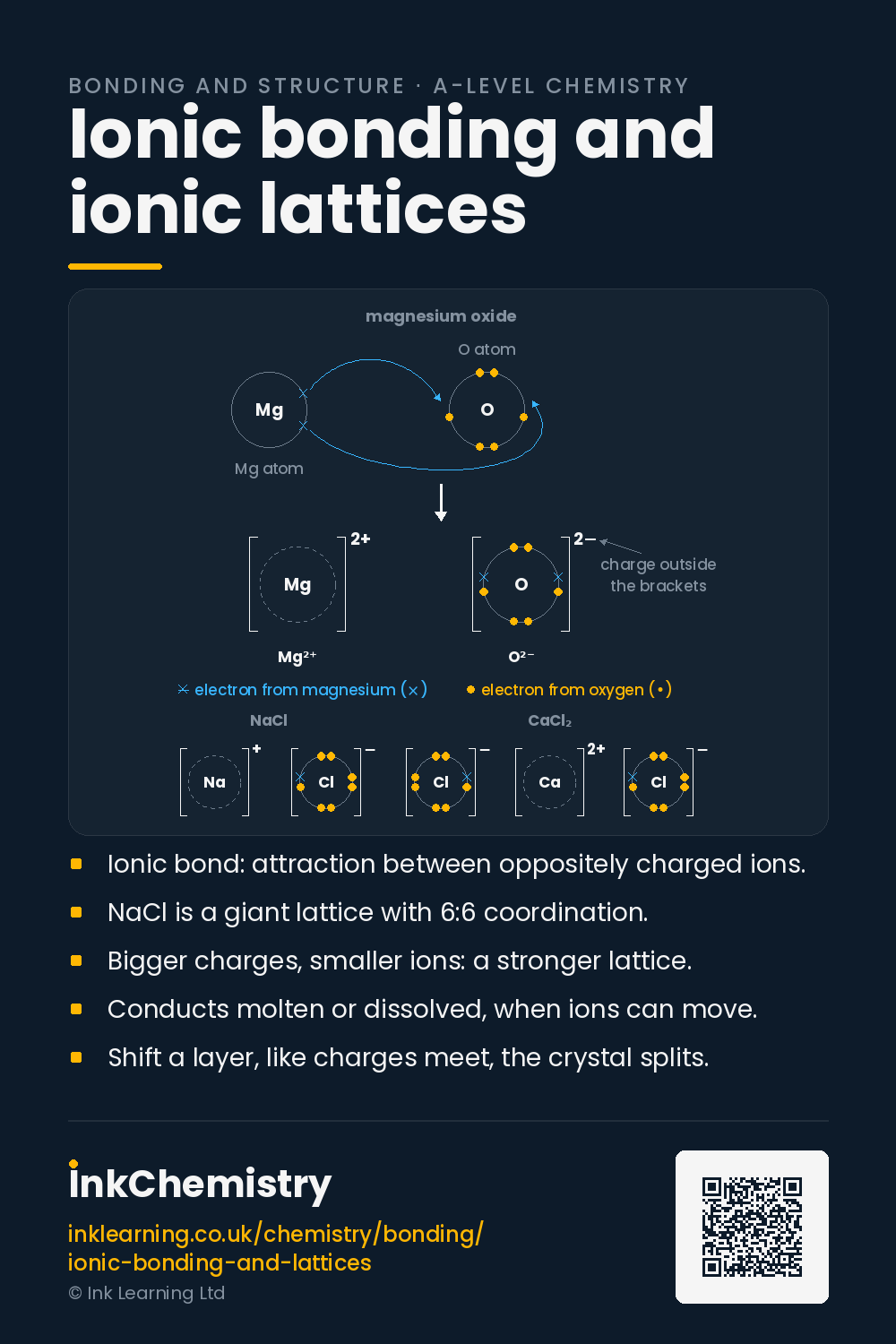
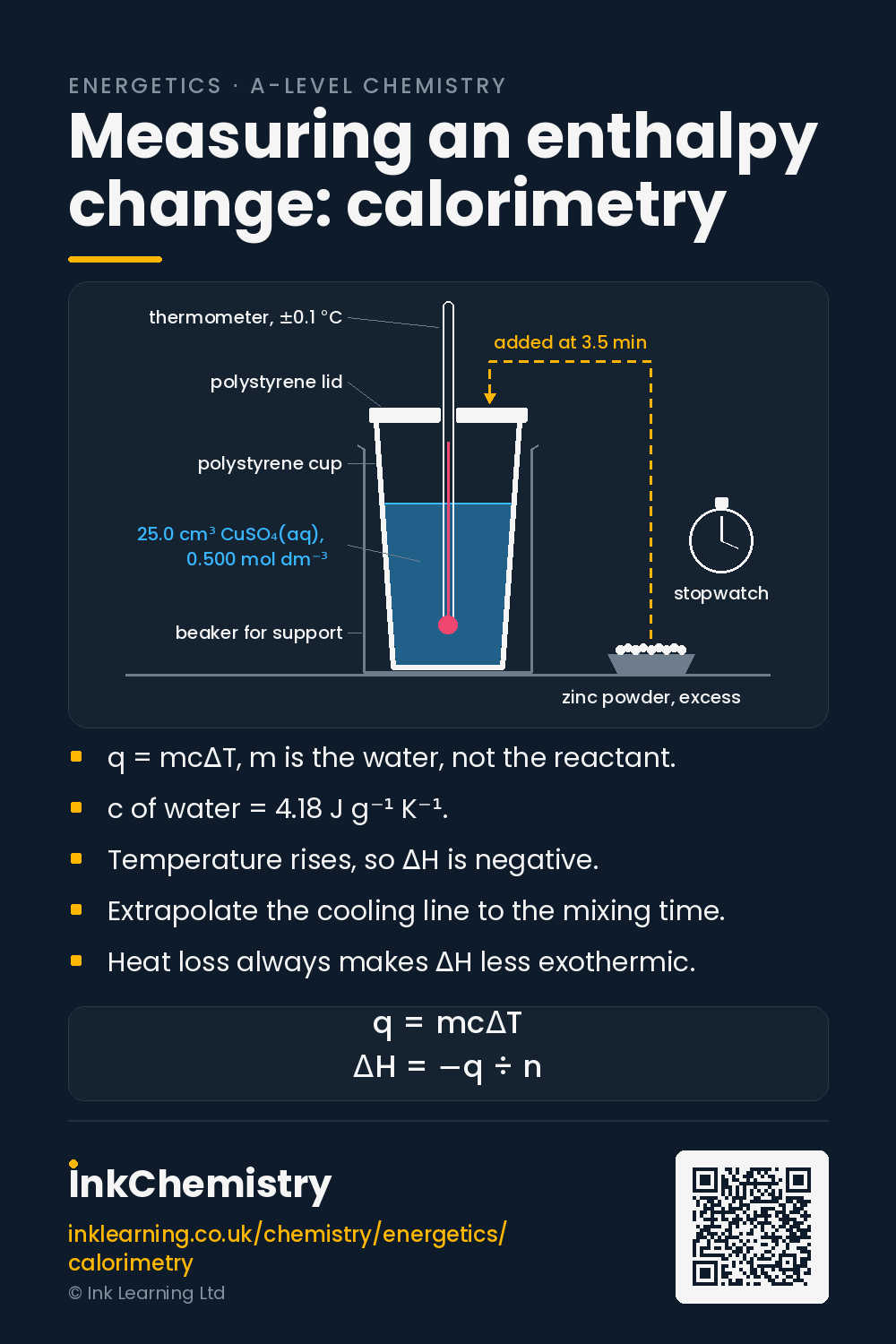
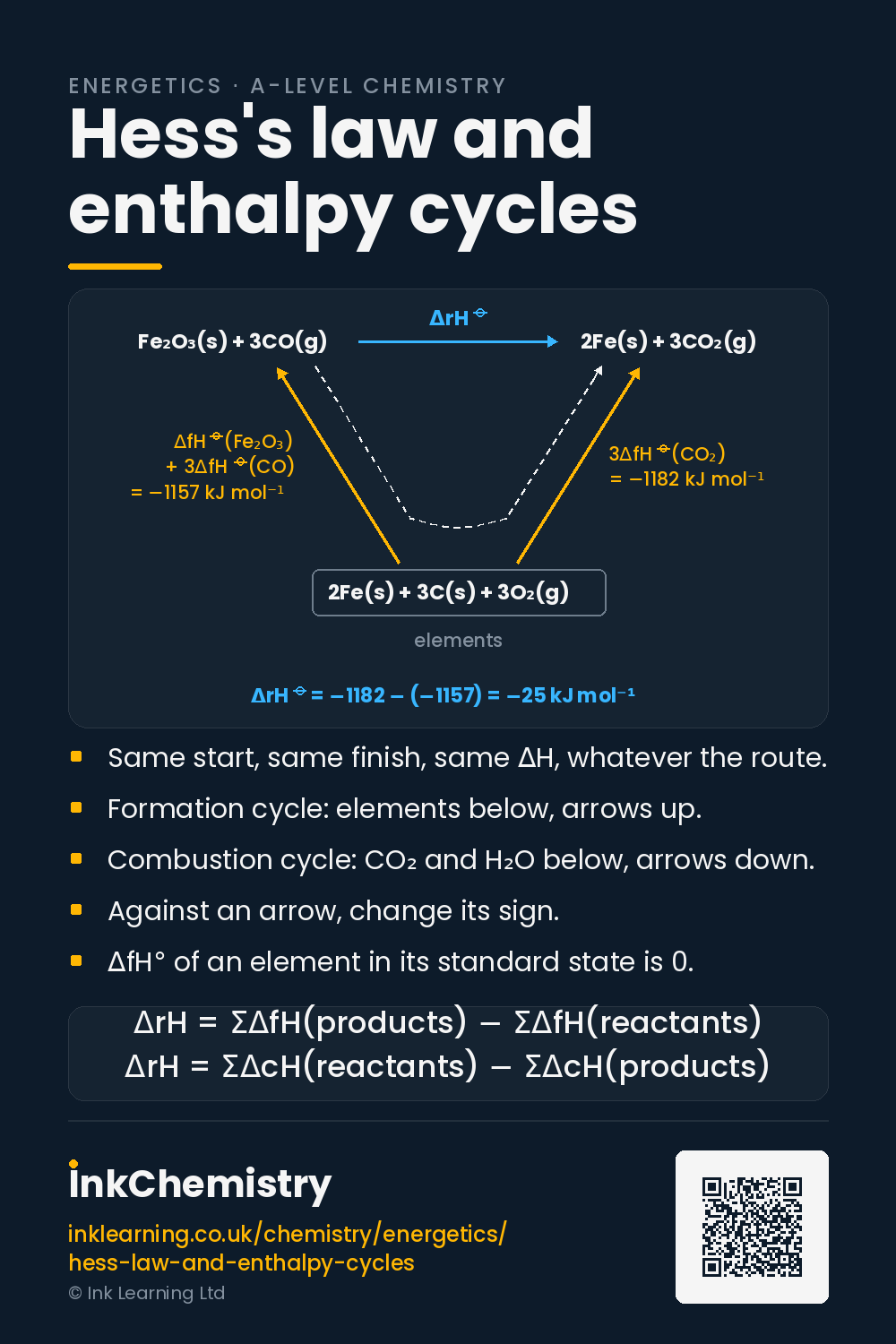
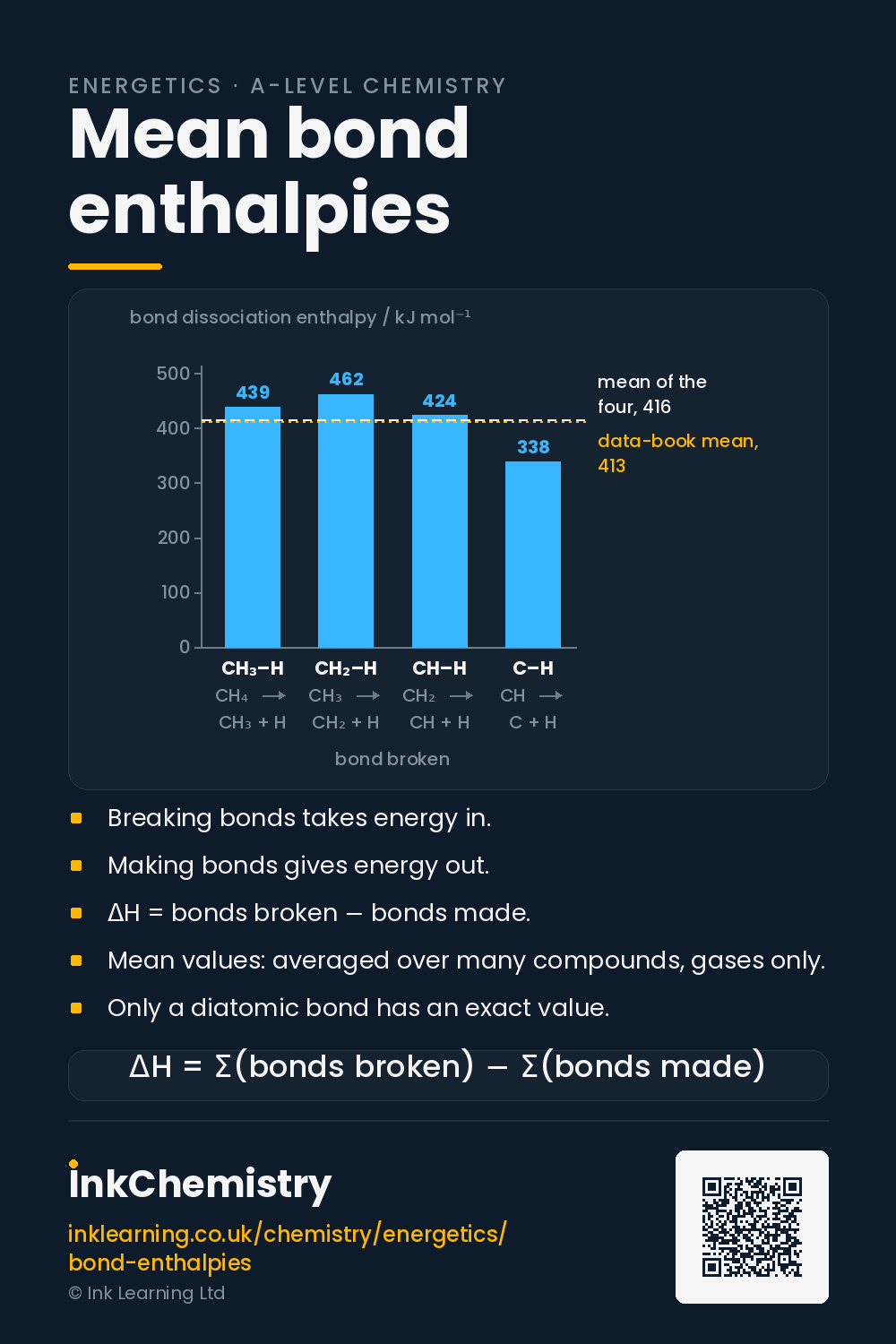
Energetics
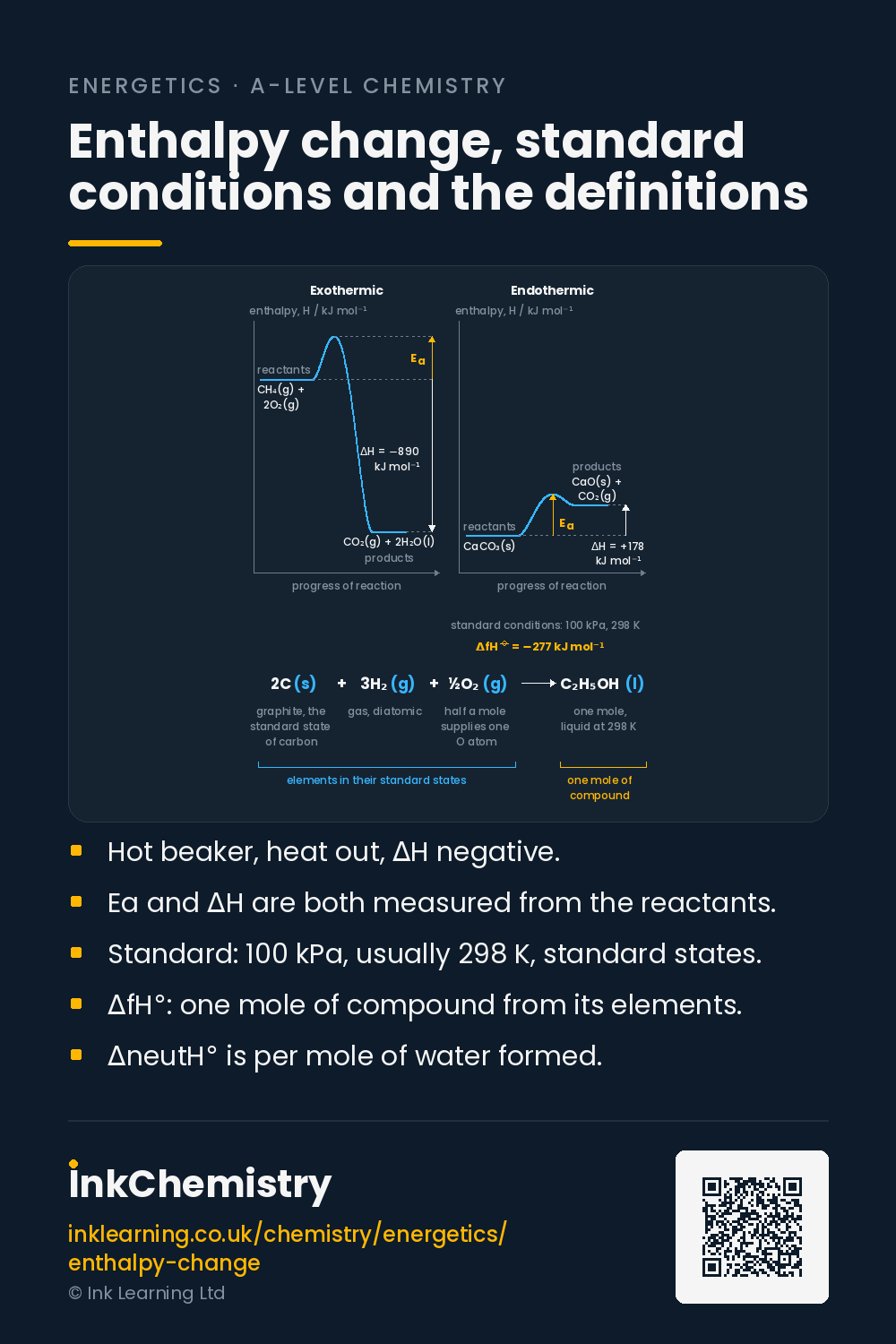
Kinetics
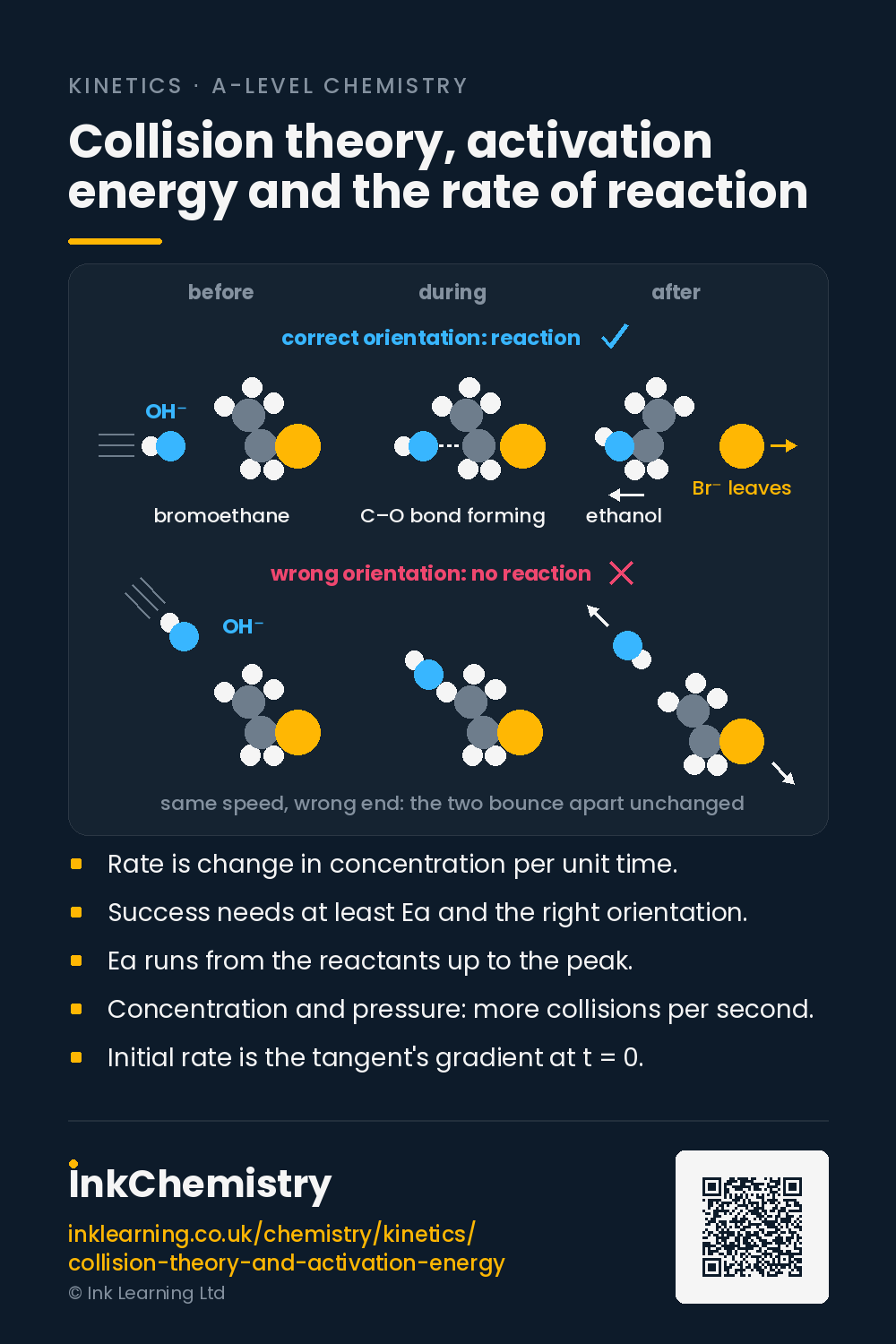
Chemical equilibria
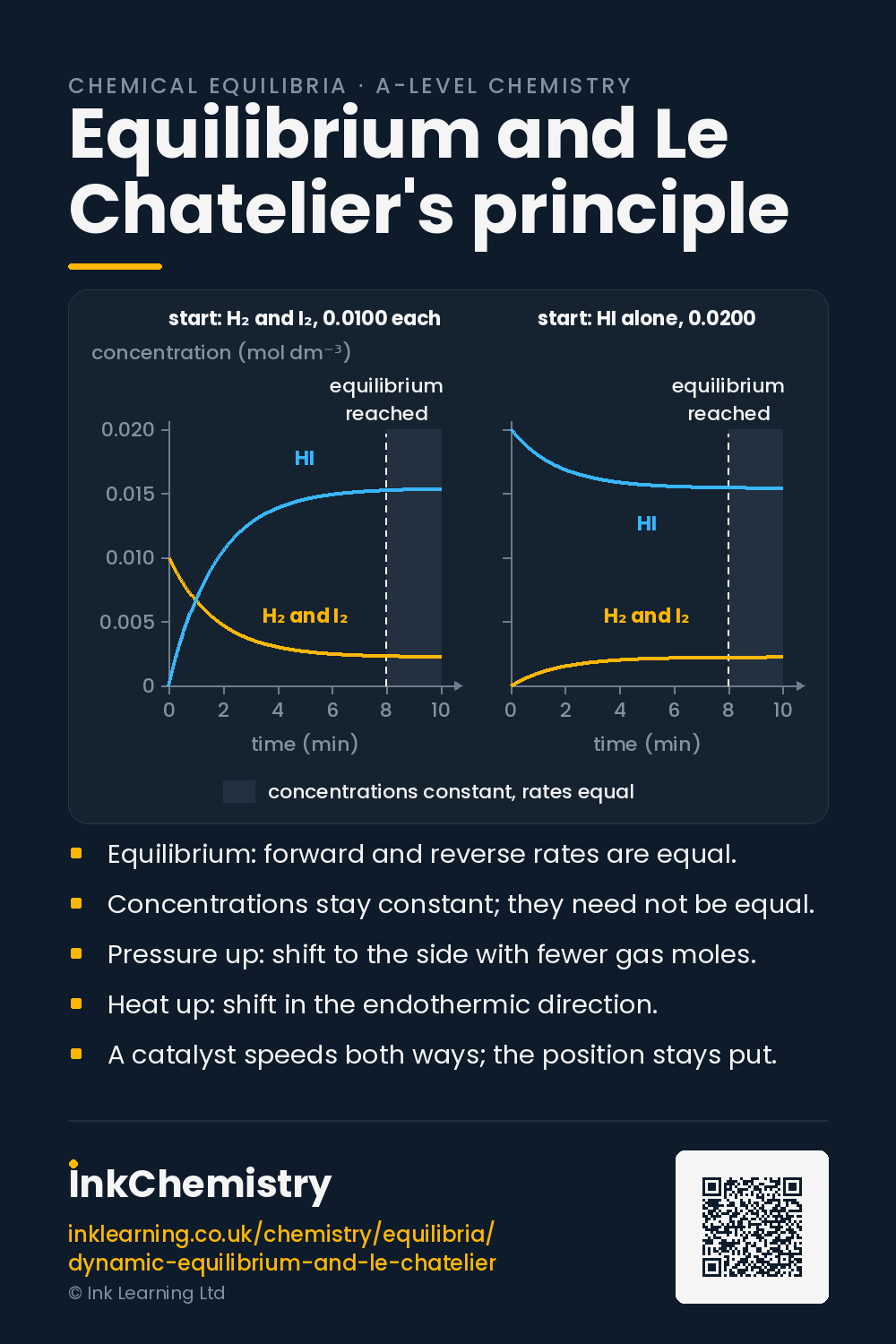
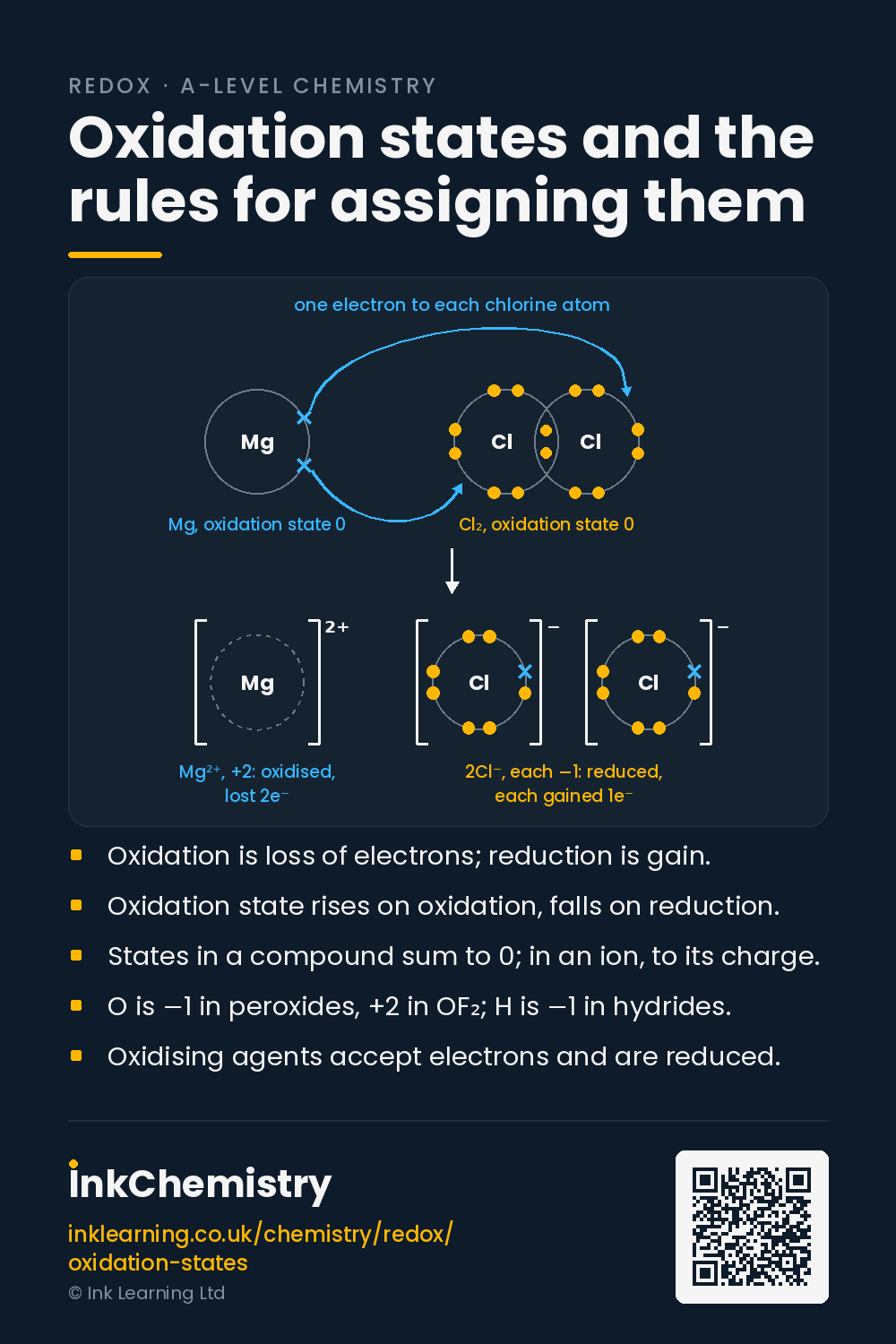
Redox
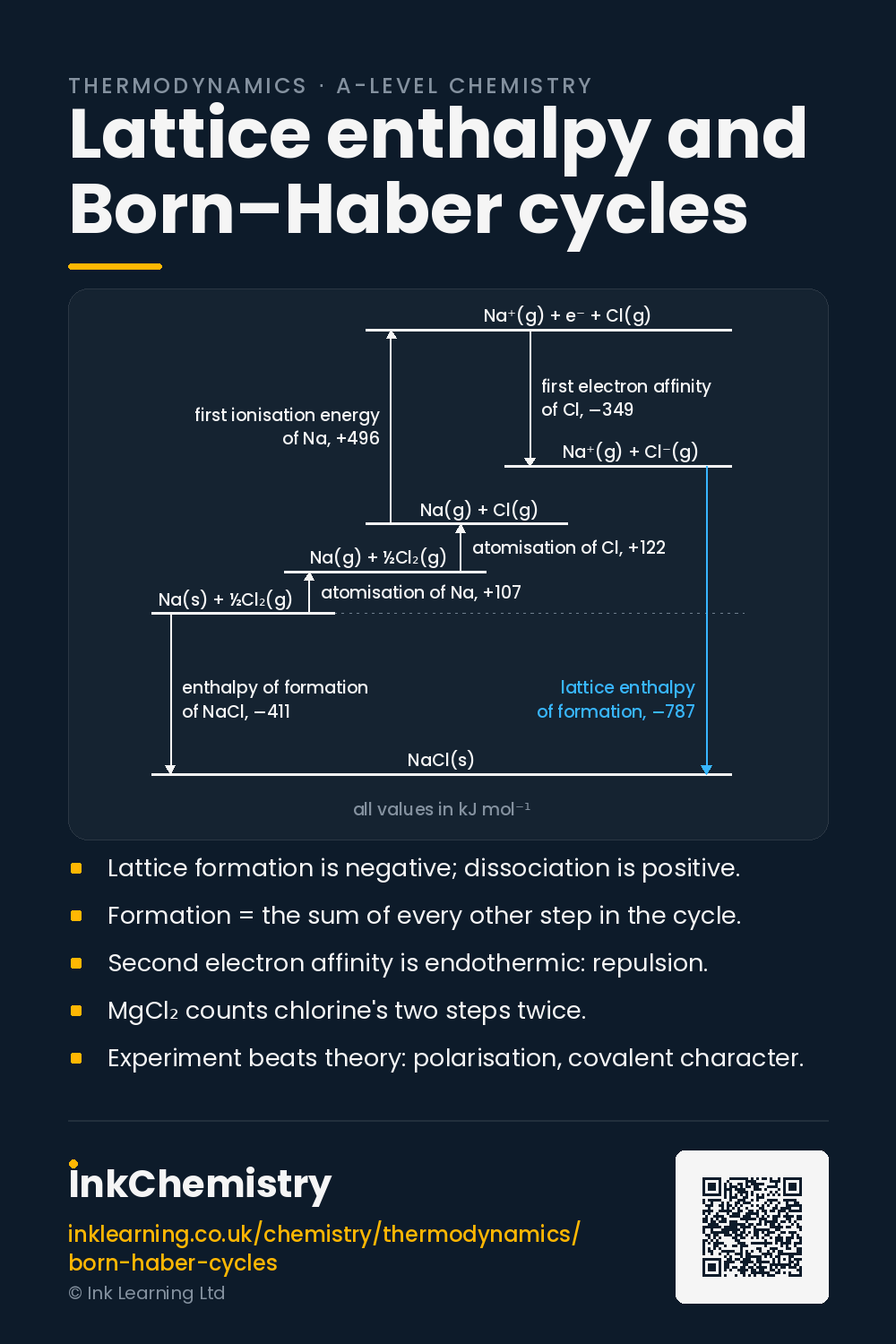
Thermodynamics
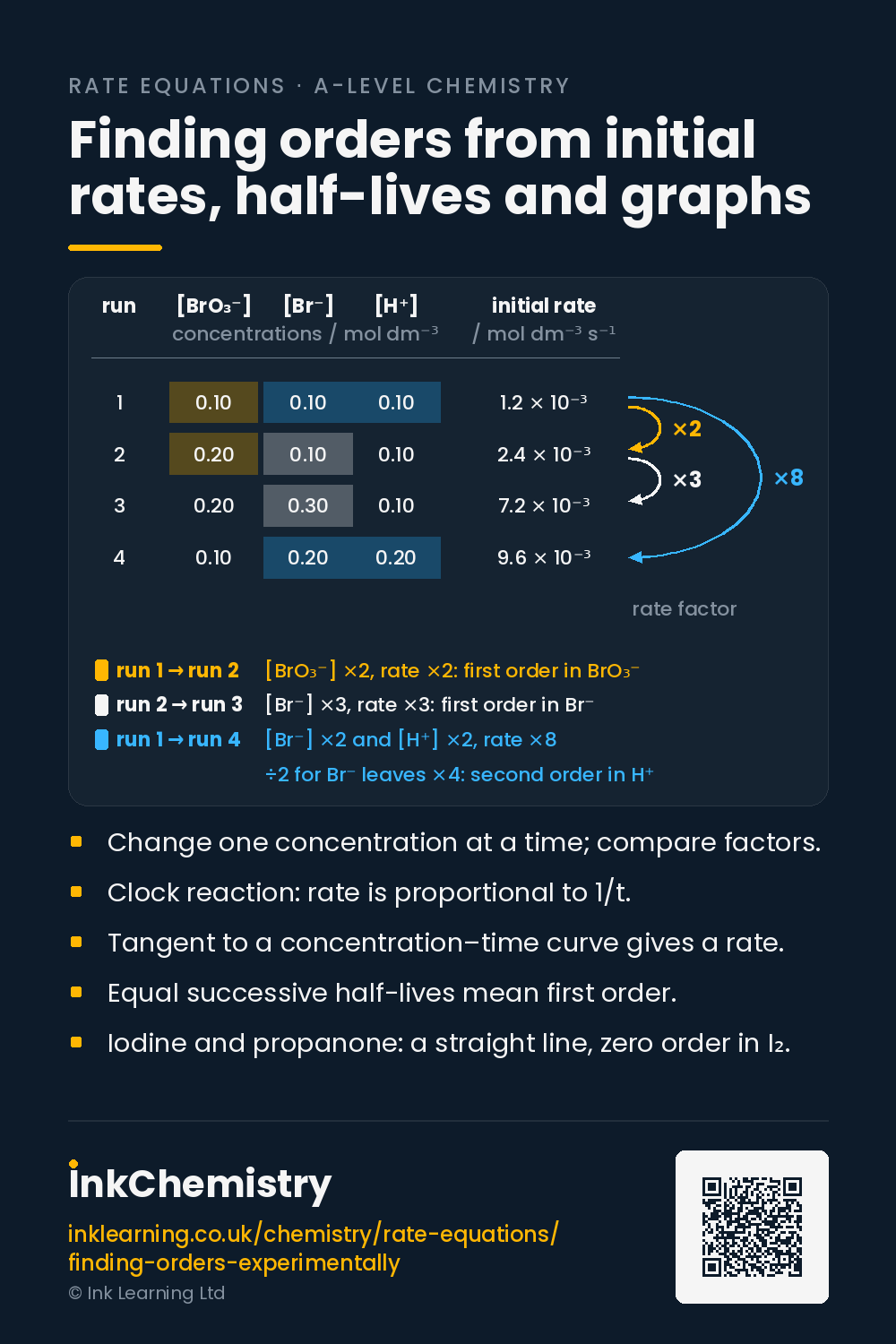
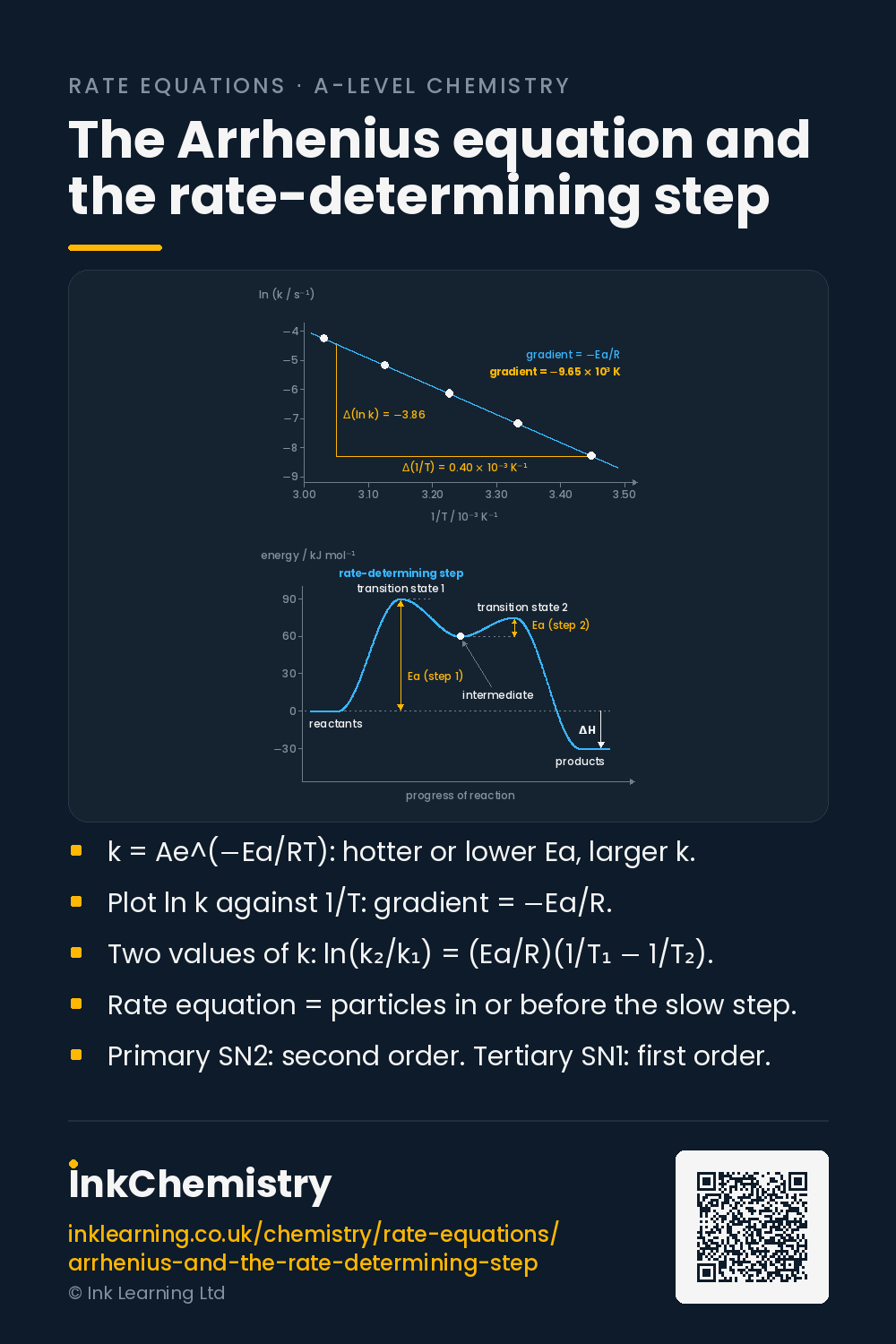
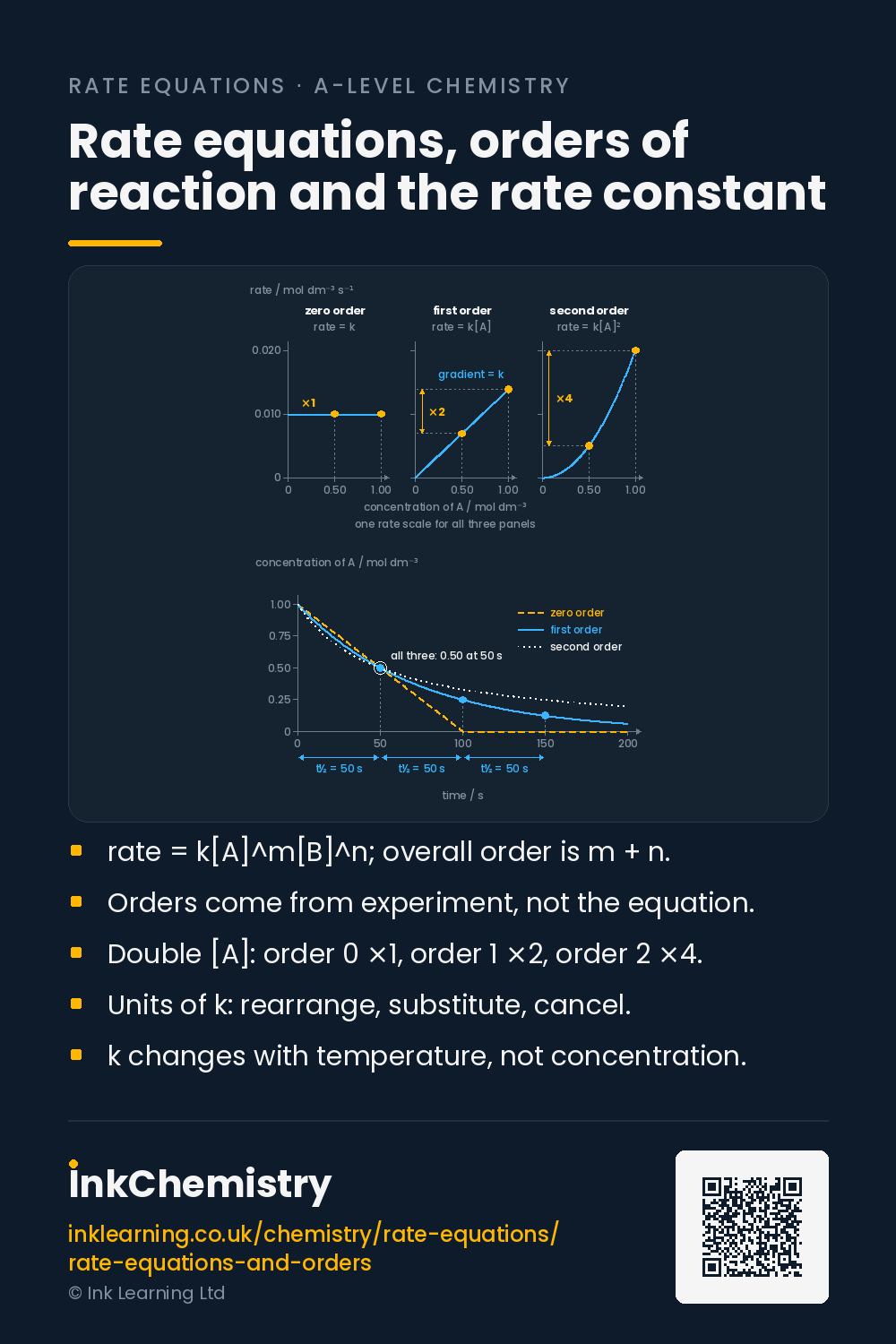
Rate equations
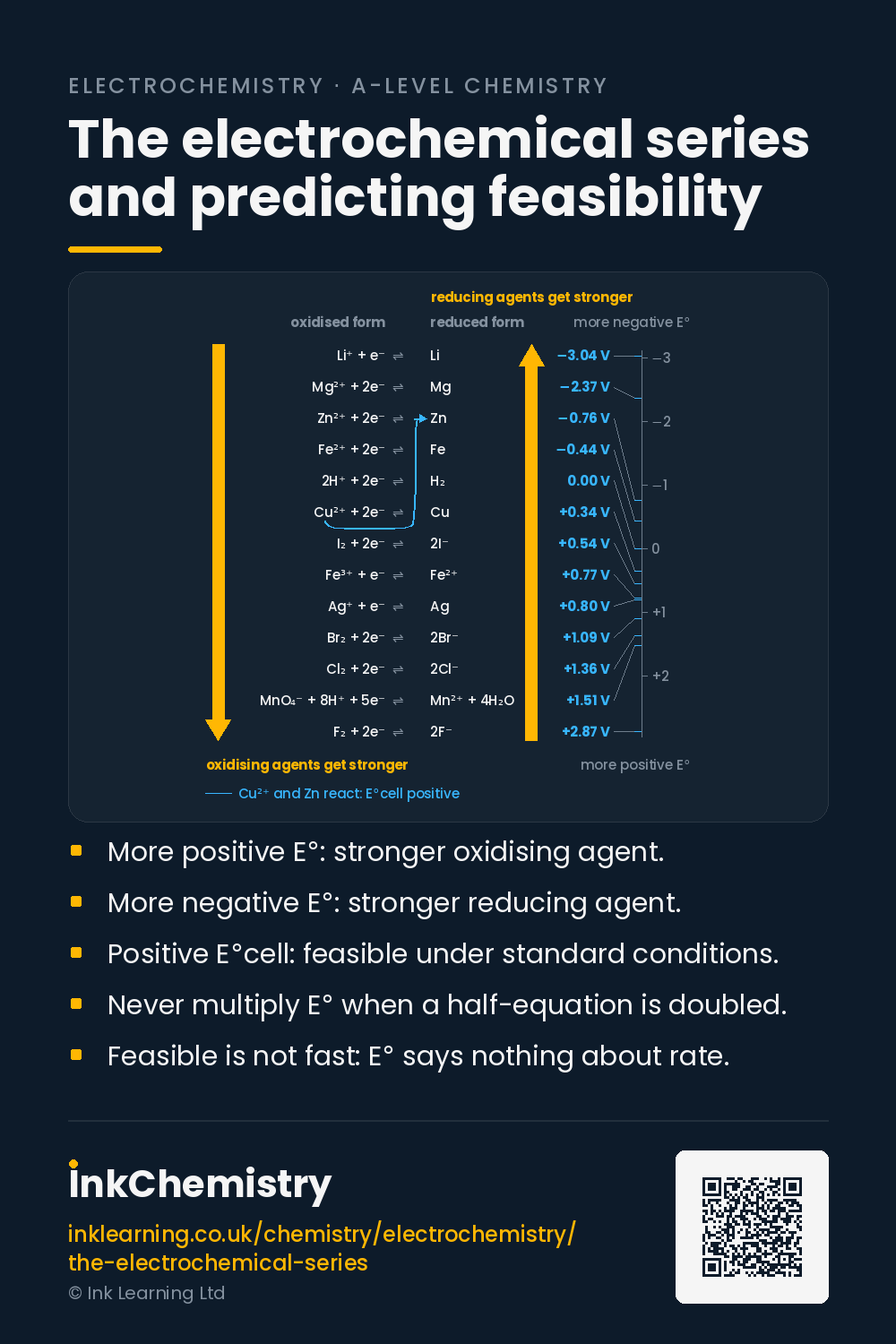
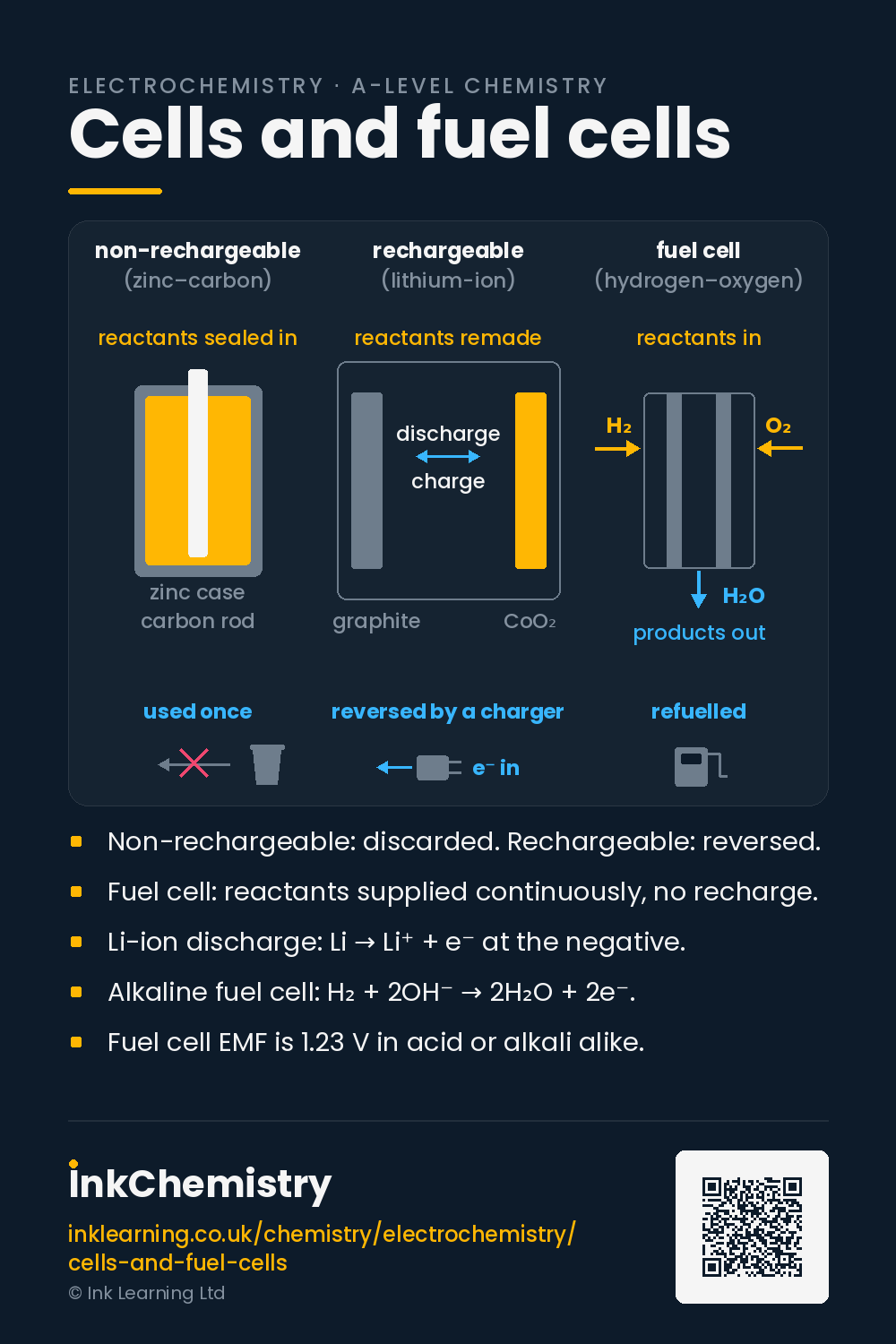
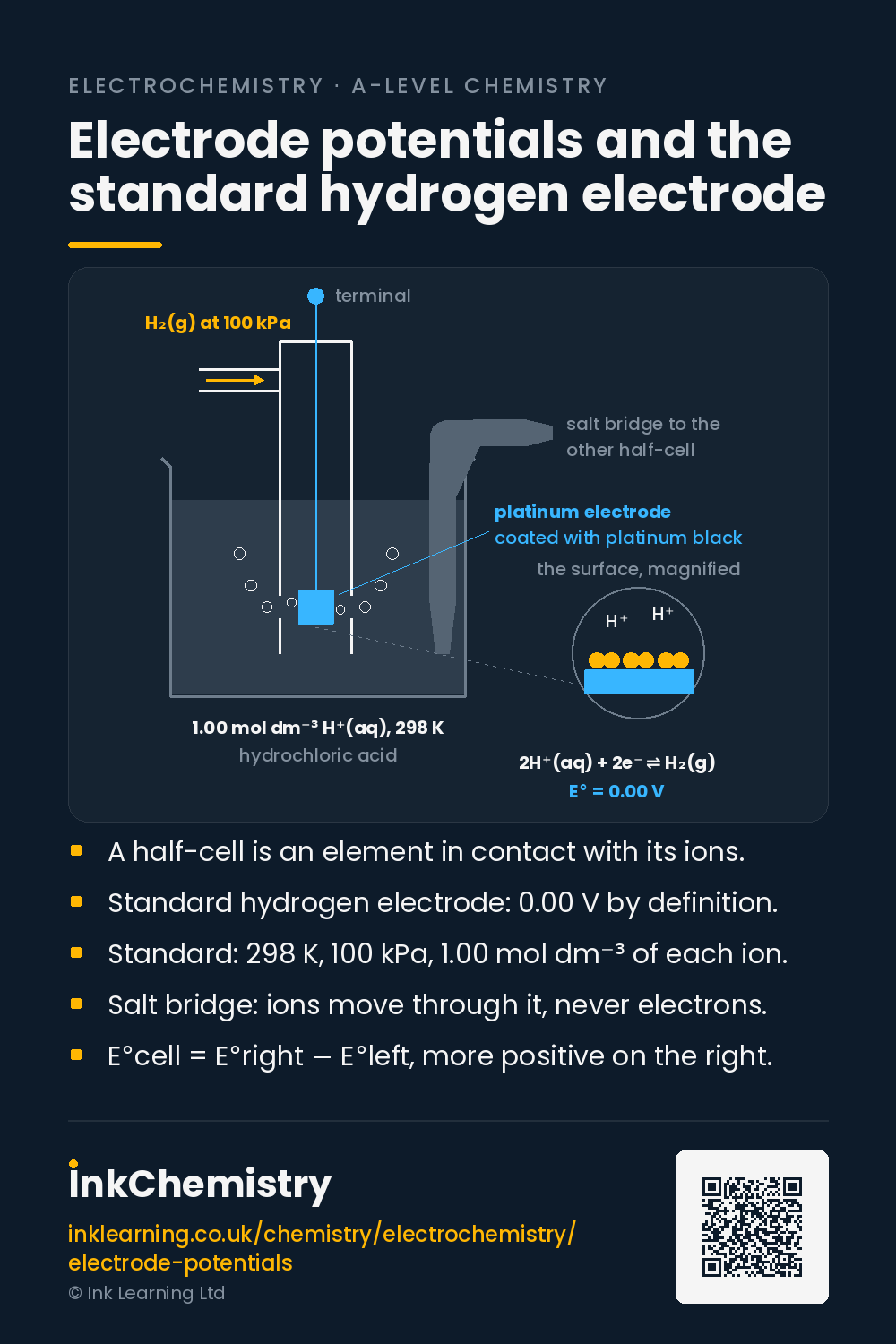
Electrochemistry
Acids and bases
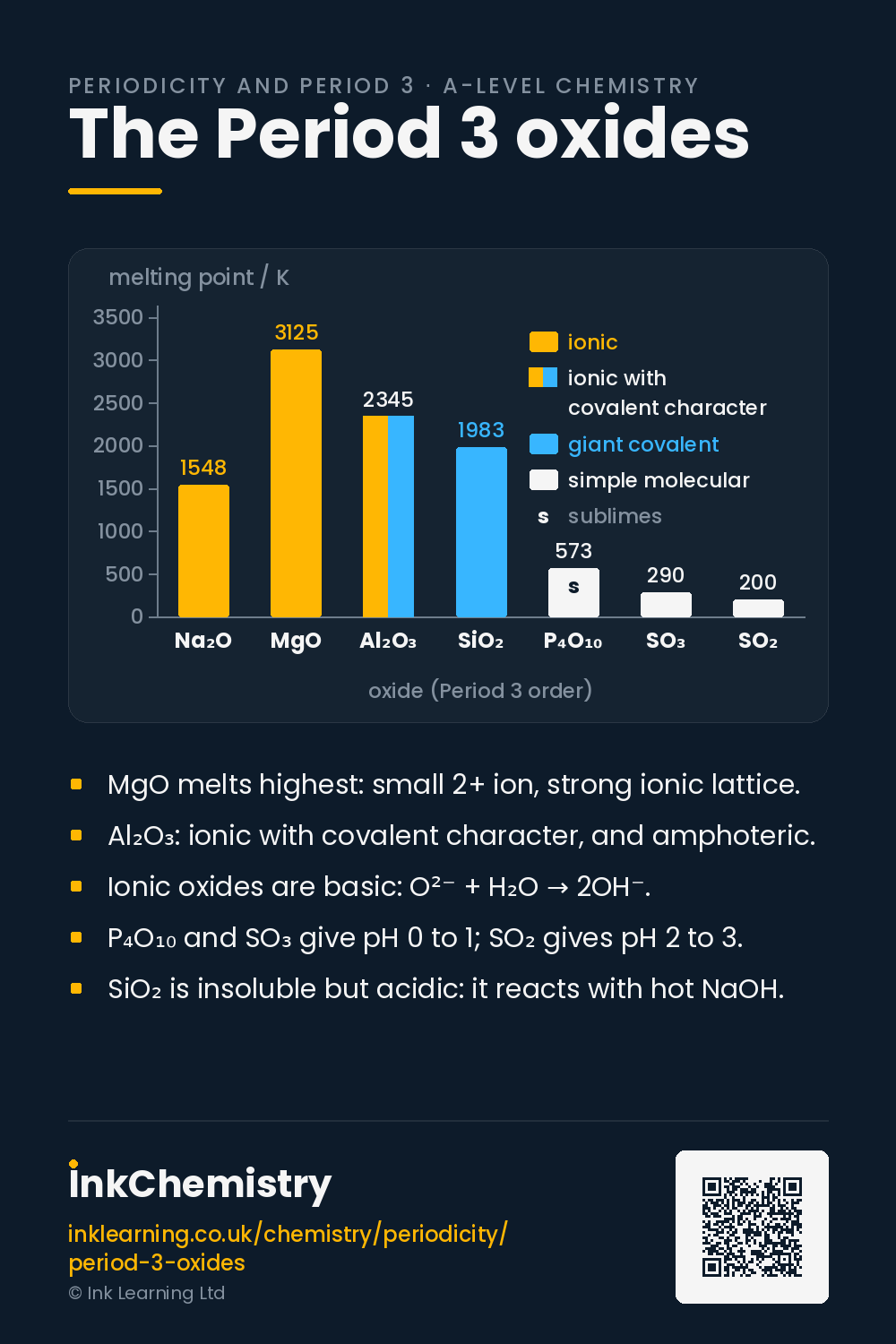
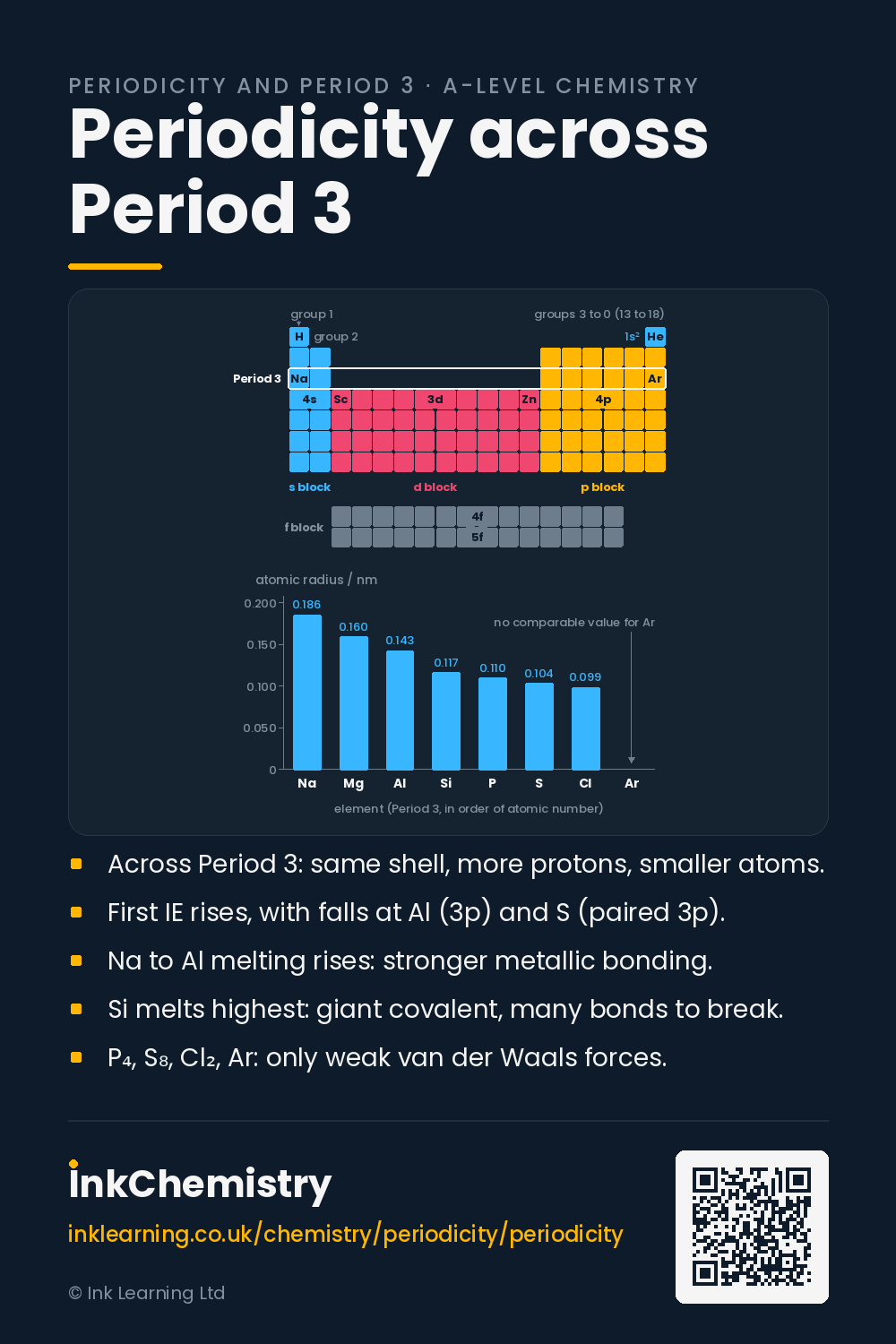
Periodicity and Period 3
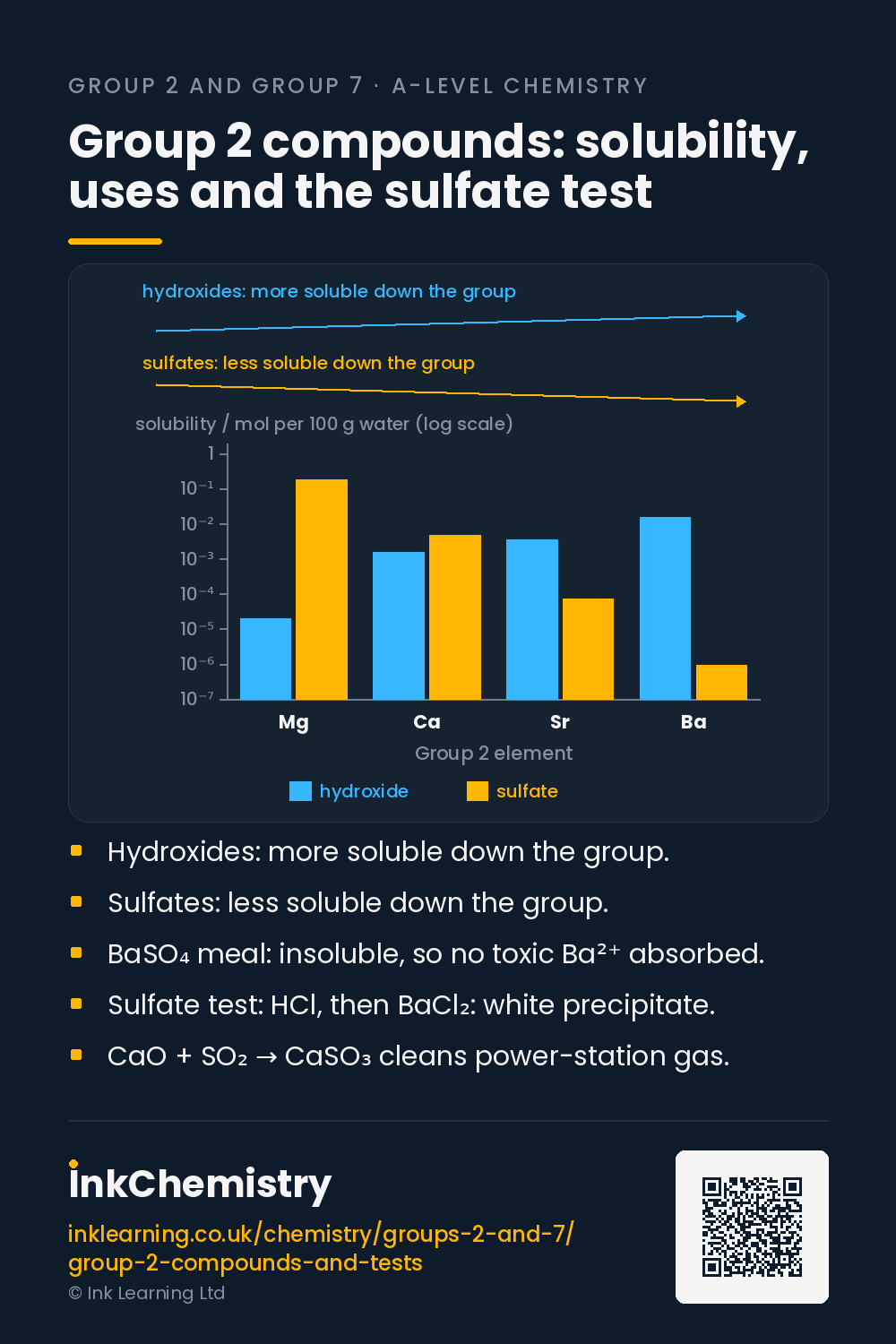
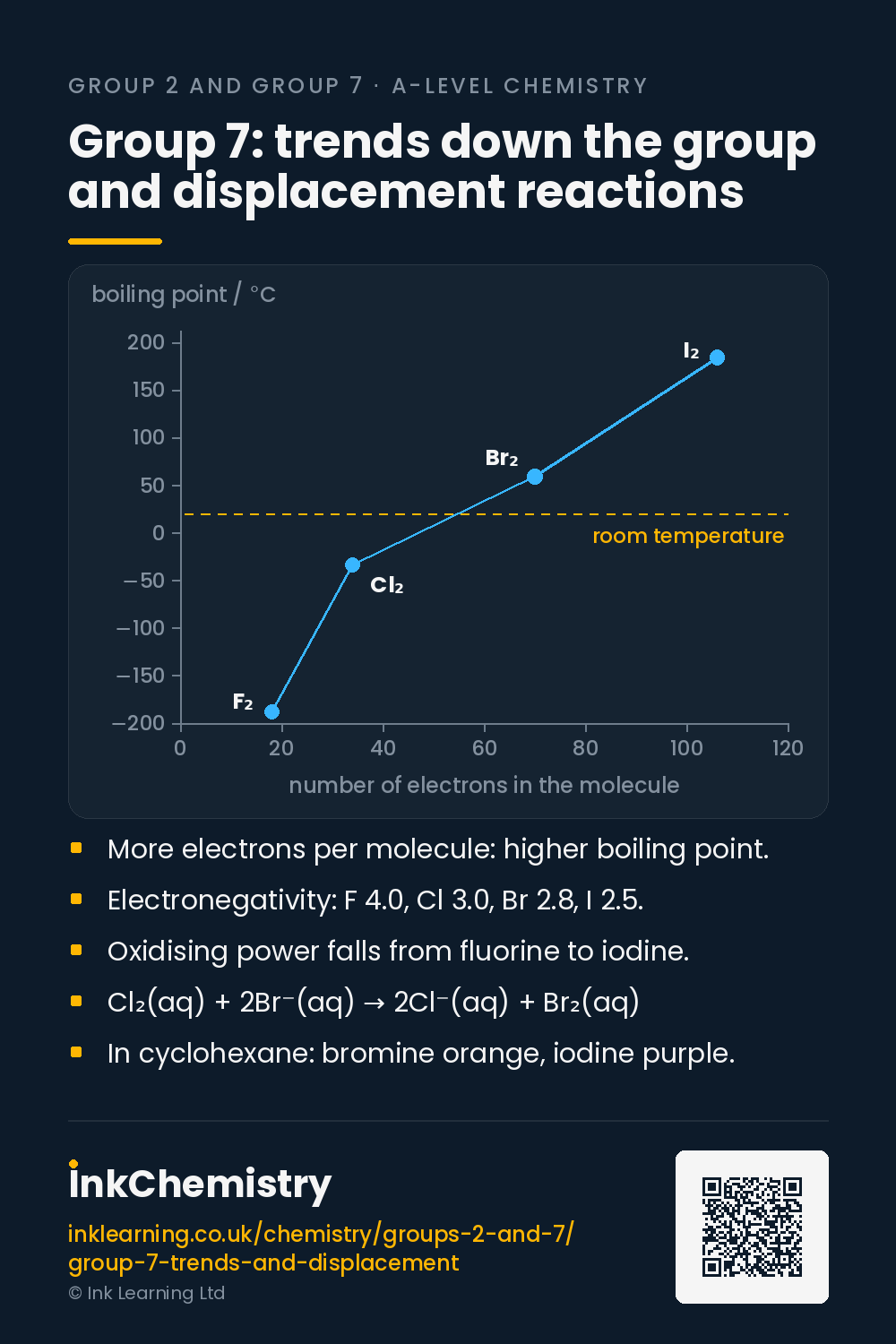
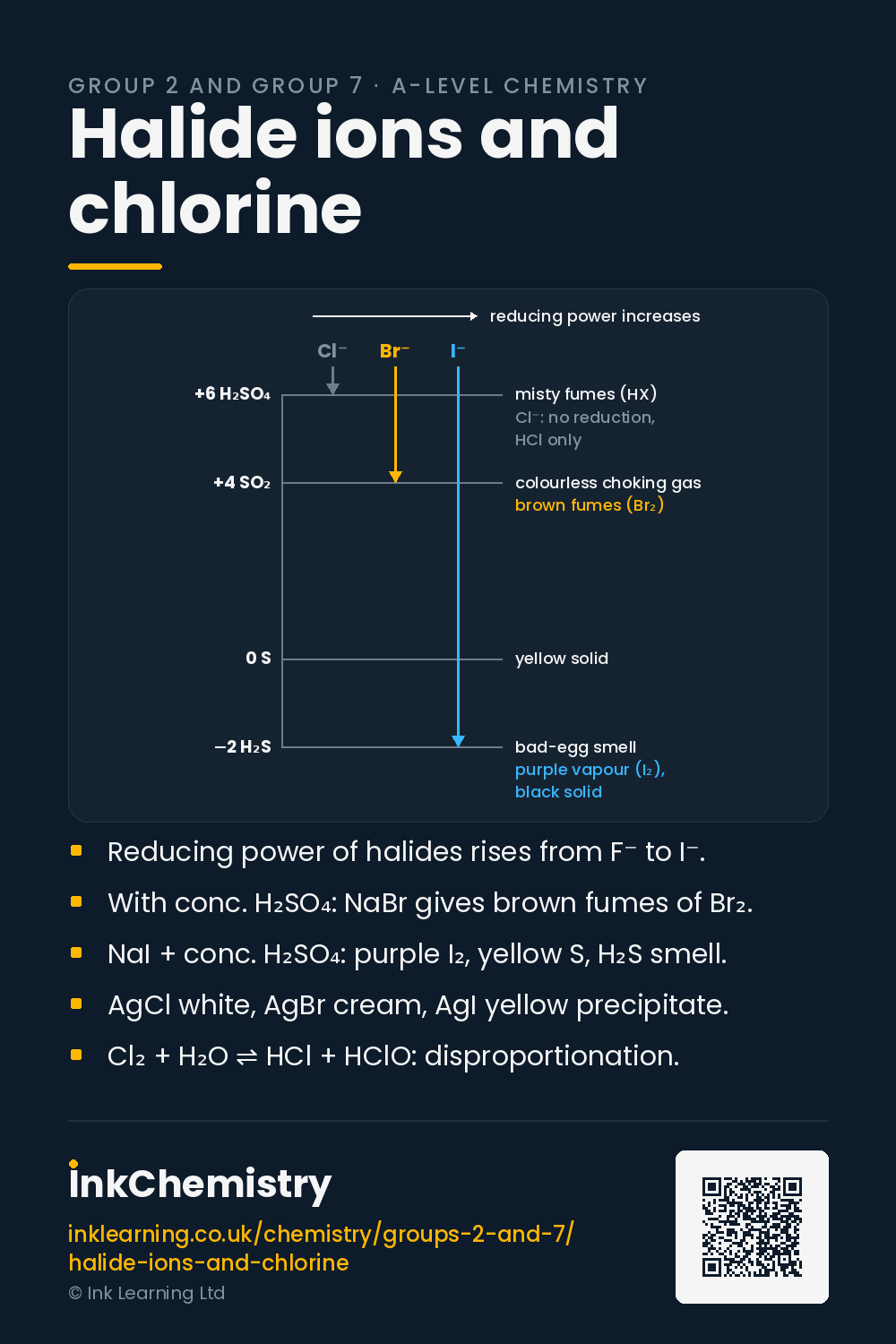
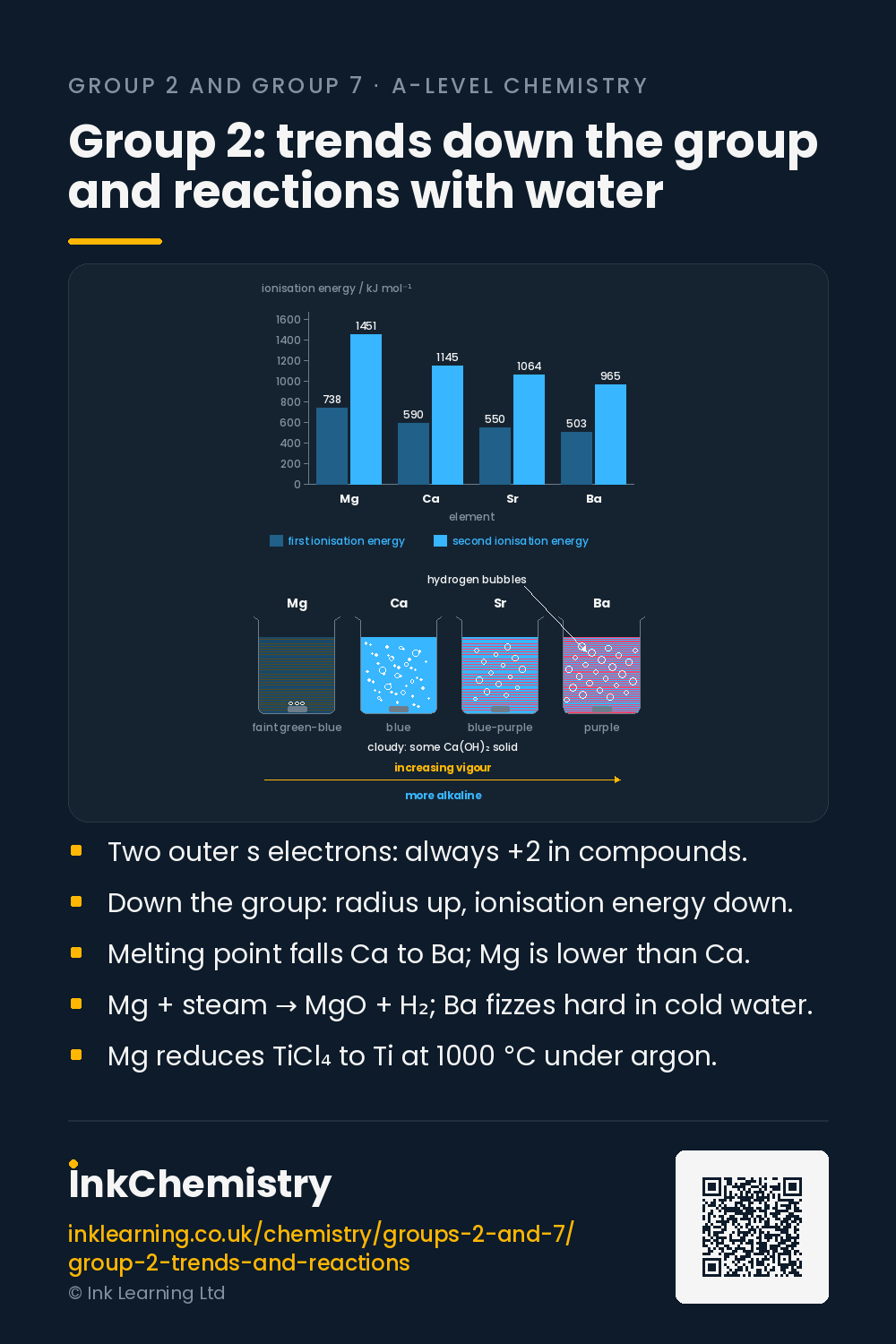
Group 2 and Group 7
Transition metals
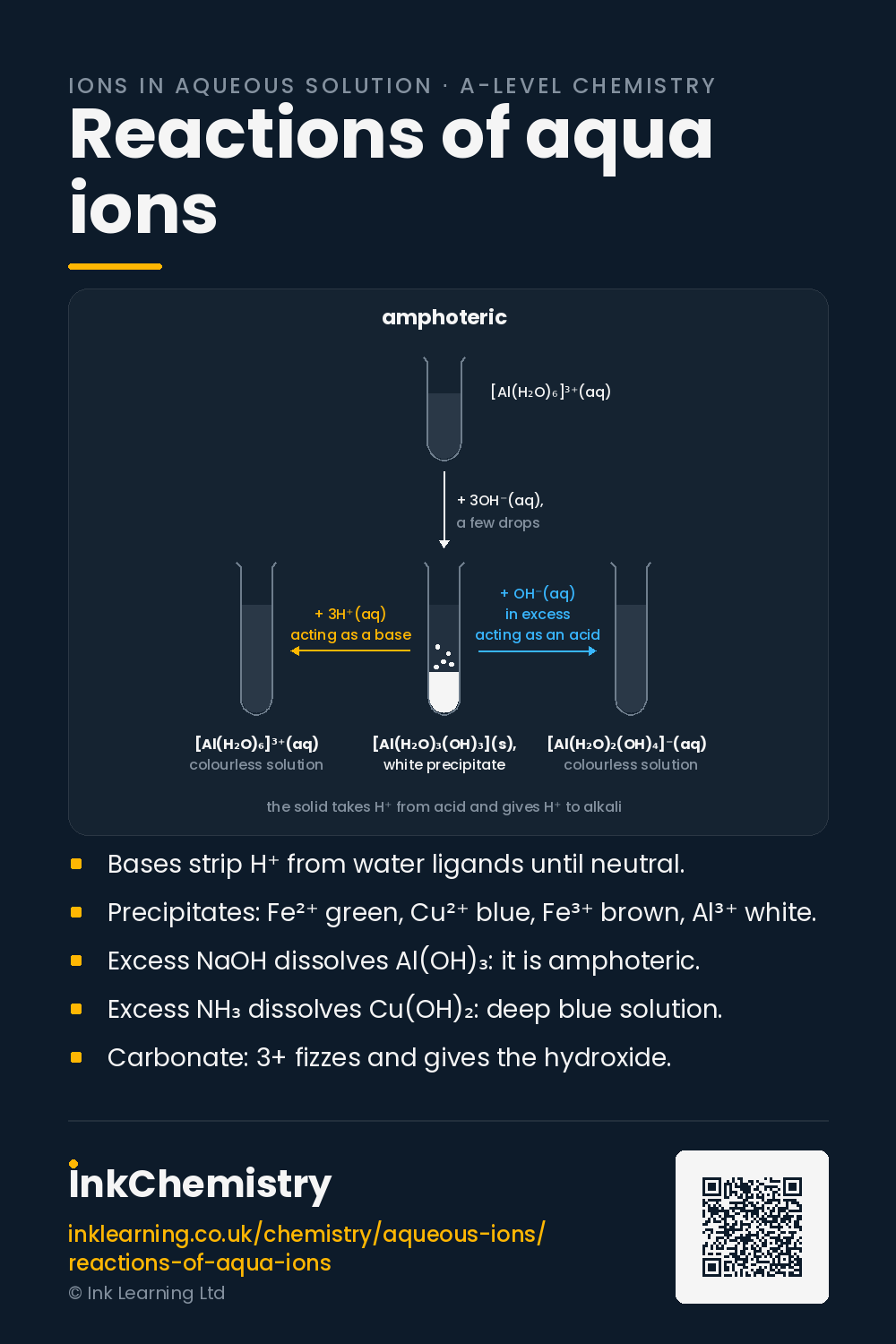
Ions in aqueous solution
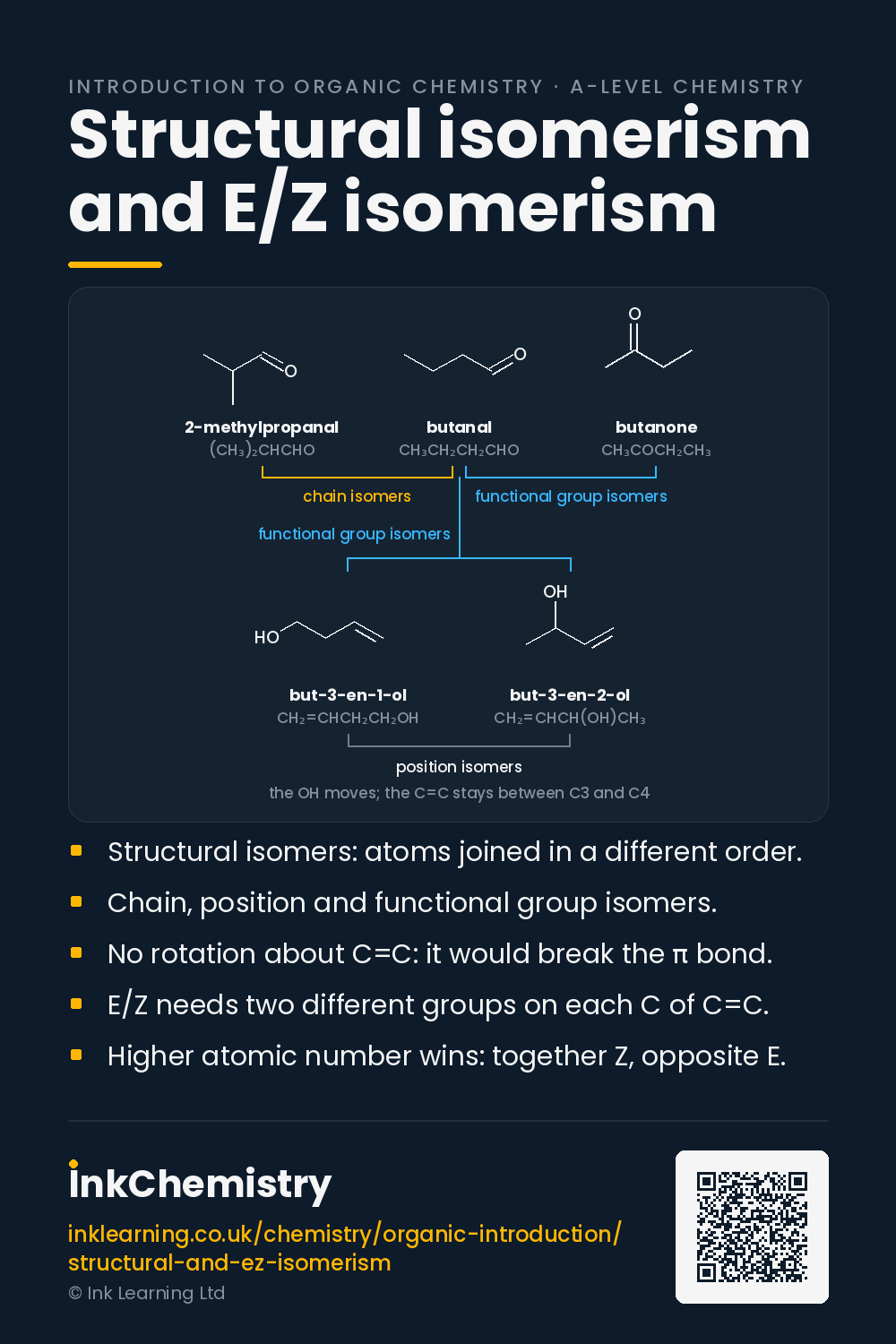
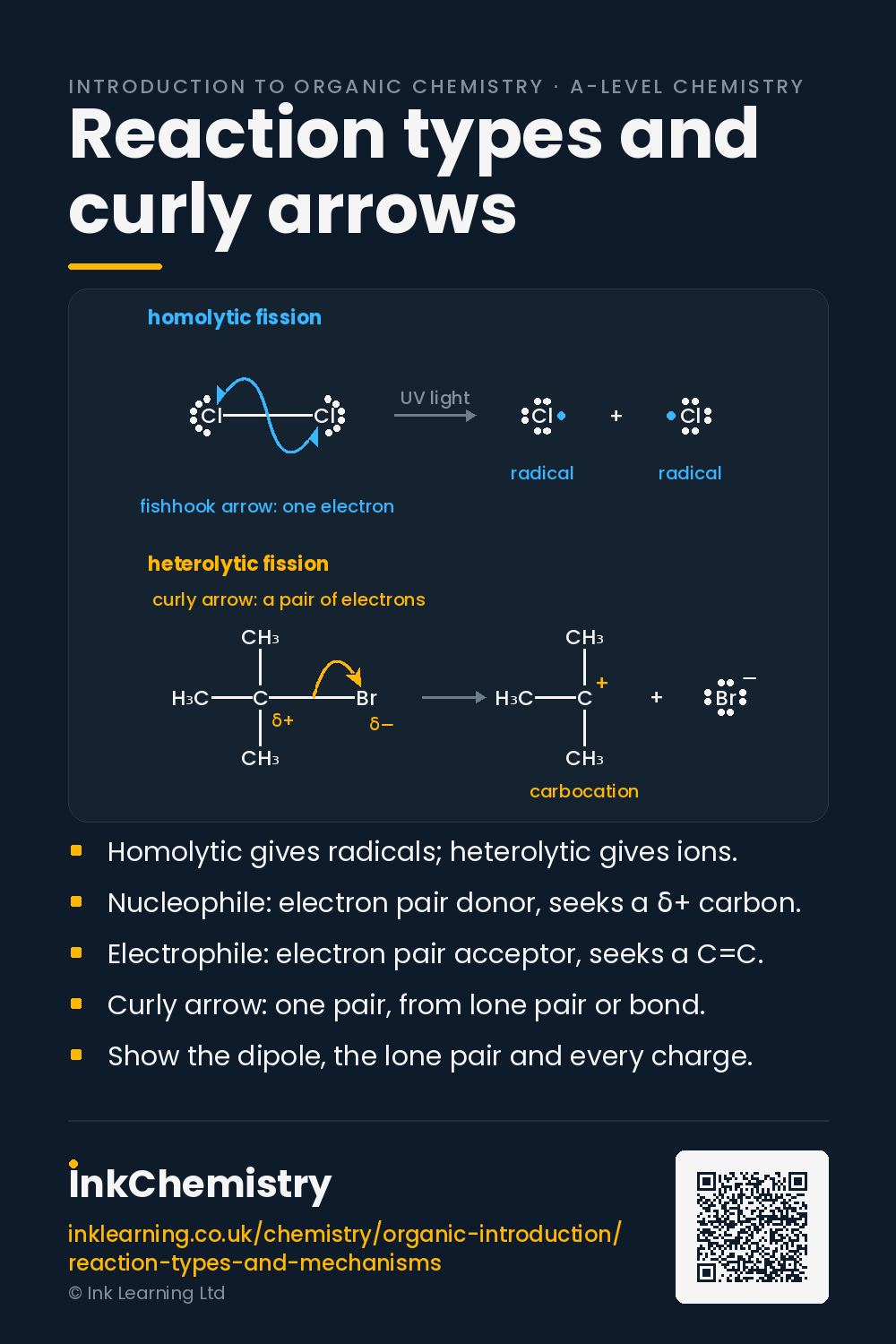
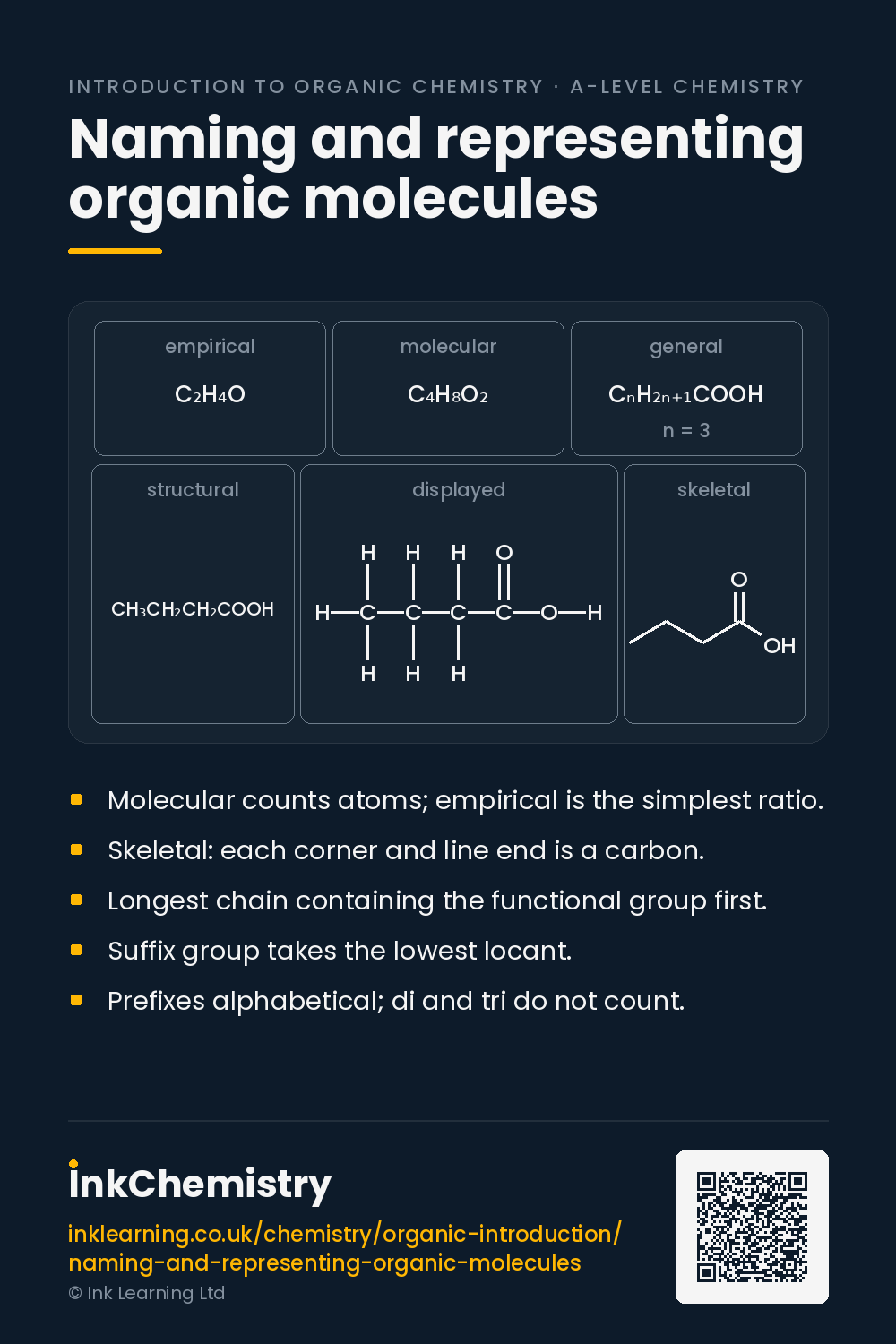
Introduction to organic chemistry
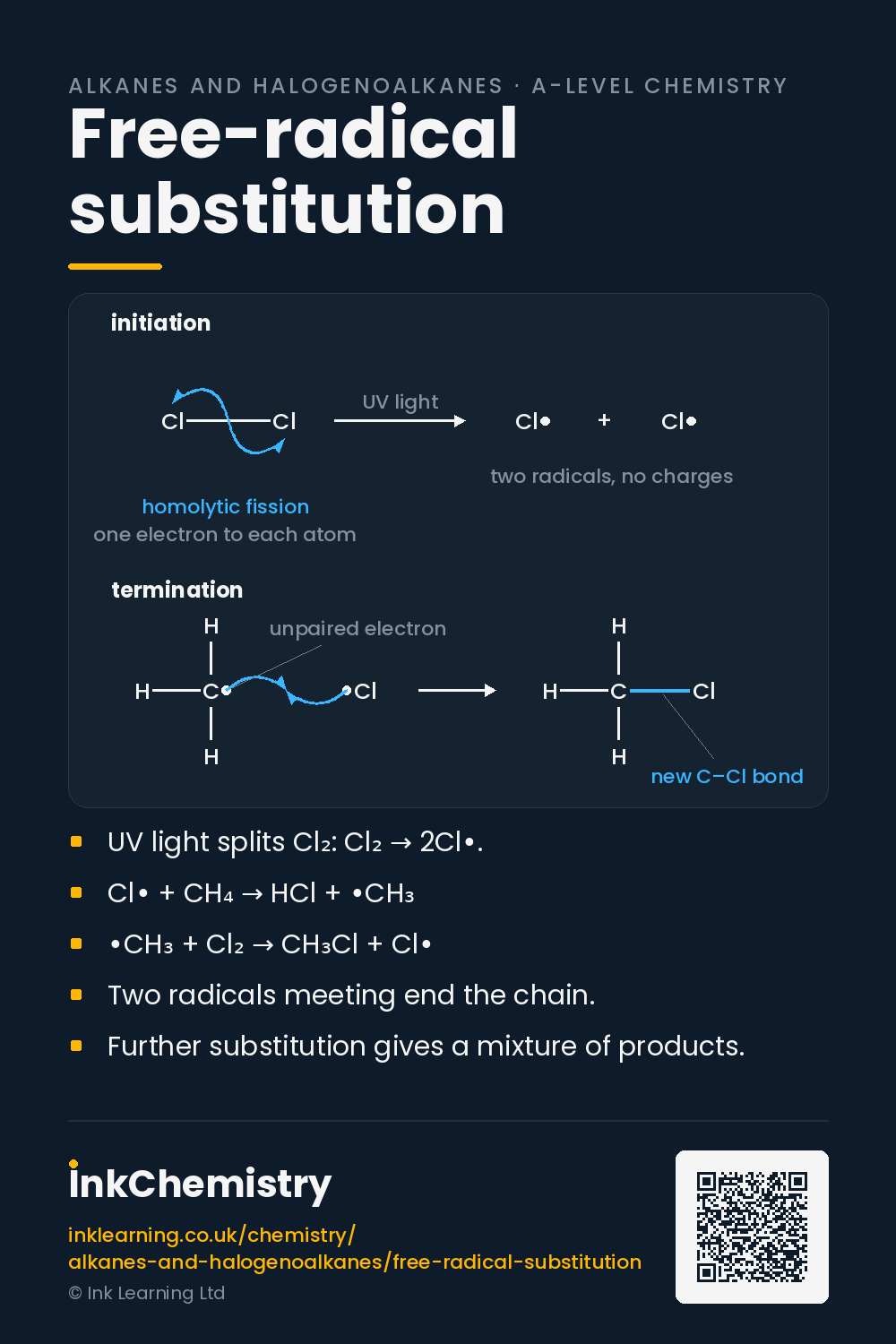
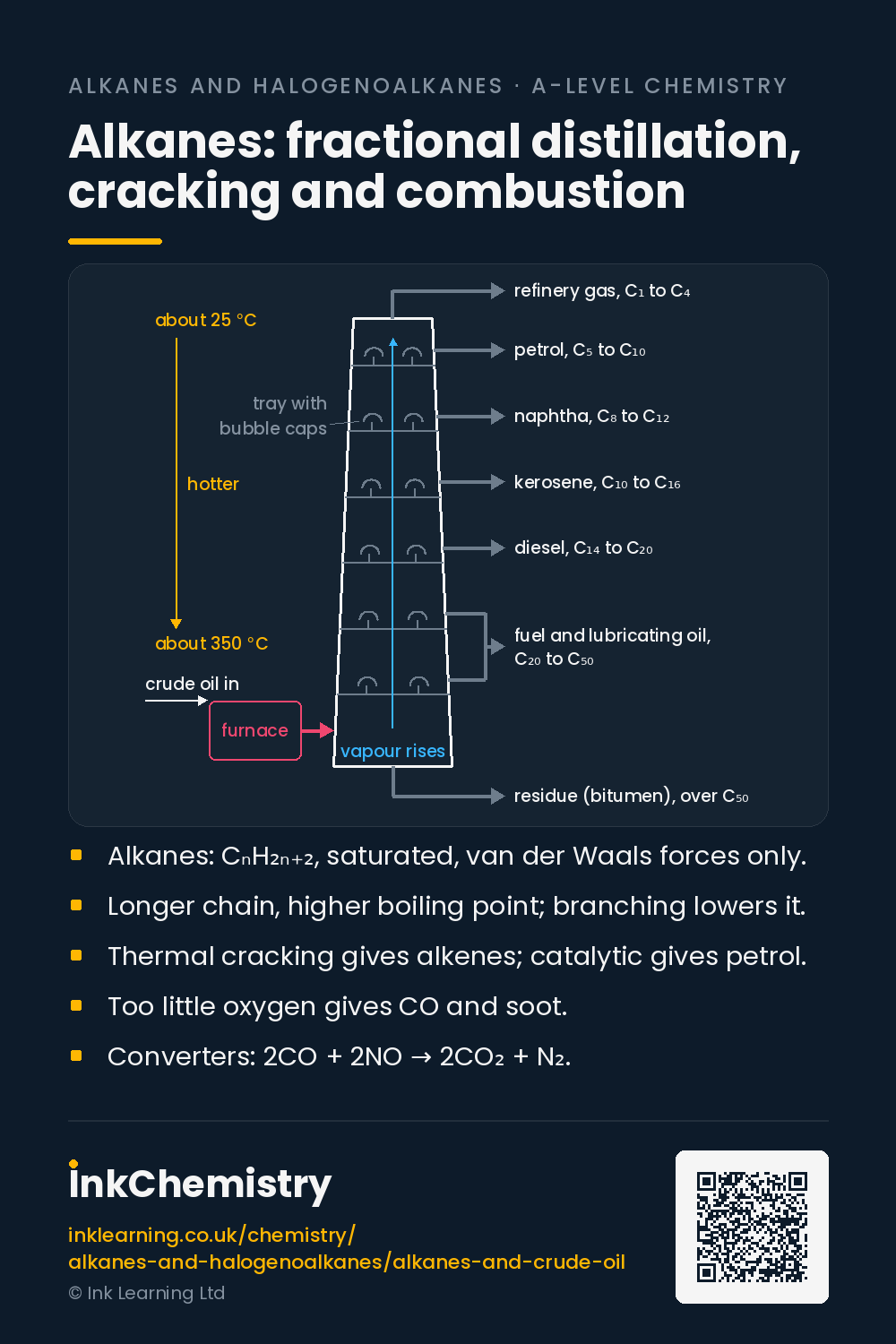
Alkanes and halogenoalkanes
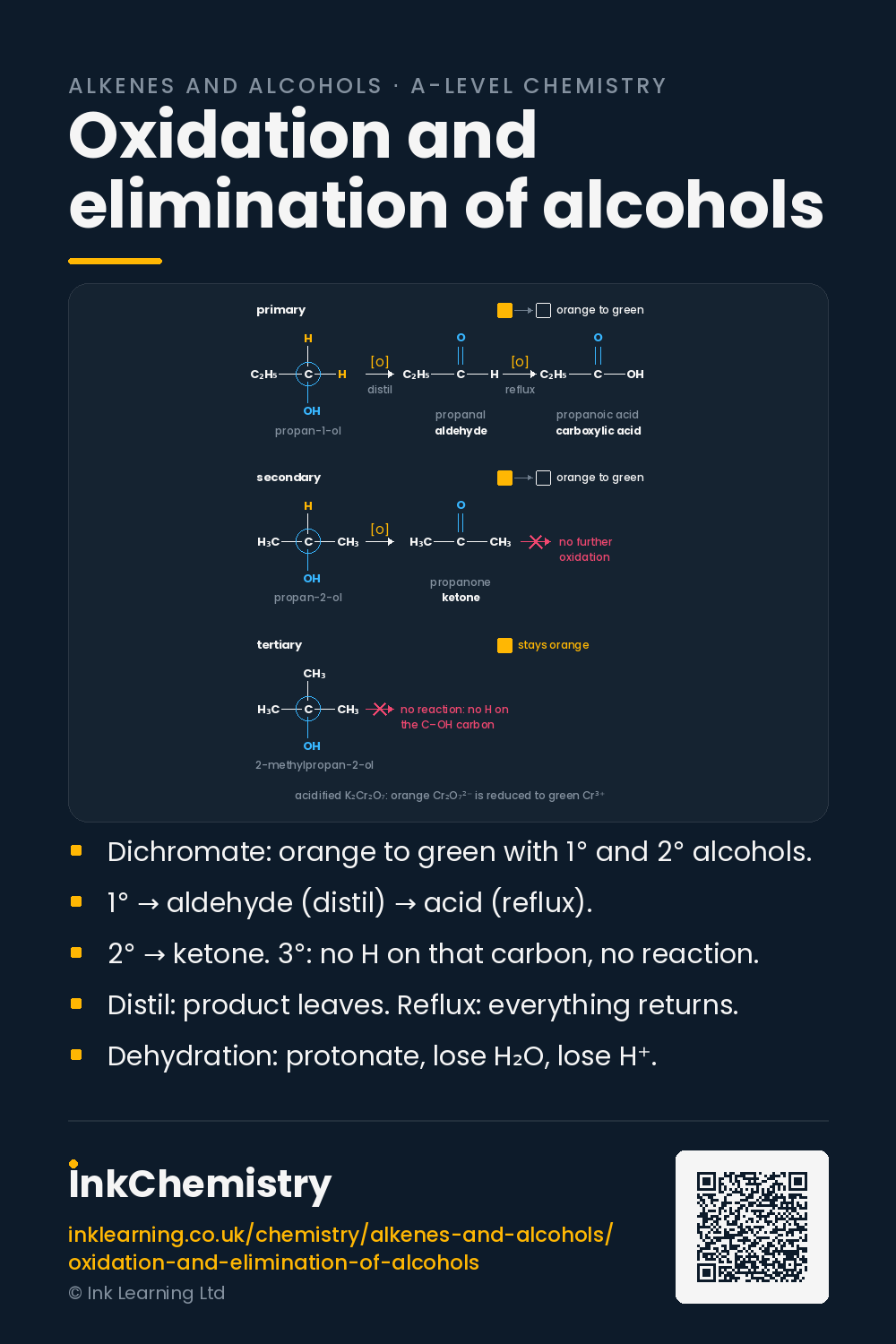
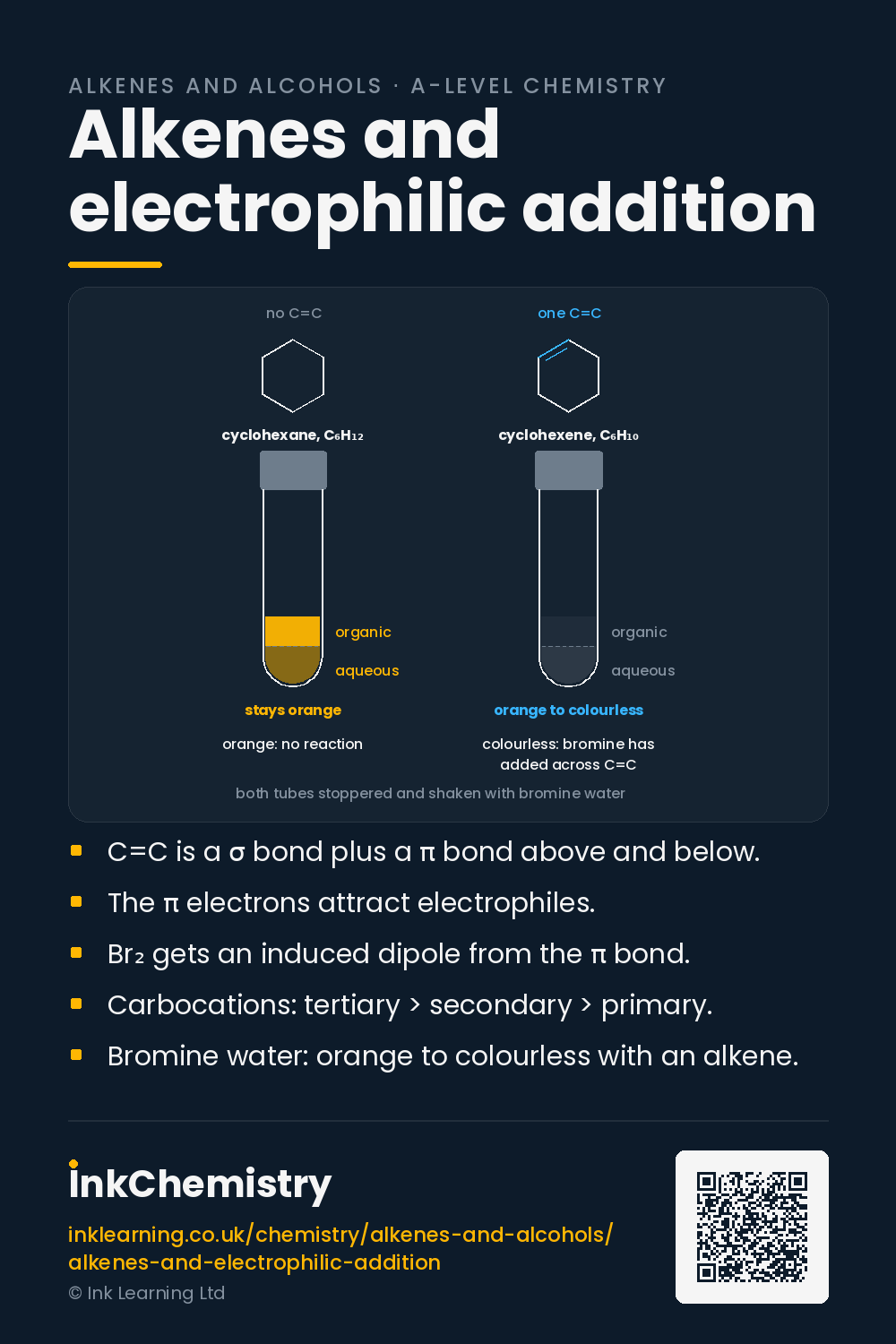
Alkenes and alcohols
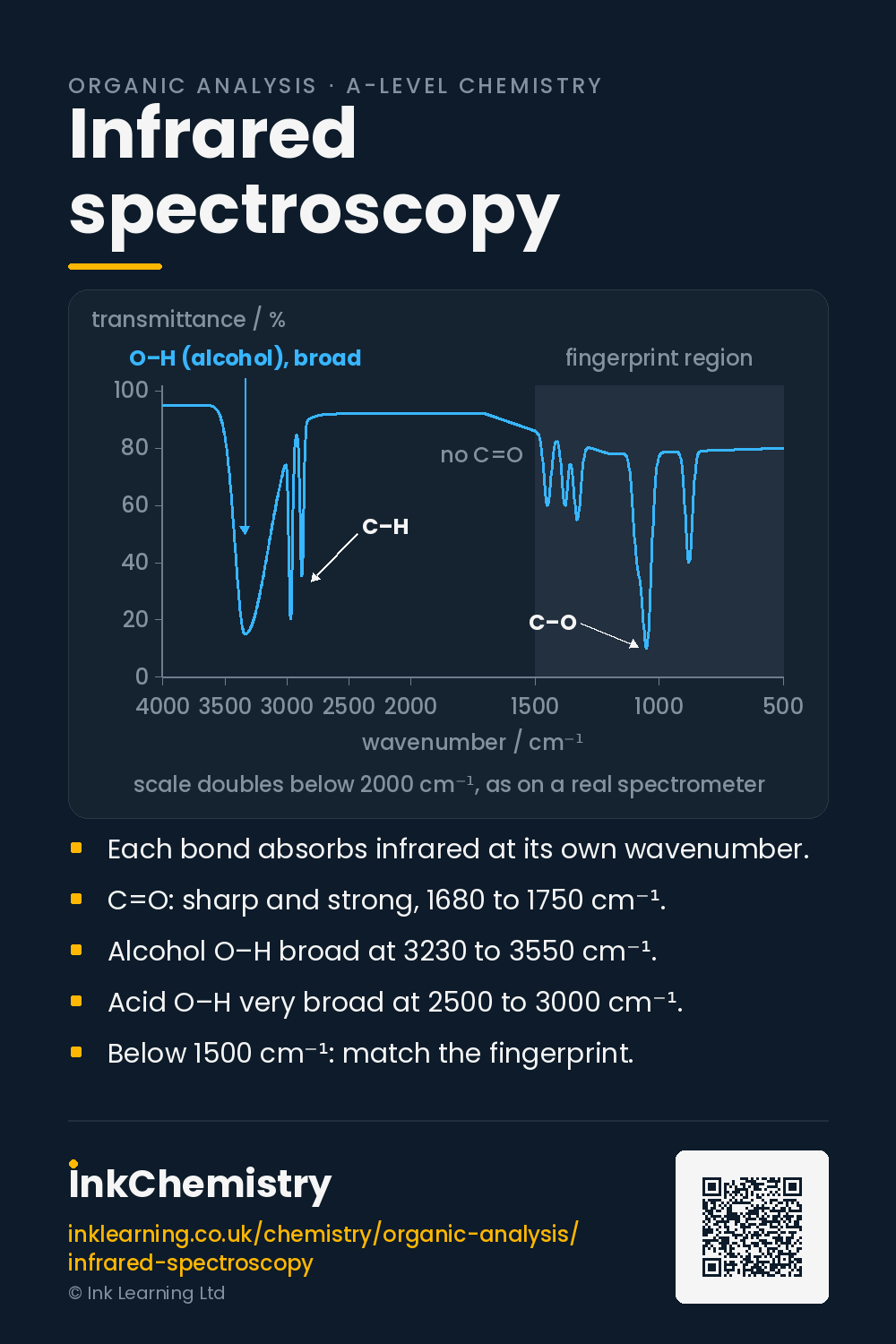
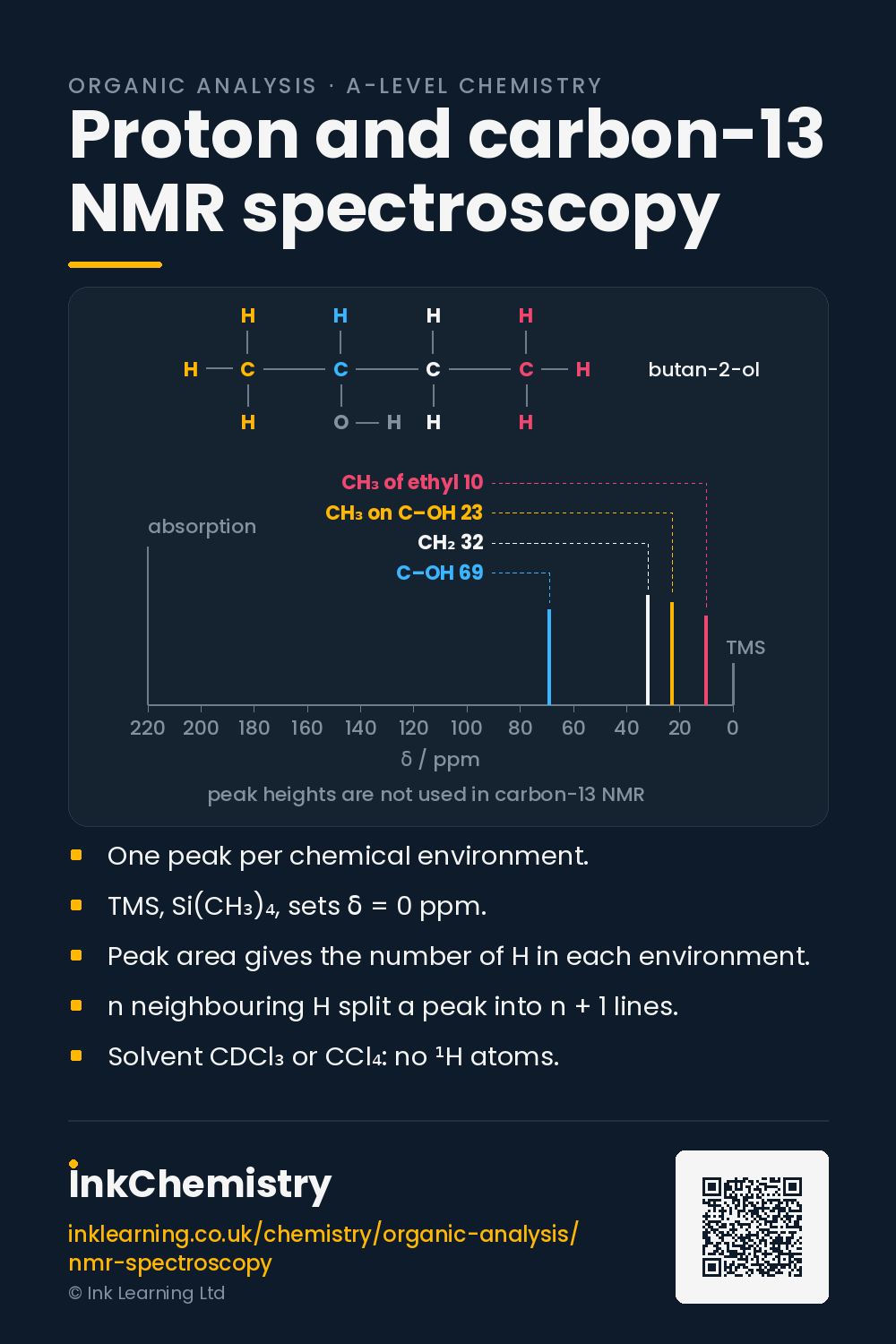
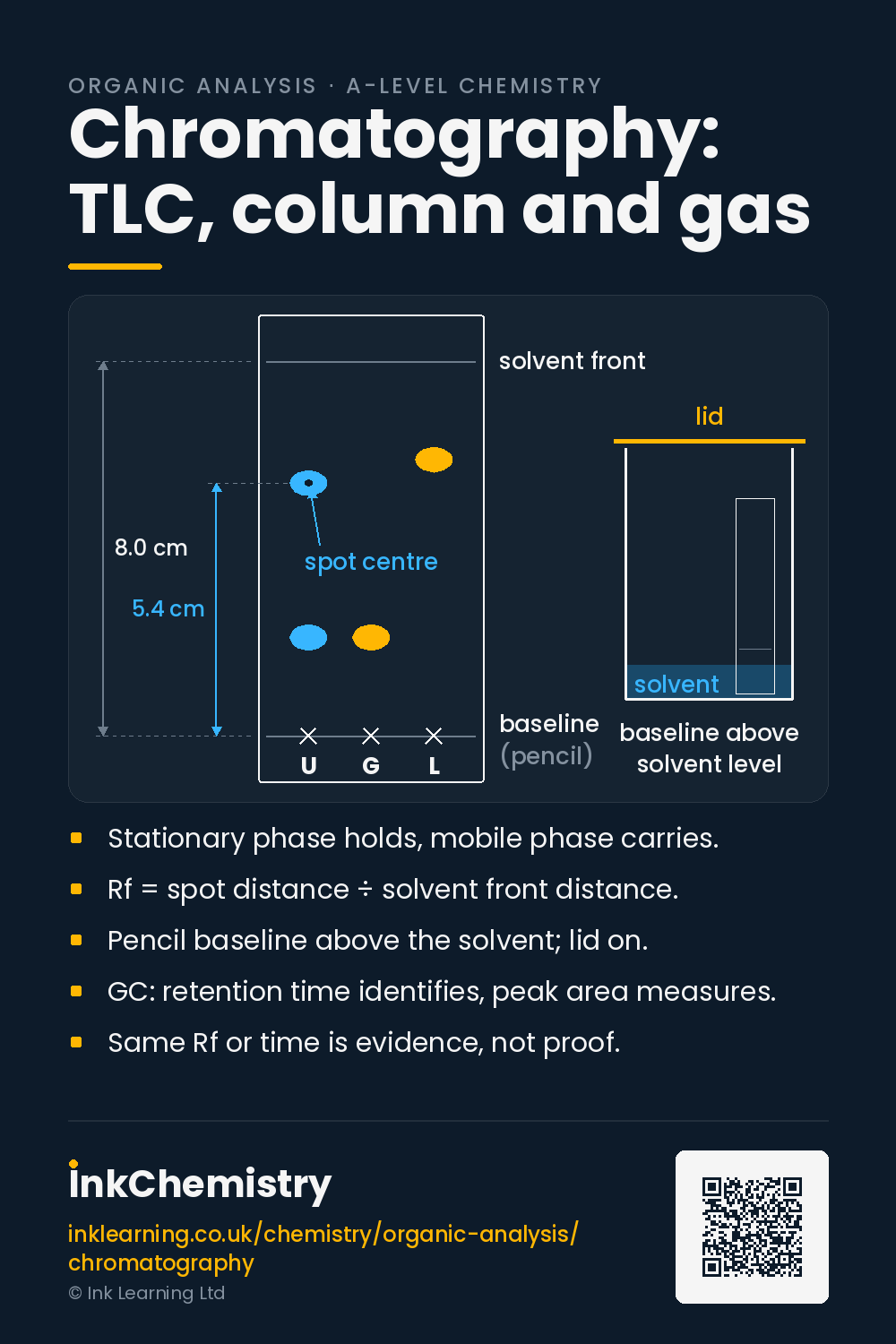
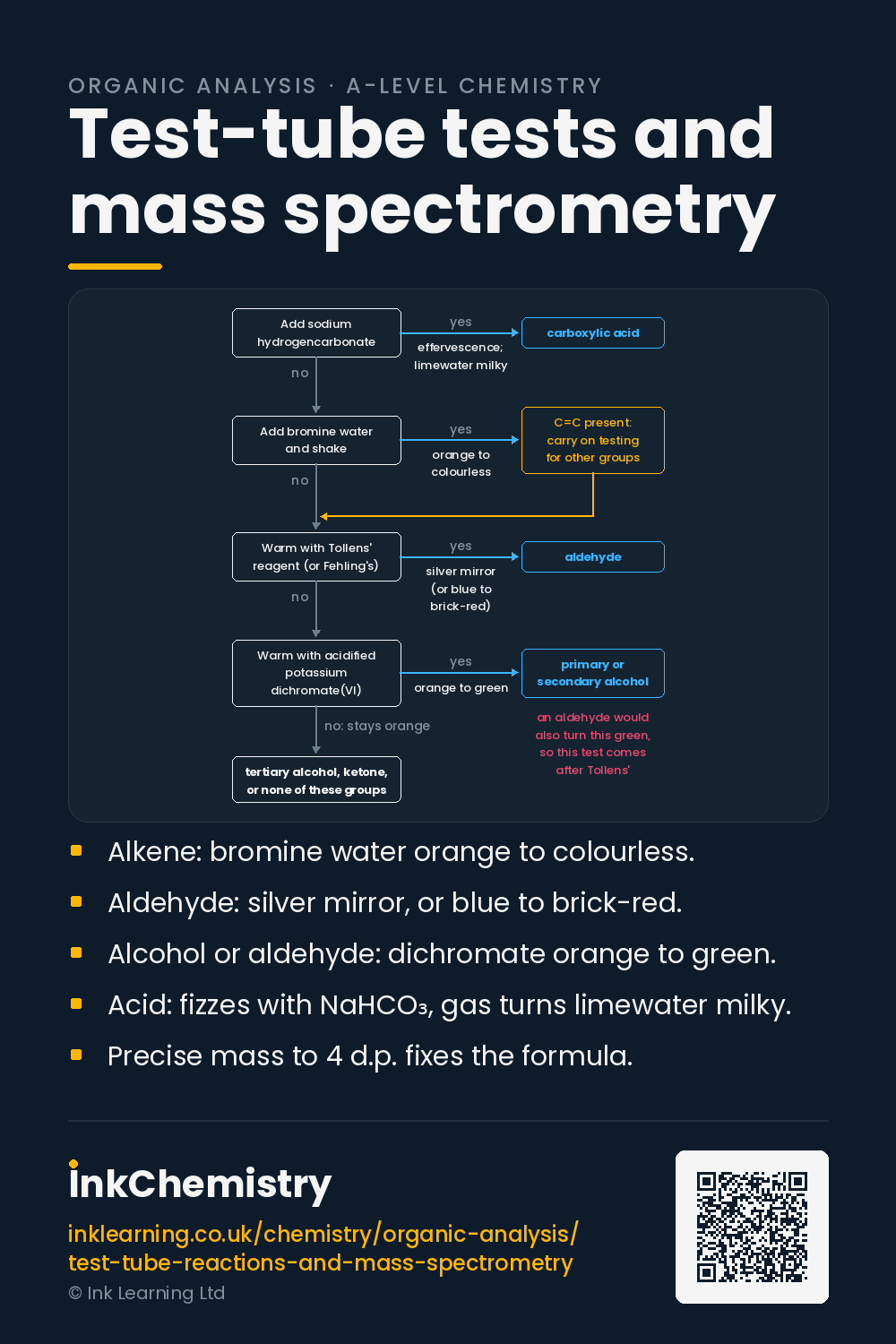
Organic analysis
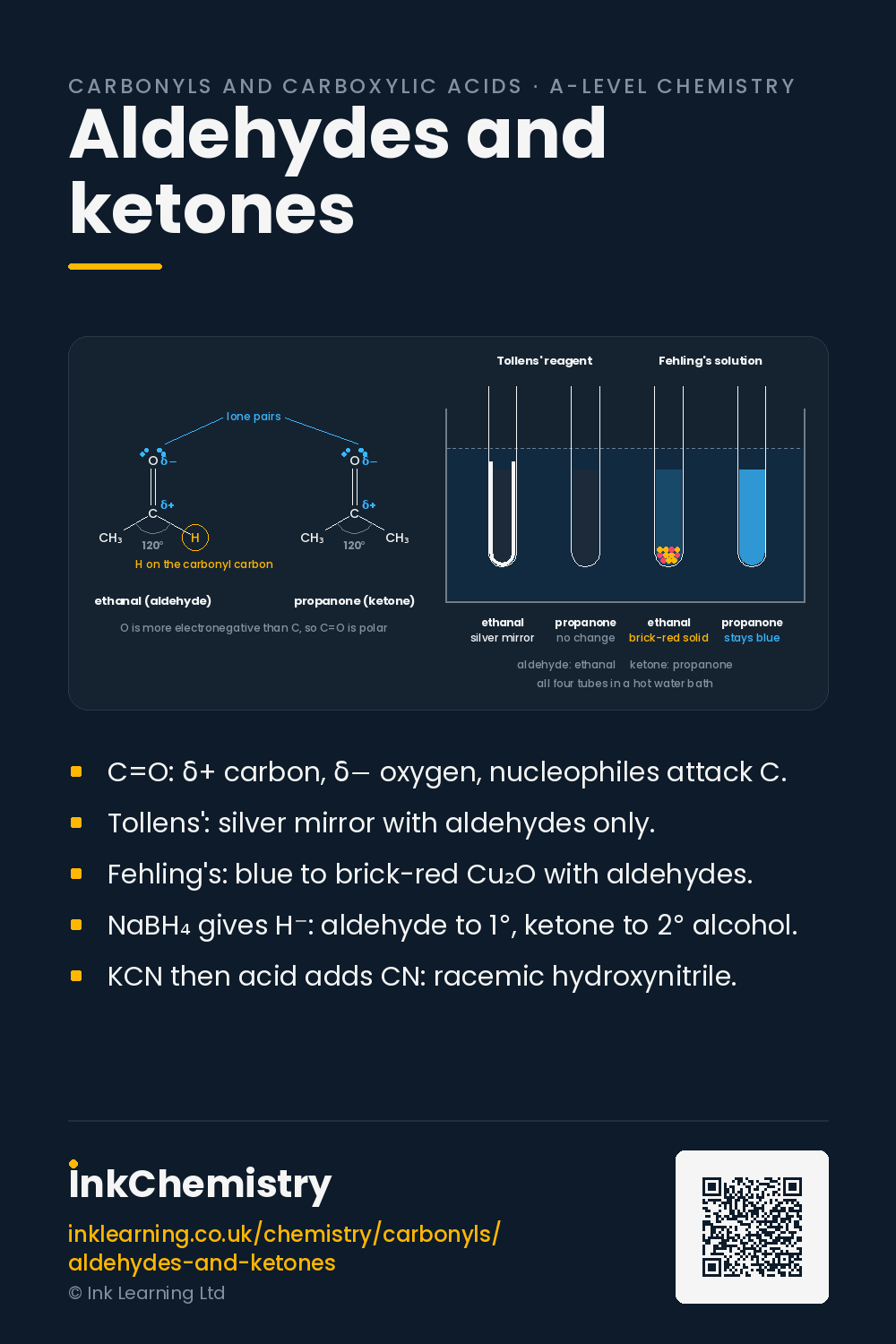
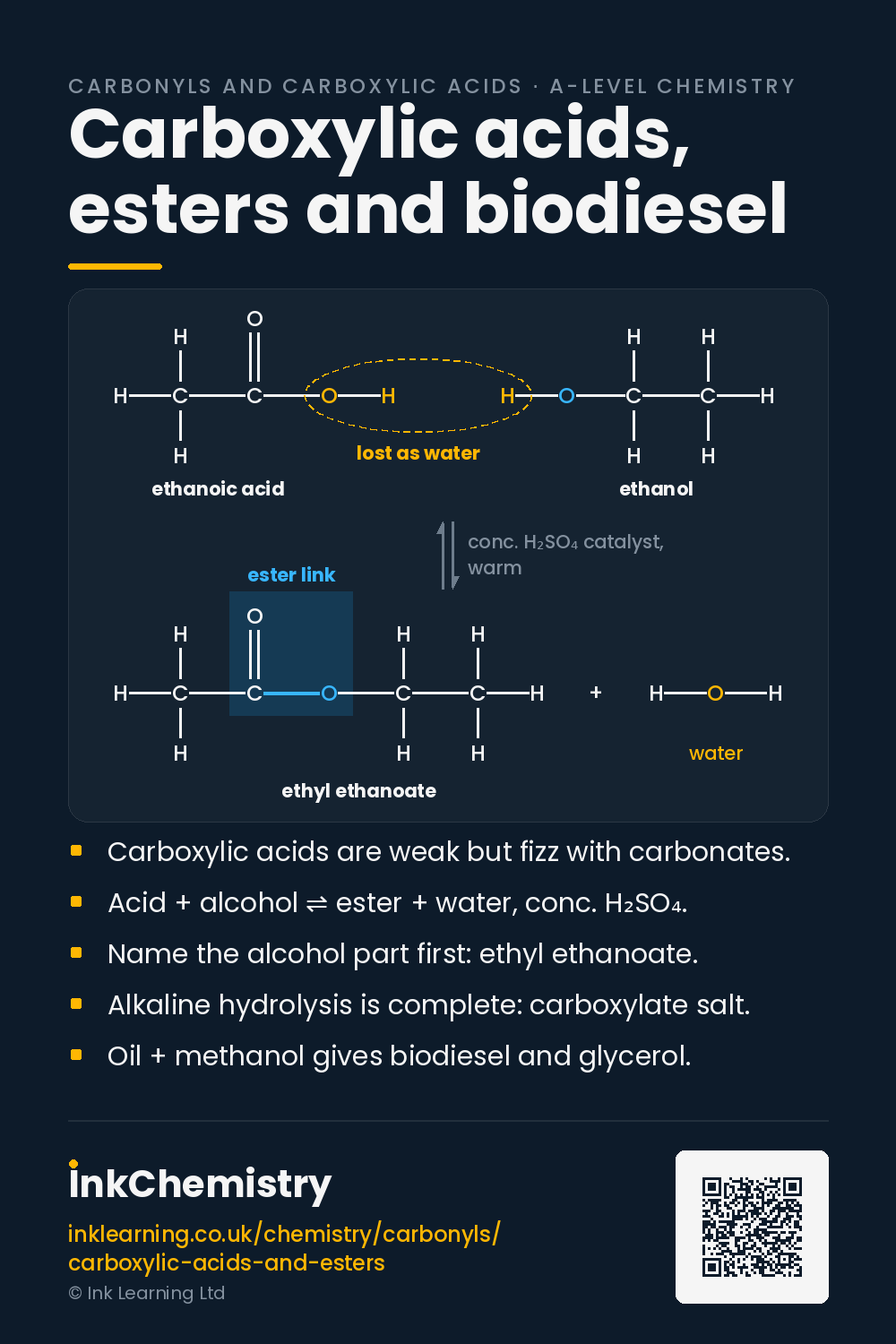
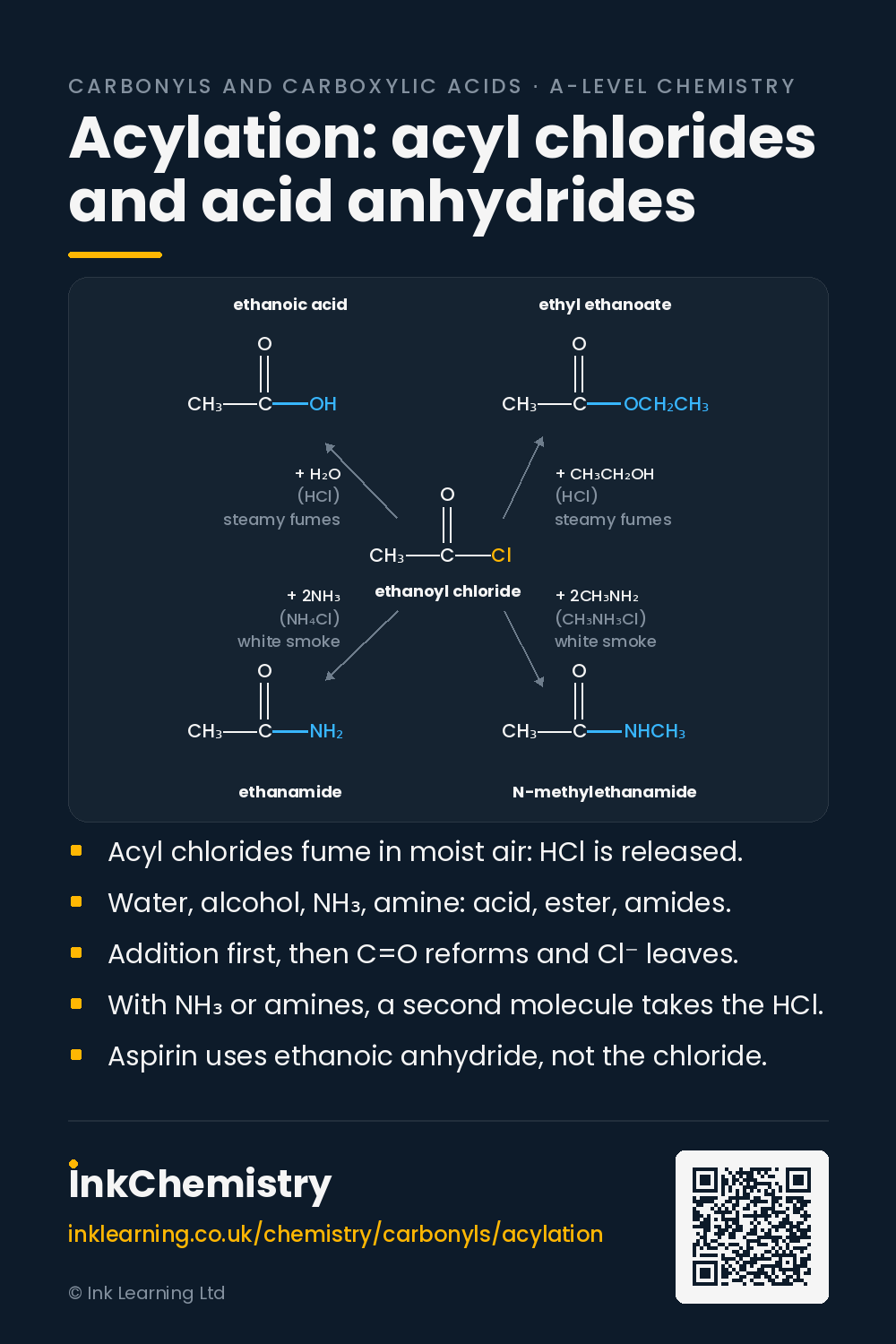
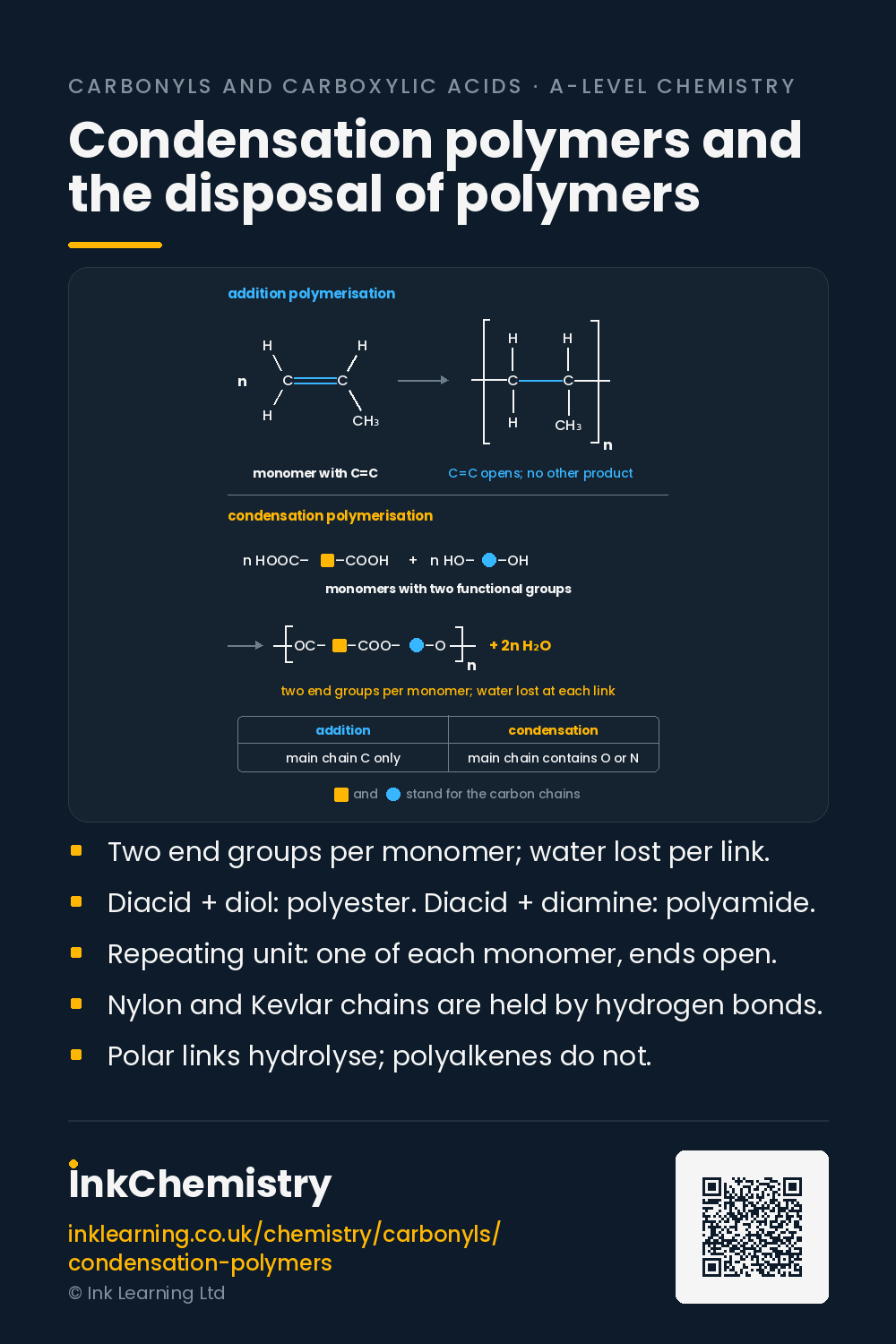
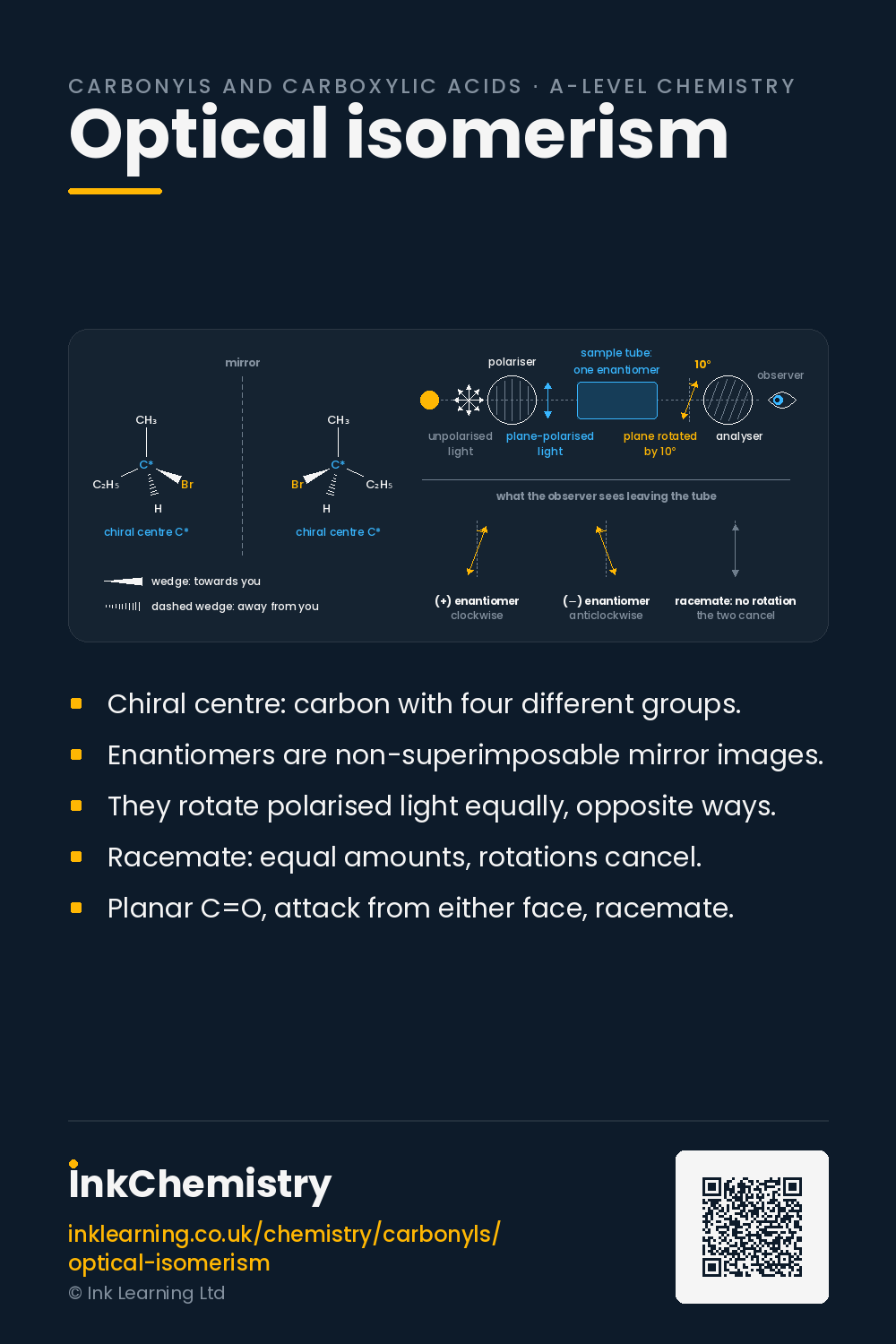
Carbonyls and carboxylic acids
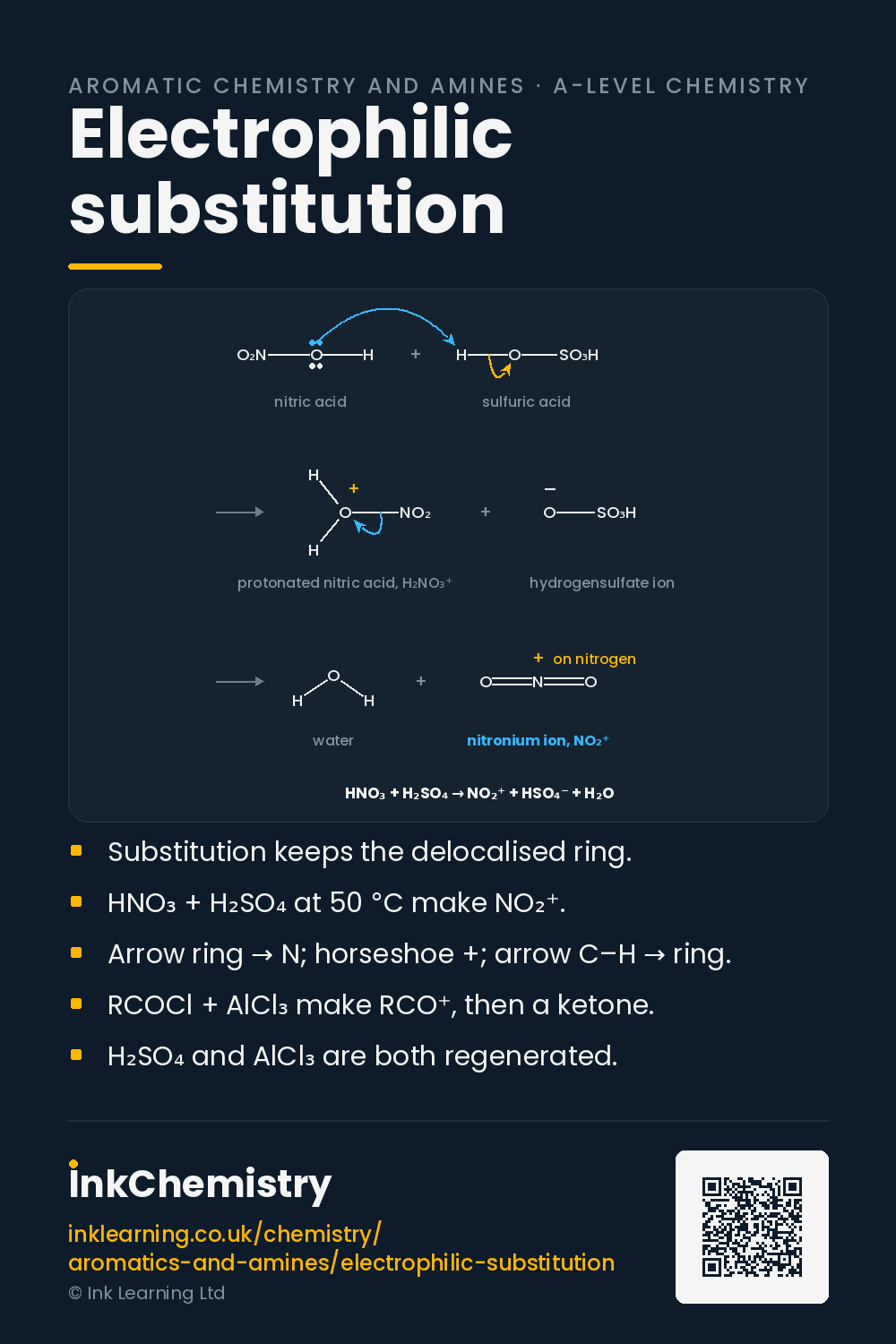
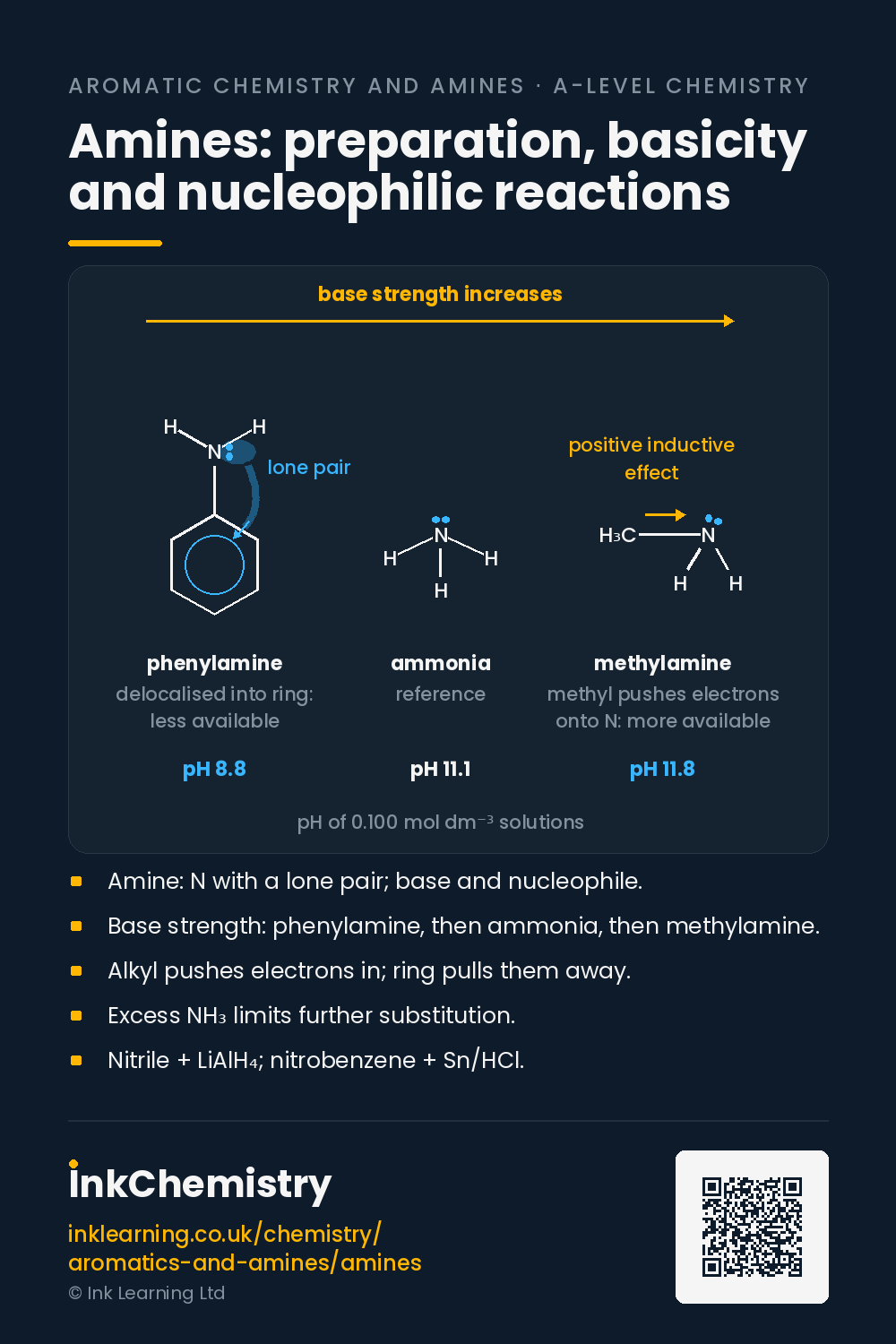
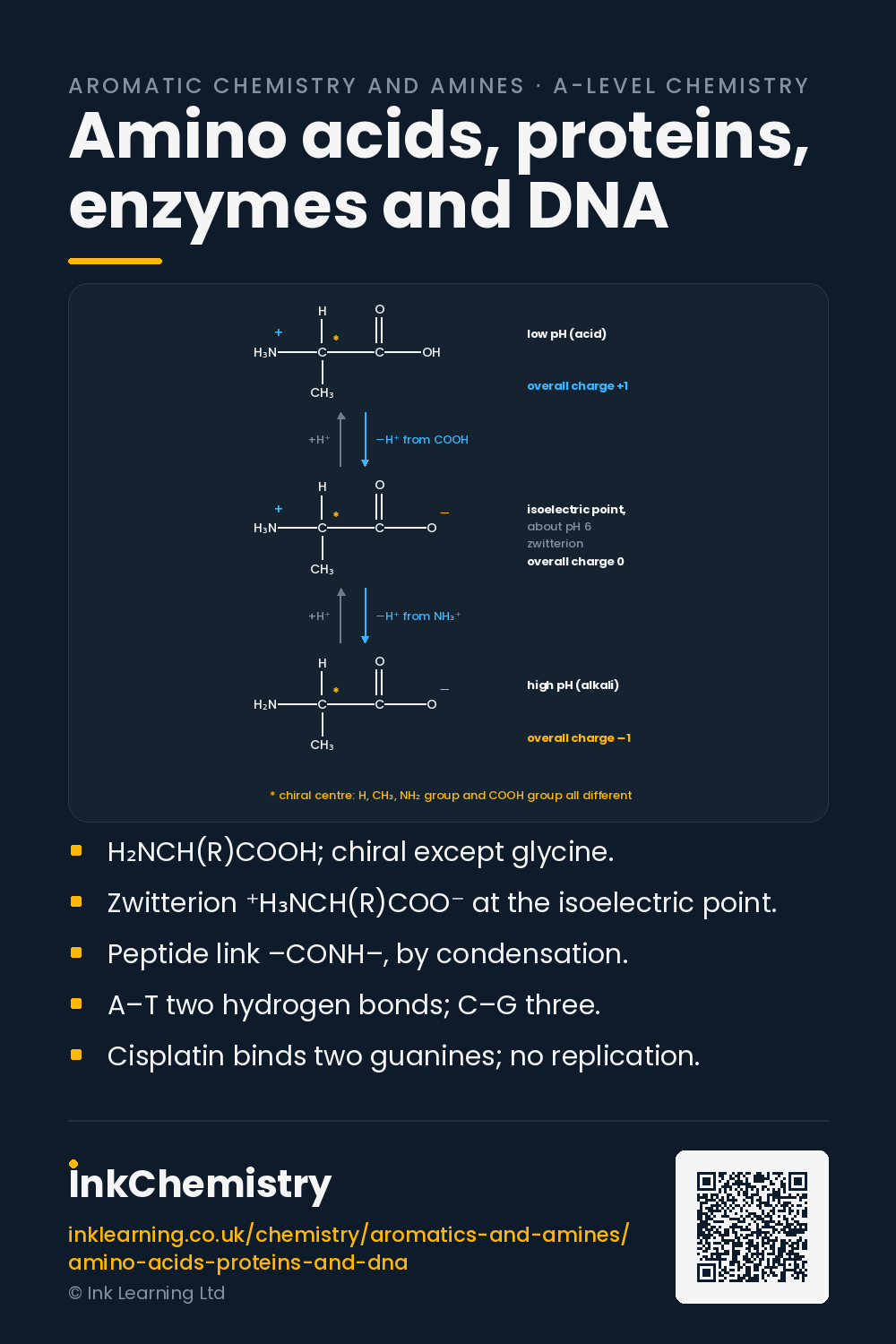
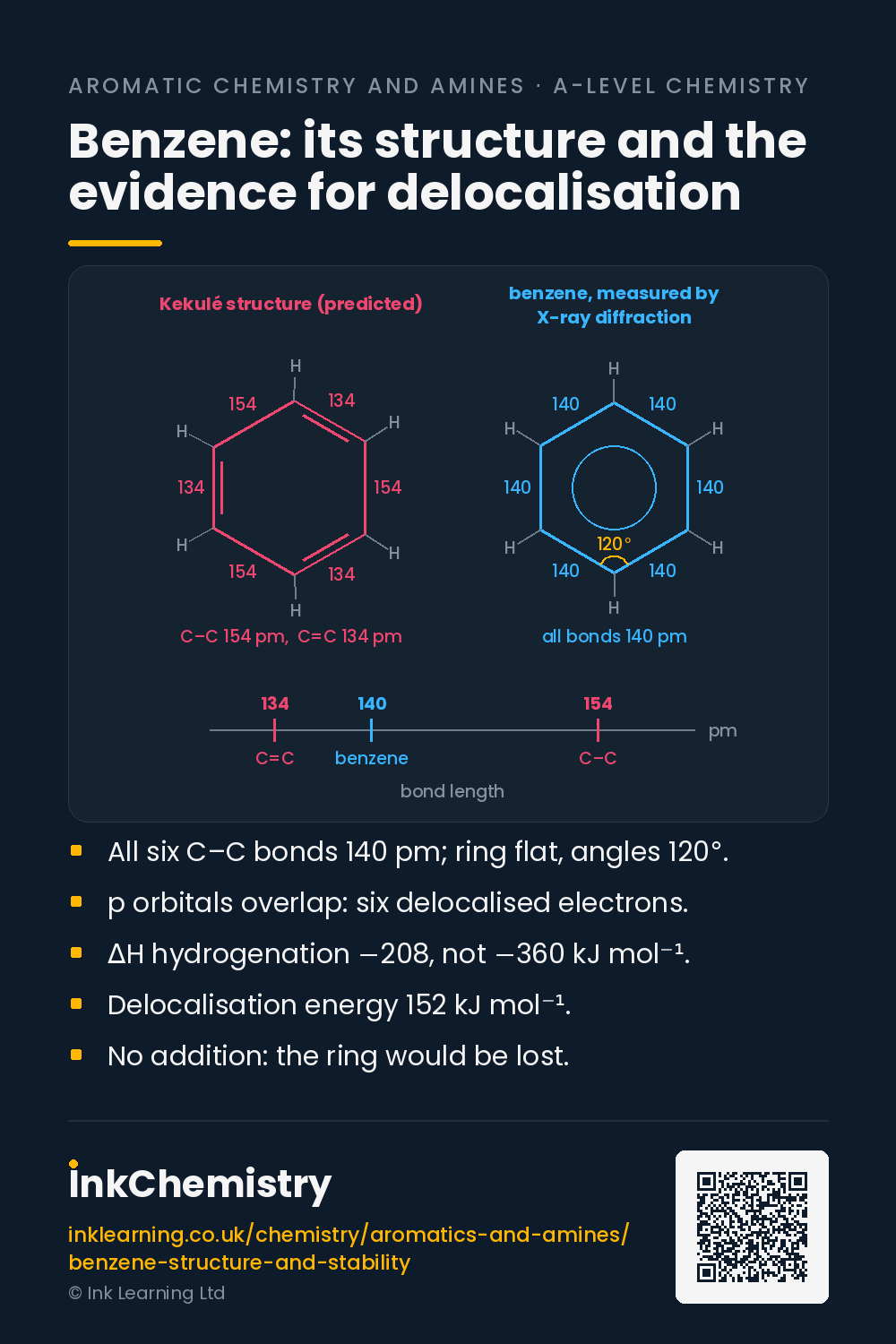
Aromatic chemistry and amines
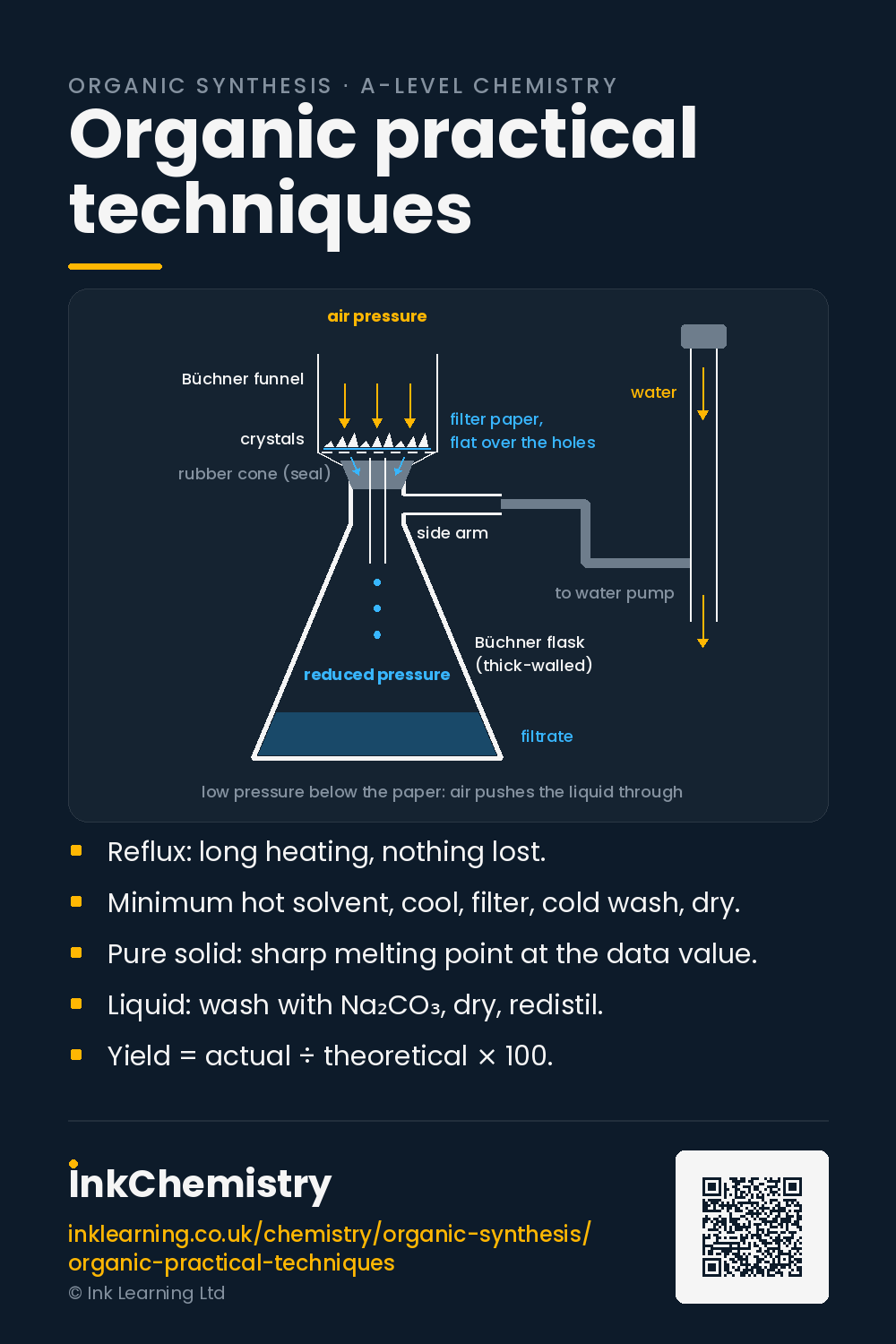
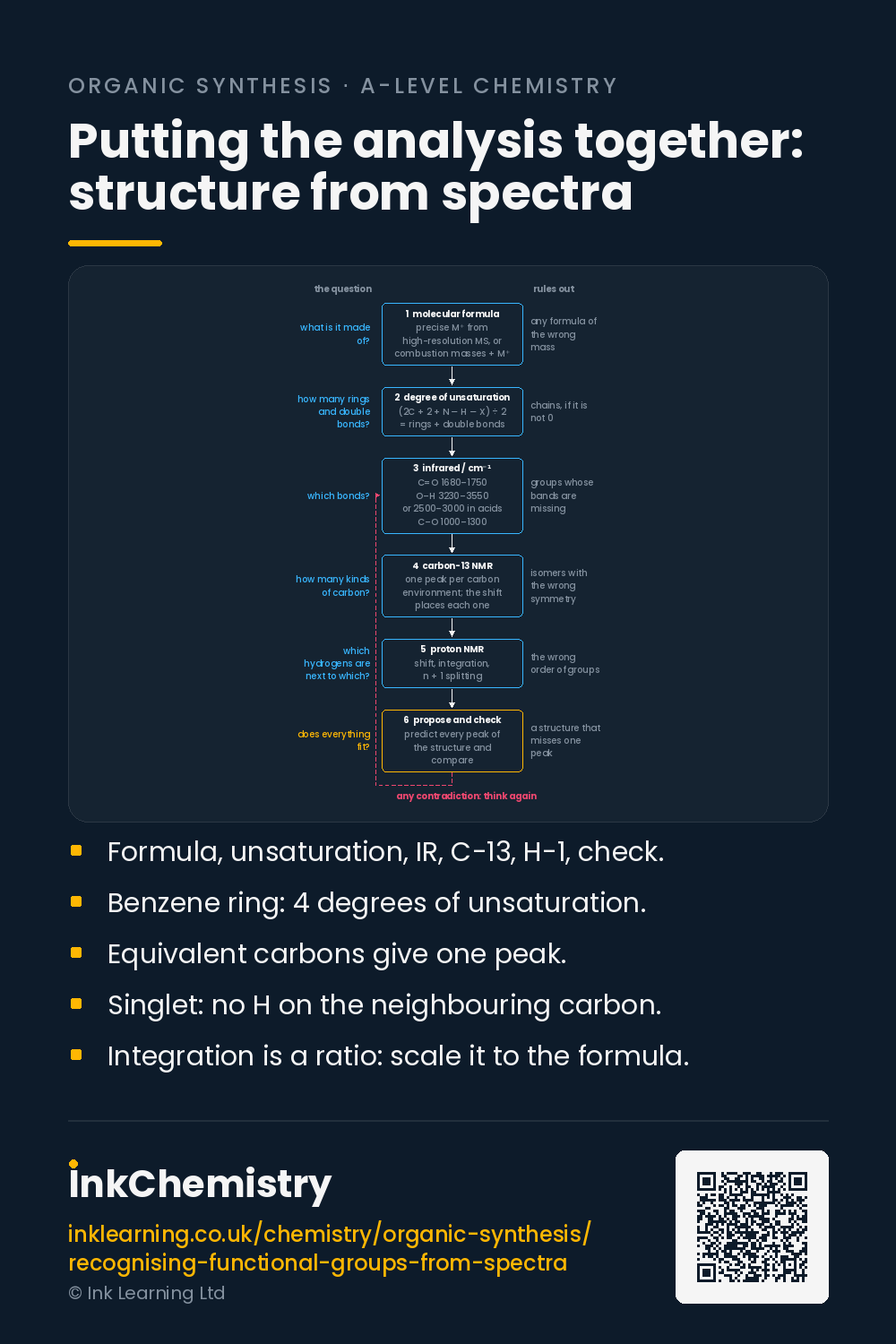
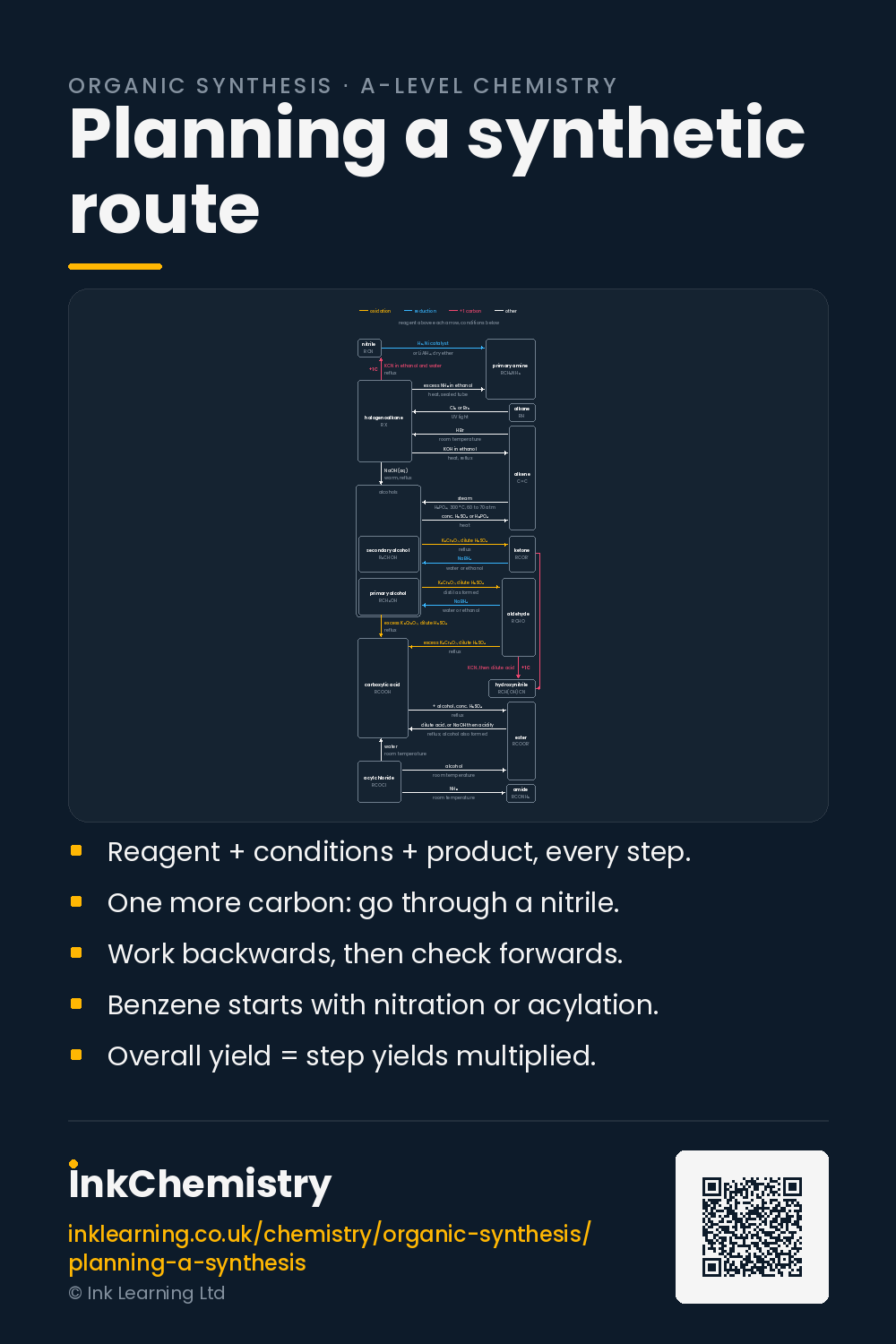
Organic synthesis
Posters are © Ink Learning Ltd, all rights reserved: print them, pin them and share them, and please link here rather than re-publishing copies. The diagrams inside them are published separately and on their own terms, which are set out in using our diagrams.


![Revision poster: Rate equations, orders of reaction and the rate constant. rate = k[A]^m[B]^n; overall order is m + n. Orders come from experiment, not the equation. Double [A]: order 0 ×1, order 1 ×2, order 2 ×4. Units of k: rearrange, substitute, cancel. k changes with temperature, not concentration.](/chemistry/assets/posters/rate-equations-and-orders.png)


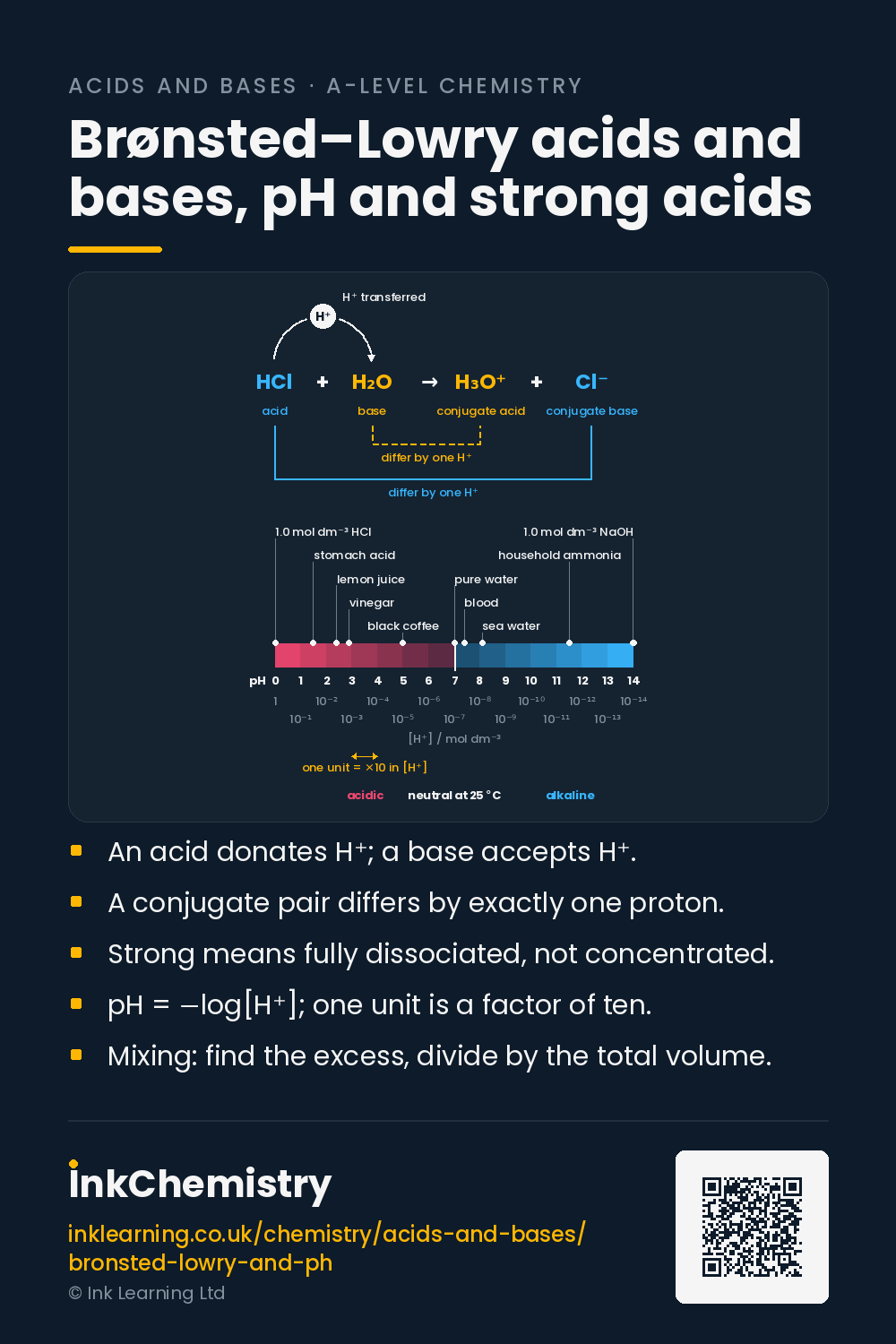
![Revision poster: Brønsted–Lowry acids and bases, pH and strong acids. An acid donates H⁺; a base accepts H⁺. A conjugate pair differs by exactly one proton. Strong means fully dissociated, not concentrated. pH = −log[H⁺]; one unit is a factor of ten. Mixing: find the excess, divide by the total volume.](/chemistry/assets/posters/bronsted-lowry-and-ph.png)
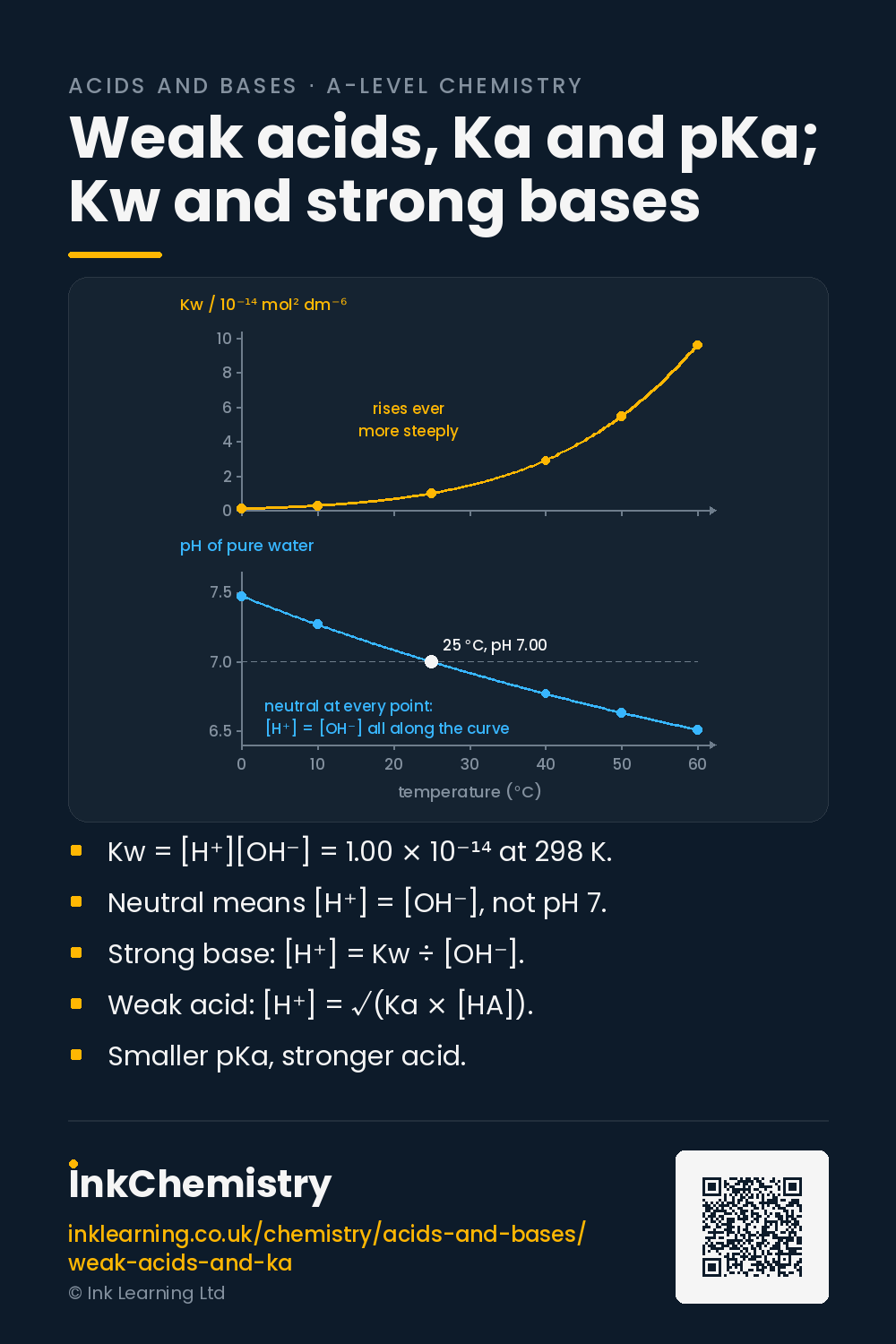
![Revision poster: Weak acids, Ka and pKa; Kw and strong bases. Kw = [H⁺][OH⁻] = 1.00 × 10⁻¹⁴ at 298 K. Neutral means [H⁺] = [OH⁻], not pH 7. Strong base: [H⁺] = Kw ÷ [OH⁻]. Weak acid: [H⁺] = √(Ka × [HA]). Smaller pKa, stronger acid.](/chemistry/assets/posters/weak-acids-and-ka.png)

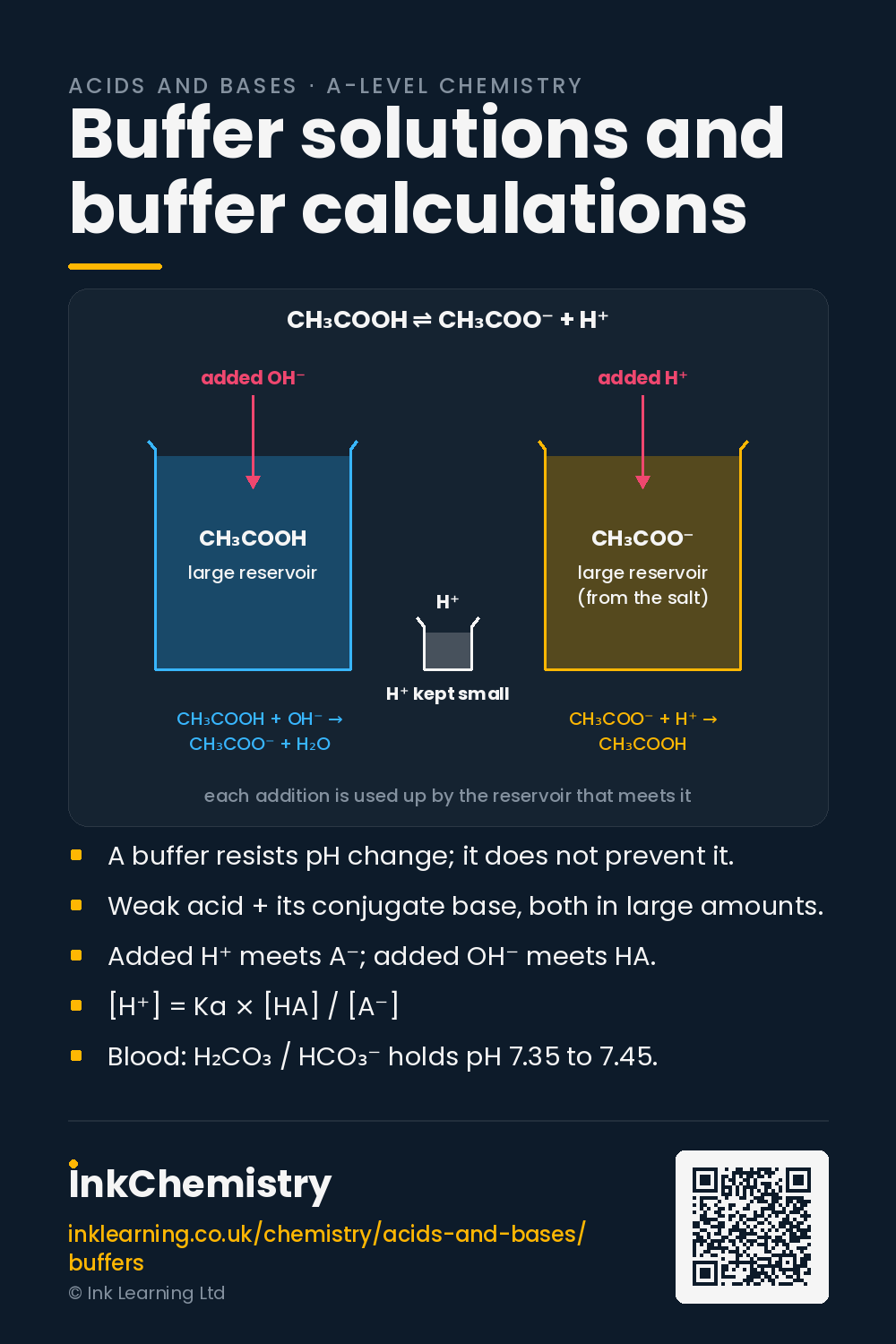
![Revision poster: Buffer solutions and buffer calculations. A buffer resists pH change; it does not prevent it. Weak acid + its conjugate base, both in large amounts. Added H⁺ meets A⁻; added OH⁻ meets HA. [H⁺] = Ka × [HA] / [A⁻] Blood: H₂CO₃ / HCO₃⁻ holds pH 7.35 to 7.45.](/chemistry/assets/posters/buffers.png)


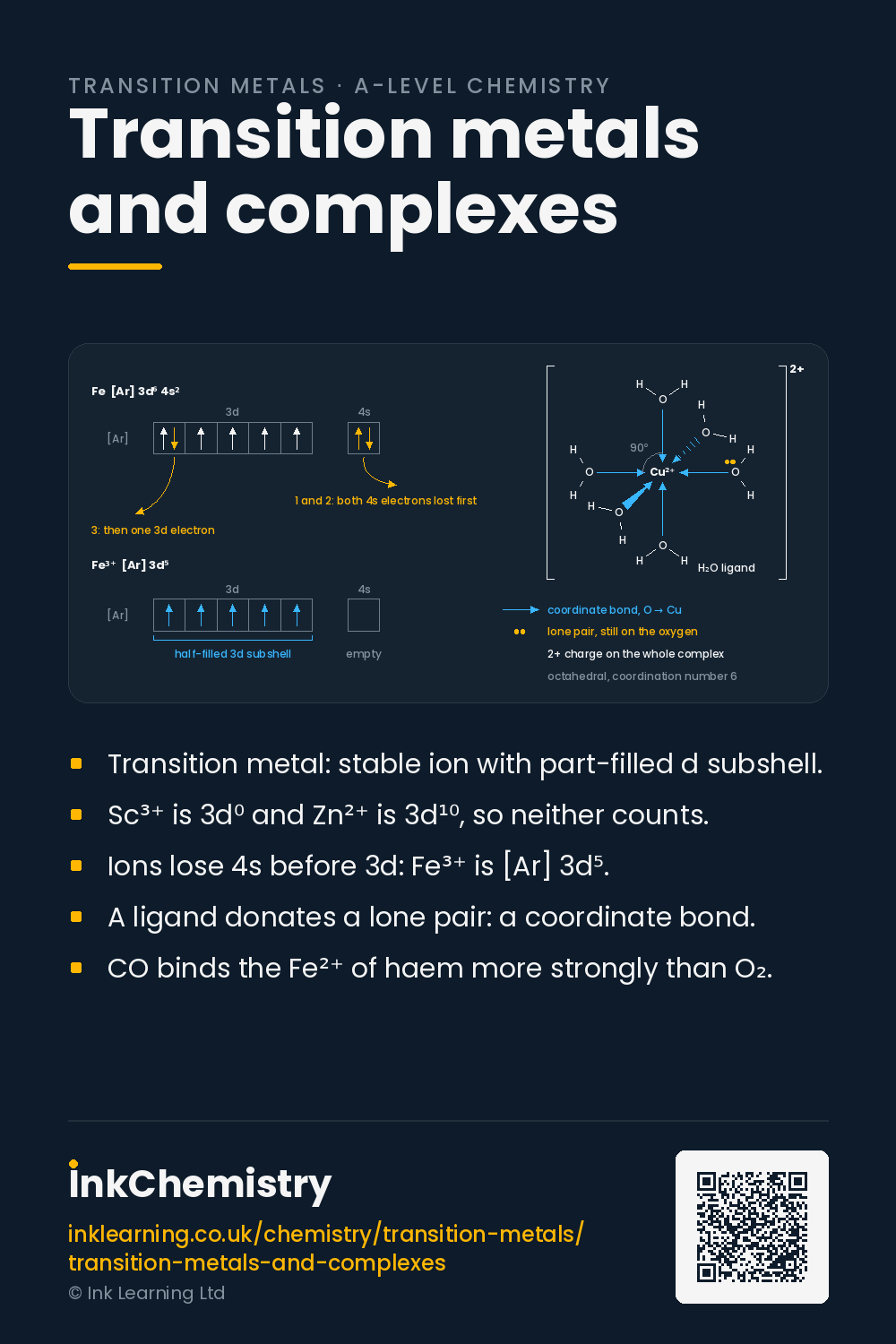
![Revision poster: Transition metal characteristics and complex formation. Transition metal: stable ion with part-filled d subshell. Sc³⁺ is 3d⁰ and Zn²⁺ is 3d¹⁰, so neither counts. Ions lose 4s before 3d: Fe³⁺ is [Ar] 3d⁵. A ligand donates a lone pair: a coordinate bond. CO binds the Fe²⁺ of haem more strongly than O₂.](/chemistry/assets/posters/transition-metals-and-complexes.png)
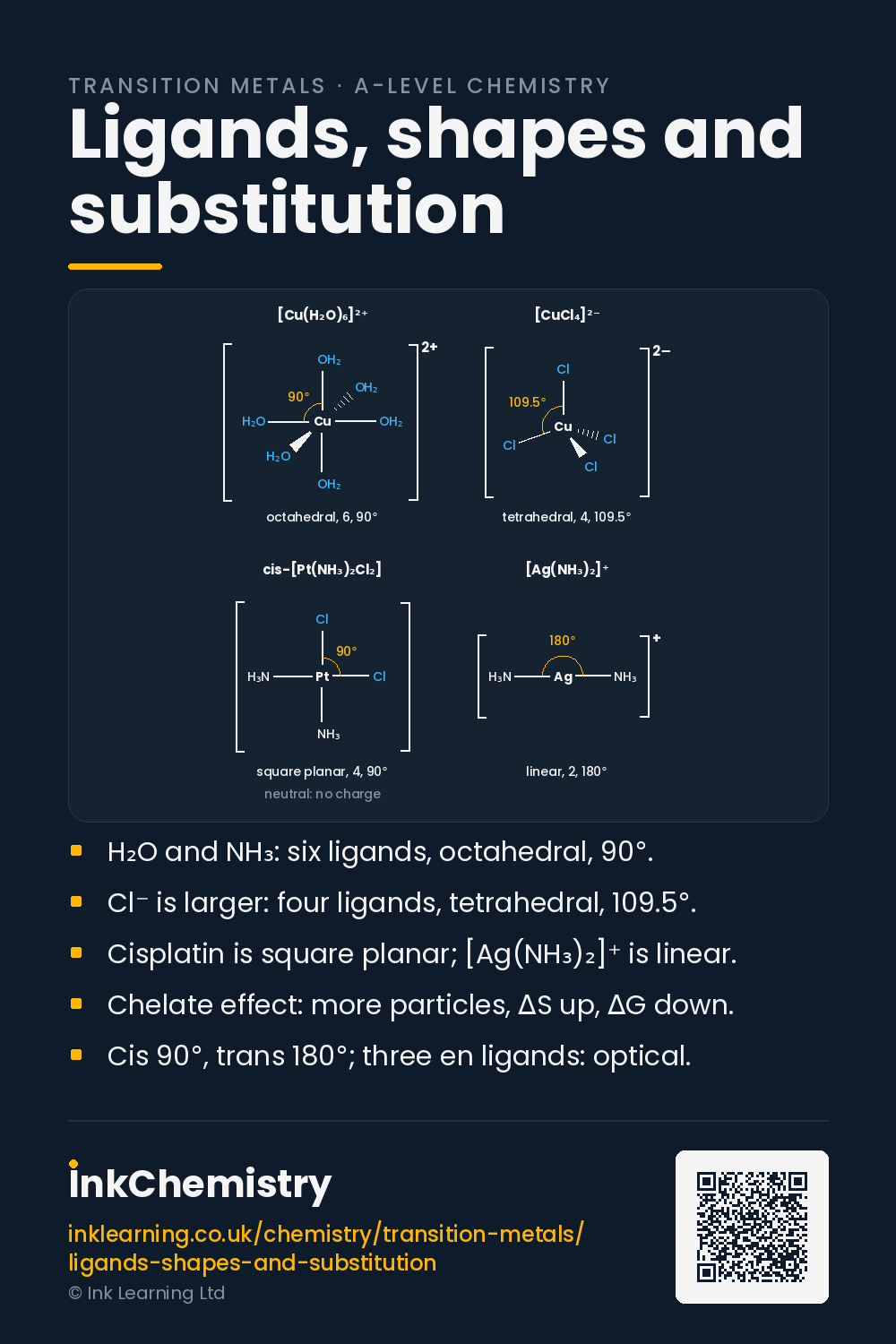
![Revision poster: Ligands, the shapes of complexes, isomerism and ligand substitution. H₂O and NH₃: six ligands, octahedral, 90°. Cl⁻ is larger: four ligands, tetrahedral, 109.5°. Cisplatin is square planar; [Ag(NH₃)₂]⁺ is linear. Chelate effect: more particles, ΔS up, ΔG down. Cis 90°, trans 180°; three en ligands: optical.](/chemistry/assets/posters/ligands-shapes-and-substitution.png)


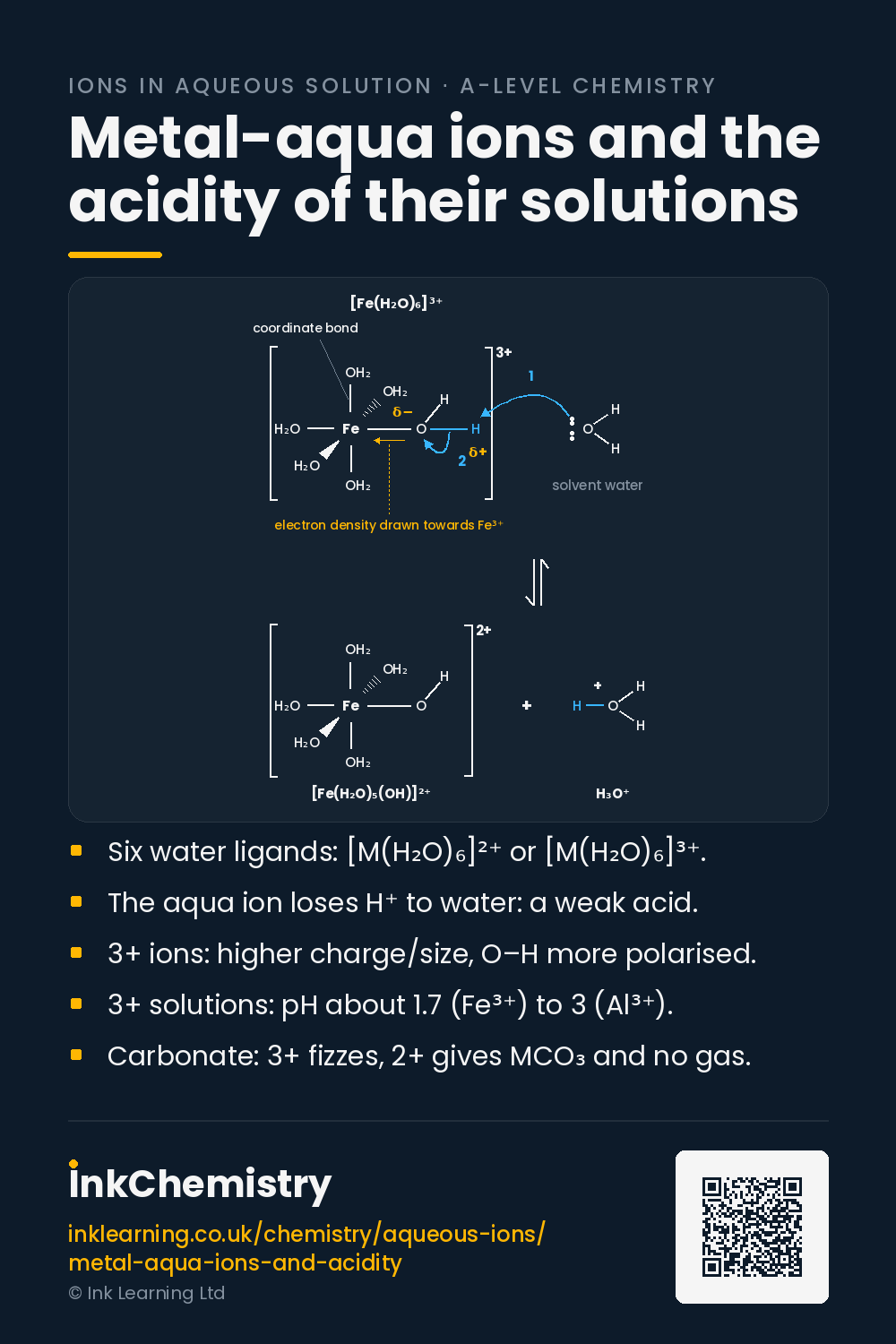
![Revision poster: Metal-aqua ions and the acidity of their solutions. Six water ligands: [M(H₂O)₆]²⁺ or [M(H₂O)₆]³⁺. The aqua ion loses H⁺ to water: a weak acid. 3+ ions: higher charge/size, O–H more polarised. 3+ solutions: pH about 1.7 (Fe³⁺) to 3 (Al³⁺). Carbonate: 3+ fizzes, 2+ gives MCO₃ and no gas.](/chemistry/assets/posters/metal-aqua-ions-and-acidity.png)